Losses mount for pig producers as prices reach new low
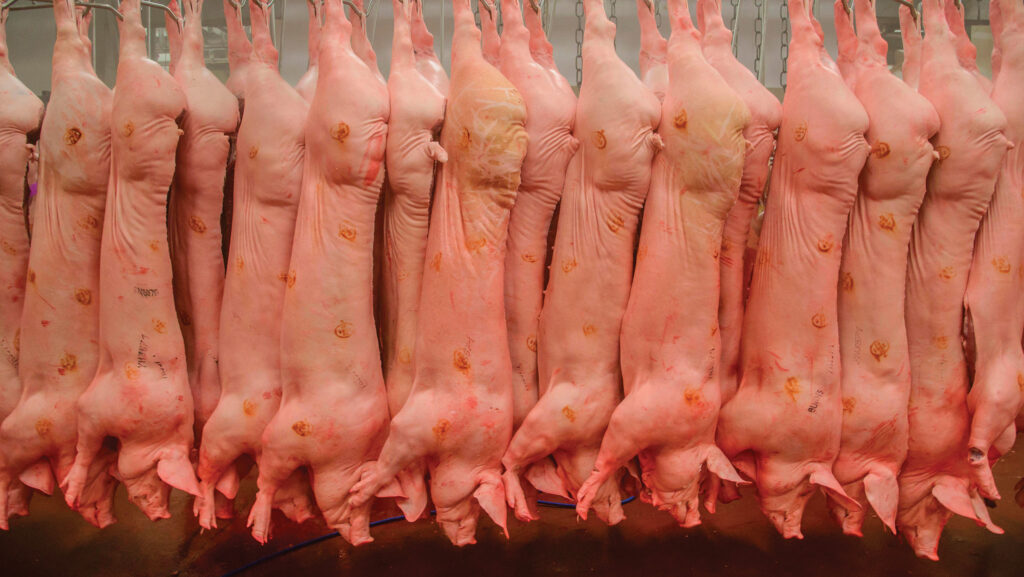 © imageBROKER/Alamy Stock Photo
A further slip in pig prices is adding to the woes of producers who face mounting losses, with production costs continuing to outstrip returns and uncertainty over processing contracts adding to the pressure.
The UK pig sector remains in a difficult position, with producers losing an estimated £25 a head during the third quarter as high production costs and oversupply continue to weigh on the market.
See also: Government signals end to CO2 stunning of pigs
The latest AHDB cost-of-production figures put the full economic cost of producing a pig at 207p/kg deadweight for the three months to September, up 6p/kg on the previous quarter.
Against an average Standard Pig Price (SPP) of 180p/kg dw, the estimated loss was £24.95 a slaughter pig, equivalent to 27.4p/kg deadweight.
Feed costs, which account for about 60% of total production costs, increased by 5p/kg during the quarter, while higher energy and fuel costs added a further 1p/kg to variable costs.
The sector was able to draw some comfort from the fact that the EU-spec SPP gained a reasonable 2.1p/kg to reach 178.54p/kg dw in the week ended 7 November – the biggest weekly rise since the start of 2023.
However, the upturn proved short-lived, with the EU-spec SPP then losing 2.43p/kg in the week to 14 November, bringing it back down to 176.12p/kg dw.
That is the lowest it has been since May 2022, and is 24p/kg dw down on year-ago levels, and almost 50p/kg lower than when the market last peaked in August 2023.
Andy McGowan at the United Pig Co-operative said few producers are receiving anything close to the estimated cost of production, and the outlook to Christmas remains “pretty bleak”.
“There are farms that have been given notice on their contracts and they do not have high-value homes for their pigs, so those animals are going on to the spot market,” he said.
“Prices are grim and I cannot see much prospect of an increase before Christmas.”
Improvements in 2027
However, Mr McGowan believes the longer-term outlook could improve as the industry moves into 2027.
“Going into the second quarter of 2027, I would expect to see more sustained recovery. A lot of sows have been culled this year, so we should see a reduced pig crop coming through.”
The current oversupply was largely a result of strong productivity gains, with improved genetics, relatively stable animal health and faster growth rates resulting in more pigs reaching the market.
European production, particularly in Spain, had also increased despite restrictions on export markets following an outbreak of African swine fever in December 2025.
This had resulted in more pork competing for fewer outlets, with the UK an important and relatively high-value market for European exporters.
Good value for consumers
Mr McGowan said pigmeat remained good value for consumers, and improving competitiveness against beef, lamb and chicken could help support demand.
“Global consumption of pigmeat is still gently rising. The problem is not consumption – it is the amount of product being supplied. Productivity is very high everywhere, with better genetics, good health and pigs growing faster and coming to market sooner,” he said.
He added that producers would need to weather the immediate pressure, with a more sustained market recovery potentially emerging as supply and demand begin to rebalance.