Tighter supplies underpin summer lamb prices
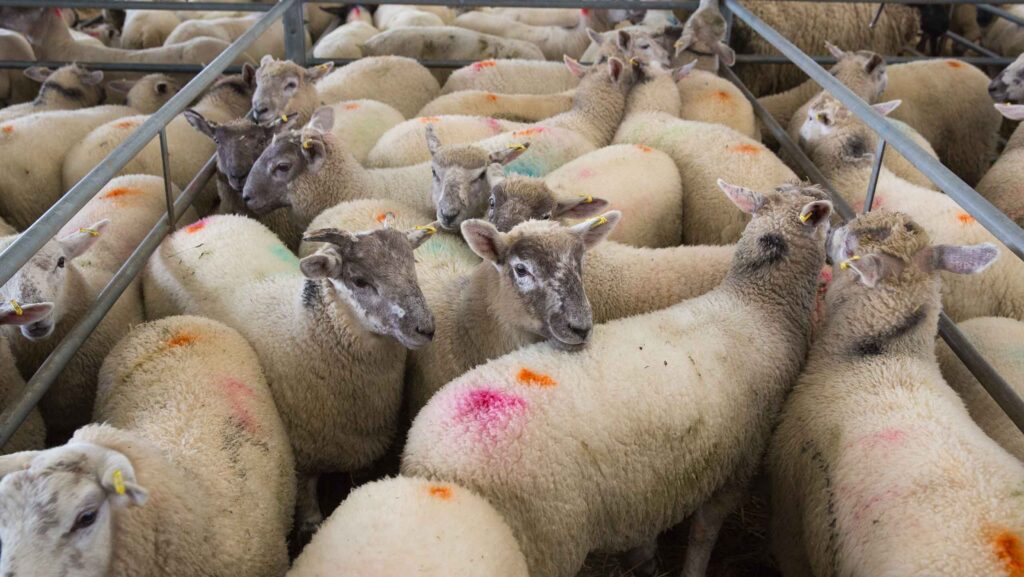 © Tim Scrivener
 Reduced stocking densities and tighter domestic demand are supporting lamb prices, despite the usual seasonal drop in values as new-season lamb enters the market.
“Supply has been quite tight in the past few weeks, so the decline has been very steady,” said Lanna Dennis, development officer at the Livestock Auctioneers Association. “The price is at a very good level for this time of year.”
Some 78,984 prime lambs went through marts in the week ending 14 July, compared with 85,152 at the same time in 2025.
Hot weather, early harvest and a busy show season are thought to be some of the reasons behind this shift, she added.
See also: How willow can help provide vitamin B12 to growing lambs
New-season lambs were averaging 385.4p/kg liveweight in the week ending 14 July, 24.2p higher than at the same time last year.
Prices were also slightly up on the previous week’s 384p/kg (although this was a drop from the 1 July price of 423.8p/kg).
“Cull ewe prices have also held well, with prices 10% above where they were last year,” said Ms Dennis. They averaged 151.6p/kg in the week ending 14 July across GB, compared to 133.7p/kg one year earlier.
But while producers have seen a more marginal decline in liveweight prices, deadweight values dropped by almost 30p/kg in the week to 11 July, from 830.5p/kg to 803.7p/kg.
Stores
Dry weather and a lack of grass are starting to affect store and breeding markets, influencing farm decisions to hold or move stock.
“I think the drought conditions are going to bite soon, although it’s nothing we haven’t seen before,” Ms Dennis warned.
“With breeding sales now coming up around the country, people may be a bit anxious. But if you look at prices, they are making good money. Kivells Auctioneers had its early breeding sale recently, with shearlings fetching £300 a head.”
There is a danger that prolonged dry weather could have an effect on carcass quality, but it has been limited so far, according to Rizvan Kahlid, managing director at Euro Quality Lamb. “The domestic livestock trade is holding well, while the export market has taken a slight hit,” he said.
“The EU exchange rate has gone against us, with an increase to €1.17 on 15 July [from €1.15 a month earlier]. As a result, UK lamb has become more expensive compared with Spanish and French markets. For the past month or so, demand has been poor from an export perspective.”