Mull Slaughterhouse launches new livestock collection service
 © Carolyne Charrington
 A slaughterhouse and butchery service on the Scottish Isle of Mull is launching a livestock collection service to help remote farmers and crofters access local processing without arranging their own transport.
Mull Slaughterhouse and Butchery will begin trial collection runs this spring from islands including Coll, Tiree and Colonsay, as well as mainland areas stretching towards Fort William.
The initiative is funded through the Scottish government’s Small Producers Fund.
See also: Mull abattoir future secured thanks to Prince’s grant
The business says the service will help consolidate journeys, reduce travel time for farmers and cut the carbon footprint linked to transporting livestock across the Highlands and islands.
Despite being based on Mull, about 70% of the slaughterhouse’s work already comes from outside the island.
Chairman Flora Corbett said demand from producers across the region had driven the expansion.
“We know we offer something genuinely different here and we want to make it as easy as possible for more people to access it,” she said.
“We are now serving farms and crofts across the Highlands and outer islands who tell us they have found it a more personal, flexible and often cheaper alternative to other processors.”
Processing capacity
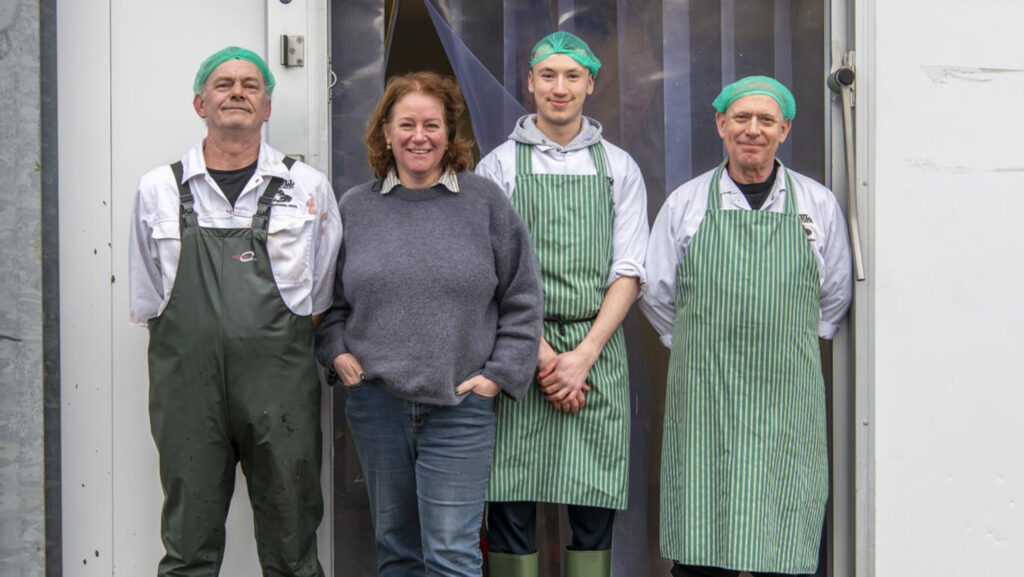
Flora Corbett with some of the team at Mull Slaughterhouse and Butchery © Carolyne Charrington
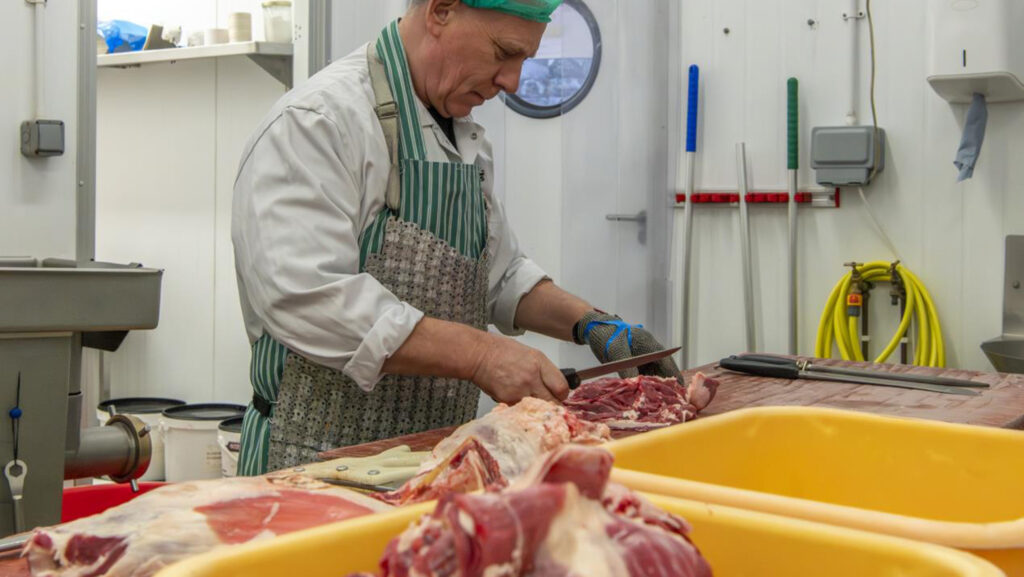
The facility processes about 140 cattle, 700 sheep and 200 pigs a year, alongside increasing numbers of goats and red deer.
It offers slaughter and butchery services on the same site, with farmers able to request individual cutting specifications.
“One farmer took four sheep in today, with four completely different cutting lists,” said Ms Corbett. “That’s just not something a large operation has time for. We do, and we think that matters.”
Essential local resource
The slaughterhouse, which employs five staff, was rebuilt after a fire in 2009 and operates a weekly slaughter day, with overnight lairage available.
Aberlour sheep and goat farmer Julie Comins travels more than 150 miles every fortnight to use the facility.
“You can rear the best quality animals in the world, but if the abattoir experience is stressful and ends up affecting the meat, it can undermine everything you’ve worked for,” she said.
Campaigners have long argued that small independent processors are essential to maintaining livestock farming and local food economies in remote areas.
“This isn’t just about farming,” added Ms Corbett.
“The restaurants, the hotels, the food economy of the whole island, they all depend on having somewhere local to process.”