Renewable energy – the tenant farmers’ guide
Nearly all types of renewable energy will require the consent of the landlord and it would be foolish and possibly costly to attempt to do it without consulting them. In particular, it is very important to ascertain early on whether any onsite energy generation will affect their ‘user clause’ and change the primary business of the farm detailed in the lease.
The second, and almost equally important consideration, is the amount of time remaining on a lease agreement. Tenants should not embark on any project that will take longer to yield full payback, usually 10 years, than the amount of time remaining on a lease.
Options available to tenant farmers
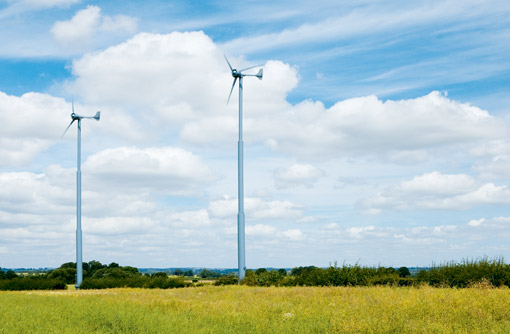
Tenants must make sure that any installation is appropriate to, and will enhance their primary business function. For example, roof mounted-solar PV on a barn or a small wind turbine to supply electricity for milking or grain drying equipment.
Projects of this size will reduce energy consumption as well as allowing tenants to benefit from the Feed-in Tariff and receive payment for any excess electricity exported to the grid.
Key pointers
- Engage with the landlord early on to discuss options
- Check the tenancy agreement and ensure any renewables project doesn’t affect the “user clause” and change the primary business of the farm detailed in the lease
- Make sure the project payback period doesn’t exceed the remainder of the tenancy agreement
- Ensure any renewables project fits with the existing farm business – for example, generating electricity from solar PV for the milking parlour
- Discuss with the landlord whether or not they have renewables plans to avoid a clash between yours and theirs – grid connection, for example, might only allow one project
- Be aware that the tenancy agreement may prevent the ability to gain security of interest for developer-led projects which offer farmers a rent or free electricity
- Consider a joint venture (JV) with the landlord
- Be aware that a renewables project could pose tax and legal implications for both the landlord and tenant
Most landlords are likely to be agreeable to this approach as it is in direct relation to a tenant’s needs and is part of their primary business function. Where landlords are agreeing to onsite renewable energy generation we have seen agreement for consent being given by landlords in return for the tenant paying around 10% of income generated from the installation.
Of course landlords could have considerations other than financial ones, which is why it is important to engage with them very early in the process. It could be that they have alternative plans for the holding, or their own plans for renewable energy generation either on the site or elsewhere that may not be compatible with the tenant’s proposals.
The availability of grid connection could also be an issue of conflict between a landlord and tenant with competing plans and this needs to be considered.
Funding the project
Many developers are approaching farmers offering to install the technology for free and either pay rent for the space or provide free or reduced price electricity in return, however a tenant is unlikely to be able to provide a third party with security of interest.
The tenant could fund the project themselves using either equipment finance or a bank loan where external funding is required. However, as an alternative a joint venture (JV) between a landlord and tenant could be another avenue to explore.
Each party would be required to make a capital investment and enter into a JV agreement to document the investment and how the project will be managed including who takes day to day responsibility for operation of the technology, and ensuring maintenance and repairs are carried out.
Tax and legal implications
Most tenants should be able to benefit from generating some renewable energy within their holdings as long as they keep in mind that they will need to work with their landlord to identify the best approach financially and legally to protect their own position as much as that of the landlord.
If the renewable technology and the income generated from a tenant’s scheme increases the value of the holding it could give rise to issues with inheritance tax if the activity is not eligible for reliefs and this could affect the landlord’s tax planning.
For both landlords and tenants, consideration needs to be given to the legal issue of succession if the farm is held on an Agricultural Holdings Act tenancy. If income from the renewable technology dwarfs the farm’s income from its original agricultural business it could affect the nature of the tenancy and also the income that any successors receive as well as having an impact upon eligibility tests.
Visit our Farm Energy page