Penwith farm gate: The story of a Cornish icon
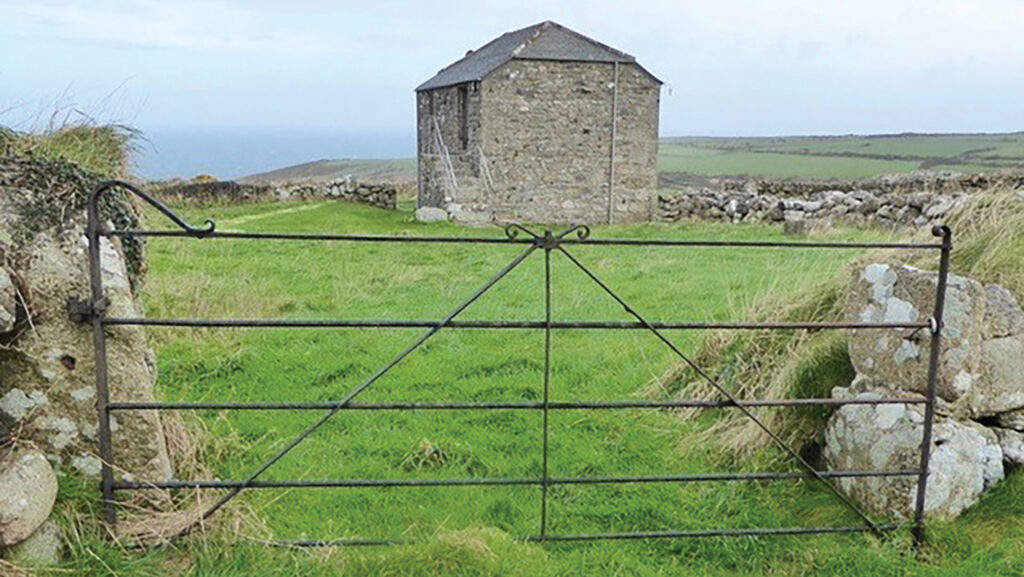 Penwith farm gate © Peter Parkinson
 Cornwall-based retired blacksmith Peter Parkinson has traced the origins of a distinctive iron farm gate, linking its design to the 1880s and the region’s granite-posted fields.
Ten years ago, Peter moved to Penwith, the far south-western tip of mainland Britain near St Just, and began documenting a regional farm gate design that has stood in the landscape for generations.
“As a retired blacksmith, I became aware of an iron or steel farm gate that belongs to this region, and began talking and writing about it,” he says.
See also: What’s in a name? History of British field names revealed
The gate, now widely referred to as the Penwith Gate, has been made by numerous blacksmiths since at least 1880, as evidenced by photographs from that date.
“There is no technical reason why they could not have been made far earlier than that,” Peter says.
However, photography, which only began around 1840, provides no earlier visual records, and the identity of the first maker remains unknown.
Hundreds of gates
There are literally hundreds of these gates across Penwith, an area characterised by small fields divided by stone-faced earthen banks, known as Cornish “hedges”.
The gates appear in every condition, from solid and operational to “shattered, skeletal, ghosts of a gate, corroded and tangled in the brambles, barely recognisable”.
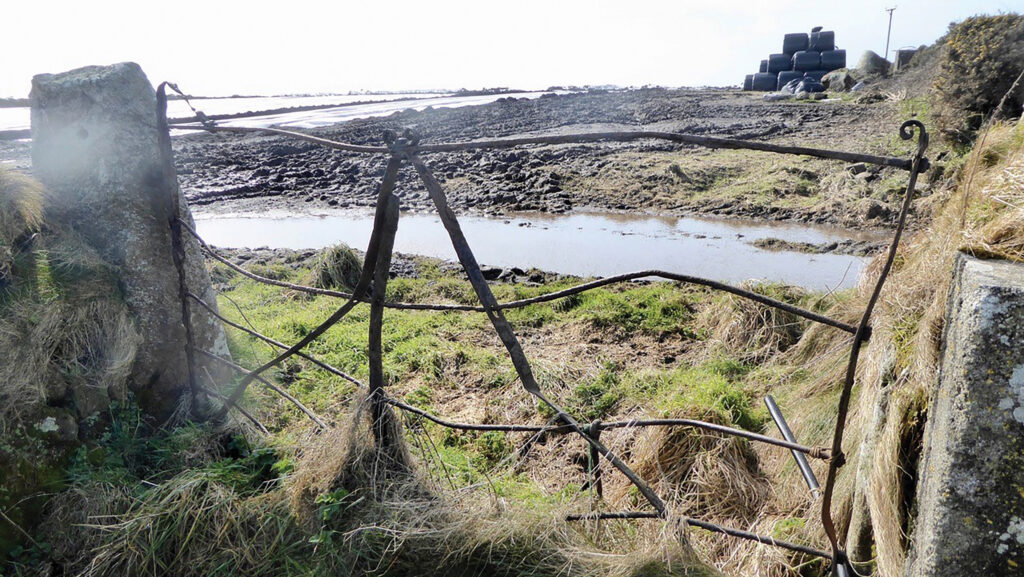
Damaged Penwith Gate © Peter Parkinson
Peter’s interest in the gates even led to the production of a 45-minute film, screened at the Filmhouse Cinema in Newlyn.
Local audiences responded strongly to the revelation that a commonplace farm fixture was part of their heritage.
The gates, he says, are “seen but not appreciated”.
Gate construction
The design was developed before electric welding became available to blacksmiths, as electricity did not reach many rural workshops until the 1930s, after the First World War.
Constructed entirely from round and flat iron or steel bars, some even appear to have been fashioned from recycled wagon wheels.
“The authentic gates were constructed with screw threads and square nuts. No electric welding,” Peter explains.
“Because of the screwed construction, these gates can be carried as separate components, to be assembled and hung on site.
“This is a great advantage on small farms in hilly country, where gate sites are awkward to access,” Peter says.
Structurally, the gate is built around four triangles formed by round bars passing through two diagonal flat bars and a central upright.
The back stile, which carries the hinges, bends over to brace the top rail, forming a fifth triangle.
As agricultural machinery increased in size and needed to pass through wider entrances, the gates got bigger, but the design reached its practical limit at around 12ft in width.
Some narrower gates were later extended by welding on additional sections.
Distinguishing feature
One of the distinguishing features of the Penwith Gate is the presence of four small scrolls along the top rail.
“They serve absolutely no practical purpose whatever.
“They are hardly there to please the livestock,” Peter says.
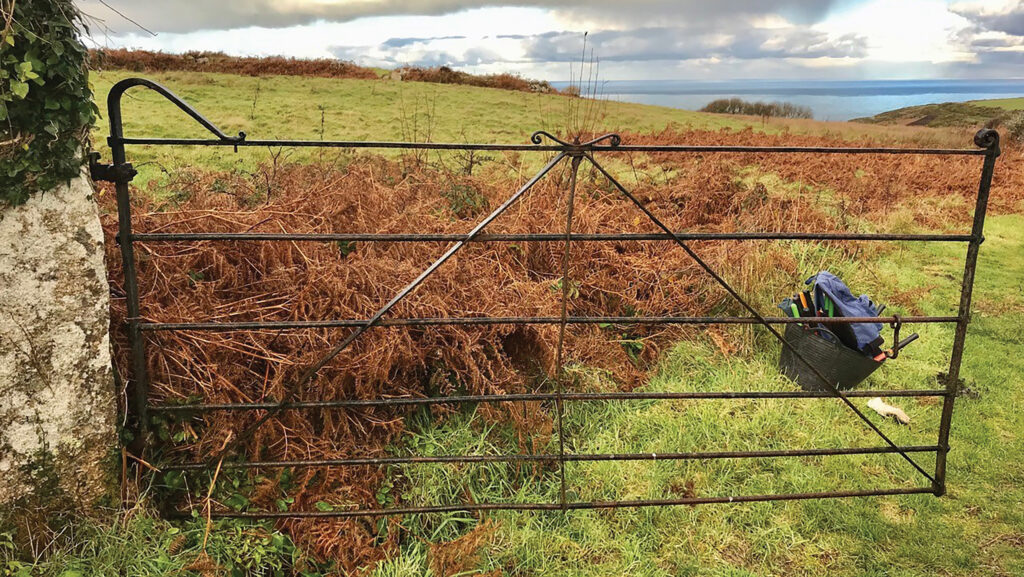
Four small scrolls along the top rail © Peter Parkinson
He believes the scrolls reflect blacksmithing pride rather than agricultural necessity.
“Blacksmiths find it hard not to do something with the plain end of a bar!”
Granite posts
Granite gate posts are another defining feature of Penwith’s farms, owing to the scarcity of timber in the region.
The hinges of traditional Penwith Gates are not usually riveted permanently to the frame.
Instead, the top and bottom hinges are separate components clamped to the back stile with nuts and bolts.
This allows them to be adjusted to align with pre-drilled holes in the granite posts.
While practical, this method has drawbacks.
“Because it is a granite gate post, all too often it is easier to locate the hinges to match existing holes in the post, rather than drill another hole,” Peter says.
In some cases, hinges positioned too close together have caused gates to sag as the back stile bends under the weight.
Consistency
Although individual blacksmiths introduced minor variations, the overall pattern remained consistent across decades.
“It is crucial to appreciate that the Penwith Gate design was followed by numbers of different blacksmiths over many years,” Peter says.
In small areas, clusters of gates with similar details suggest the work of particular smiths.
Today, the Penwith Gate remains embedded in the agricultural landscape of west Cornwall, a functional structure shaped by local materials, farming needs and craft tradition.
Do you know of any gates or styles of other agricultural equipment or infrastructure that is unique to your locality? If so, do tell us about it by emailing albie.matthews@markallengroup.com