Snow has hit at critical time, say farmers
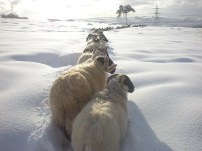
The heaviest November snow falls for over 30 years could not have come at a more critical time for north east sheep farmers.
Many have already been forced to break into low supplies of winter fodder to feed to ewe flocks in the midst of tupping time – but meeting the nutritional needs of ewes is only part of the problem facing flockmasters.
Much needed grazing is now under three feet of snow on some hill farms where feeding ewes with hay and silage risks disrupting normal breeding behaviour.
“We need to feed these sheep but we can’t give them silage ad-lib as we’d normally do in these conditions. It just keeps ewes crammed around the feeders all day and that’s not what we want at tupping time,” said Northumberland sheep farmer Bobby Anderson who runs around 600 Swaledale ewes at Garretshiels near Otterburn.
With fodder stocks “considerably down” this year, it’s feared the onset of severe weather so early in the winter will put even greater pressure on supplies.
“It has caught us all out. We’re short of fodder to start with. We only just managed to get the last of the cattle inside before the snow came but we’ve got lambs outside on hoppers that won’t be gaining any weight in these conditions,” said Mr Anderson.
Lynda and John Heron of Hope Farm, Longframlington, Northumberland, have fields under snow at least three feet deep. Some cattle were being fed outside by tractor – the quad-bike is now unable to cope – because it was too deep to drive them back to the farm.
“We keep trying to get stock nearer home each day but the snow keeps falling. We’re just hoping it doesn’t start blowing because the drifting could be very serious for the stock that’s still outside,” said Lynda.
Andy Fawbert of Hall Farm, Farndale in the heart of the north Yorkshire moors near Kirkbymoorside, said there was about a foot of snow covering all his fields: “We’re coping but we don’t want any more.”
“We were lucky because we’d got all the sheep off the moor just in time but we’re having to feed hay and energy blocks. We don’t want ewes losing condition at tupping time,” said Mr Fawbert.
Further north at Haltwhistle on the Northumberland/Cumbria border hill farmer Alan Wigham said it could be a “very dodgy time” for breeding ewes.
“Our Swaledale ewes have come to the tup in good condition but I can never remember having to put hay and silage out for sheep at this time of the year.
“The main priority for all hill farmers is to keep condition on the ewes. The last thing we want is for all this to effect conception rates and hit us again at lambing time in the spring.”
• Help build a picture of the wintry conditions by uploading your shots of the snow to our gallery or emailing them direct to rachel.jones@rbi.co.uk.