

How breeding index is reducing dairy carbon footprint by 16%
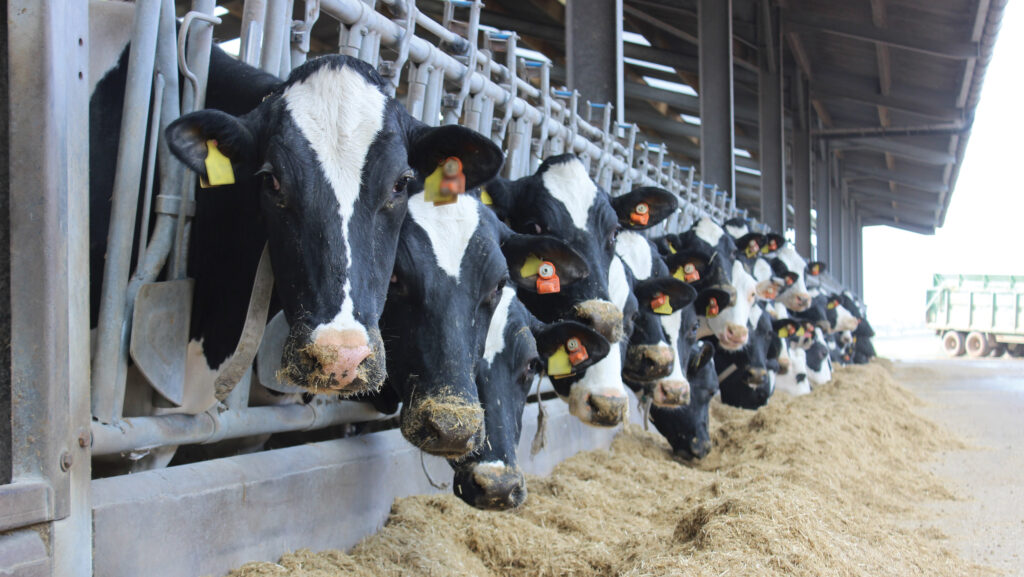 Case-study farmer Adam Sills' 460 Holsteins are bred for efficiency, longevity, health and high solids © Ann Hardy
 The dairy genetic index EnviroCow has delivered environmental benefits – across three different farming systems – with a cumulative reduction in carbon footprint of up to 16%, according to a UK study.
A five-year project found that targeted selection for the index was linked to a lower carbon footprint, potentially reflecting the improved feed efficiency.
Other benefits included better lifespan, production and fertility.
These will deliver financial benefits in their own right, but have the added potential to generate increased income if reflected in future payment structures for milk.
See also: Top-ranking bull Lorenzo offers strong health and longevity
The study, commissioned by the AHDB and carried out by Promar International’s principal sustainability consultant, Dr Jordana Rivero, involved 5,000 cows across three dairy herds.
Each herd sold its milk to Arla and was measured for carbon footprint and sustainability indicators through the buyer’s incentive package, FarmAhead.
During that period, strong links were established between actual carbon footprint and EnviroCow across conventional indoor, high-efficiency indoor, and intensive grazing systems.
Jordana describes the results as “really promising” and says more than one-third of the variation in dairy farming’s greenhouse gas emissions could be explained by genetics.
She also found that EnviroCow, specifically, was the genetic index most strongly associated with a reduction in emissions.
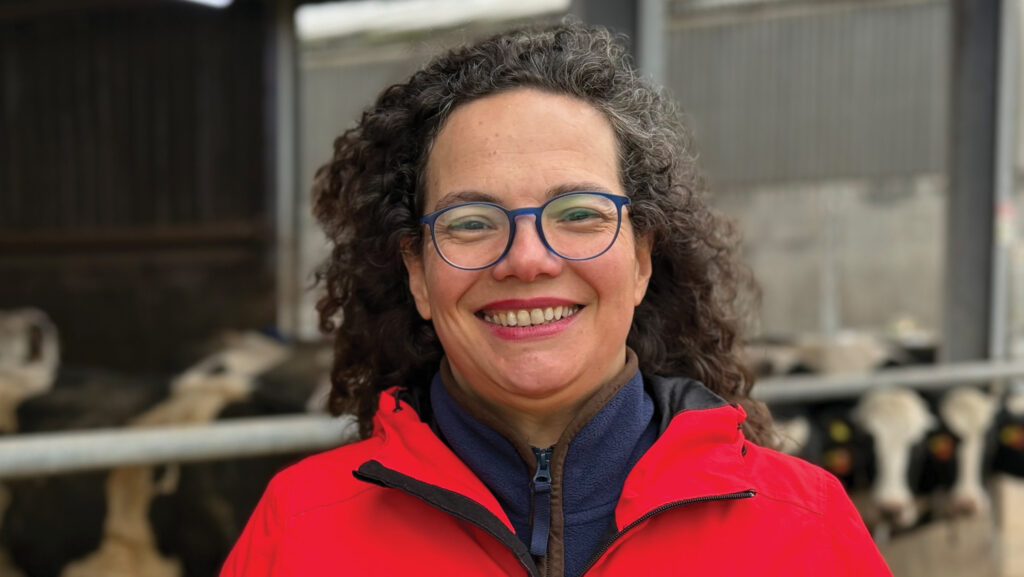
Jordana Rivero © Ann Hardy
It was responsible for more than 37% of the variation in total emissions intensity in the herds taking part. Roughly half of this was due to enteric emissions.
The study demonstrates that a higher EnviroCow score reduces emissions intensity on dairy farms, as had been planned and predicted when the index was developed by the AHDB about five years ago.
Quantifying this benefit, Jordana says: “By prioritising bulls with high [positive] EnviroCow values, herds can achieve cumulative reductions in carbon footprint of 8.5% to 16% over five years of targeted selection.”
(This progress assumed an average emissions intensity of about 1.01kg carbon dioxide equivalent for every kilogram of fat- and protein-corrected milk.)
However, Jordana also observes that other breeding indexes are strongly associated with reductions in carbon emissions, most notably the Profitable Lifetime Index (£PLI).
This index explains almost as much variation as EnviroCow, at just under 30%. “£PLI and EnviroCow are highly correlated, so the national herd has been moving in the right direction,” she adds.
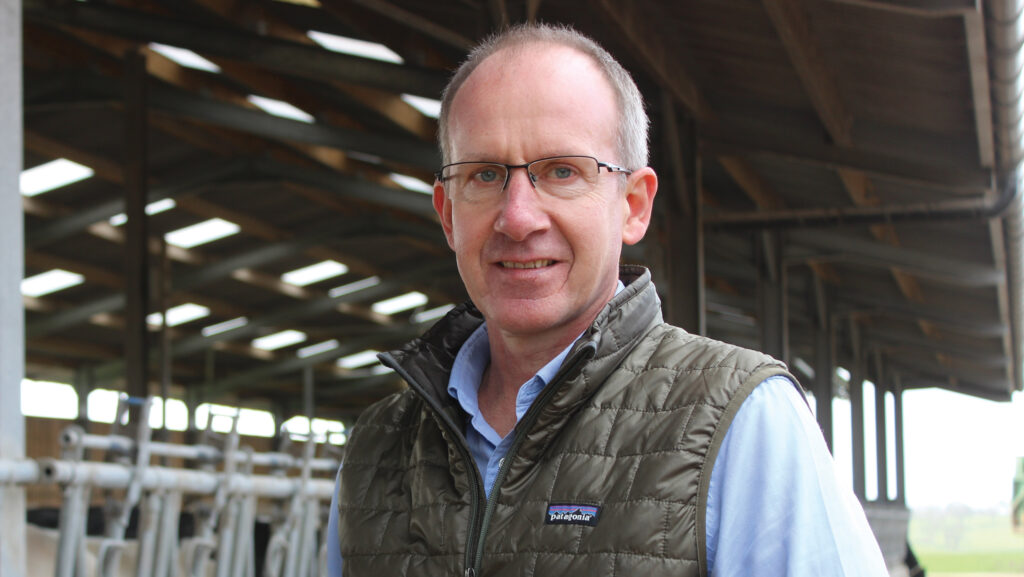
Marco Winter © Ann Hardy
AHDB head of animal genetics Marco Winter says the results show the importance of breeding as the next step in tackling greenhouse gas emissions.
Farmers have made substantial improvements in £PLI over the past 20 years. As an economic index, it was known to improve efficiency, but was also predicted to have a beneficial impact on emissions.
“EnviroCow was developed specifically to reduce emissions intensity. Our estimates are that even under current selection policies, farmers are improving emission intensity by about 5% every five years,” he explains.
However, by specifically selecting for an environmental index, he says this can be improved.
“It means the industry is on the right track, and dairy producers should be mindful of including EnviroCow as part of their breeding strategy.
“The link between AHDB’s EnviroCow and carbon footprint isn’t perfect, but, like all genetic improvement, the benefits come at little additional cost to the farm, yet can deliver significant benefits.
“Crucially, genetic changes are permanent and accumulate over time,” says Marco.
“Our recommendation remains that producers should keep their focus on breeding for profit indexes like £PLI, but strive to improve EnviroCow alongside.
“It is important not to focus solely on emissions as a trait, because a breeding policy should be well-rounded and other important traits must also be considered.”
Explore more / Transition
During the series we follow our group of 16 Transition Farmers through the challenges and opportunities as they seek to improve their farm businesses.
Transition is an independent editorial initiative supported by our UK-wide network of partners, who have made it possible to bring you this series.
Visit the Transition content hub to find out more.
