

Why cutting dairy carbon footprint starts in the calf shed
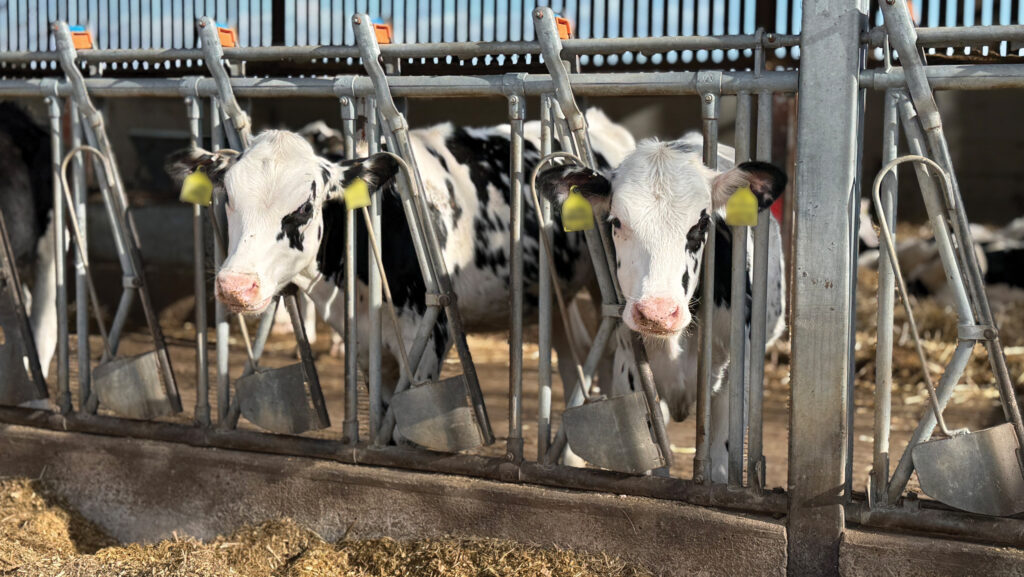 Weaned heifers at Two Pools Farm © Rhian Price
 For one south-west dairy, cutting carbon is about producing milk more efficiently, starting with the next generation of cows.
Two Pools Farm, near Bristol, is one of 50 dairy farms taking part in the AHDB’s three-year UK Dairy Carbon Network project, which is led by the Agri-Food and Biosciences Institute and funded by Defra.
The aim for farm owners Mike and Chris King is to reduce methane emissions by breeding healthy, productive replacements.
See also: Feeding calves colostrum: Focus on quality over quantity
Mike was keen to get involved in the project to understand which mitigation strategies could help lower emissions on the farm and quantify the results.
Carbon audits are already a requirement of their aligned contract with Muller/M&S.
He believes having robust farm data will be crucial in helping the business respond to – and, where necessary, challenge – future requirements that may prove impractical to implement.
Farm facts Two Pools Farm, near Bristol
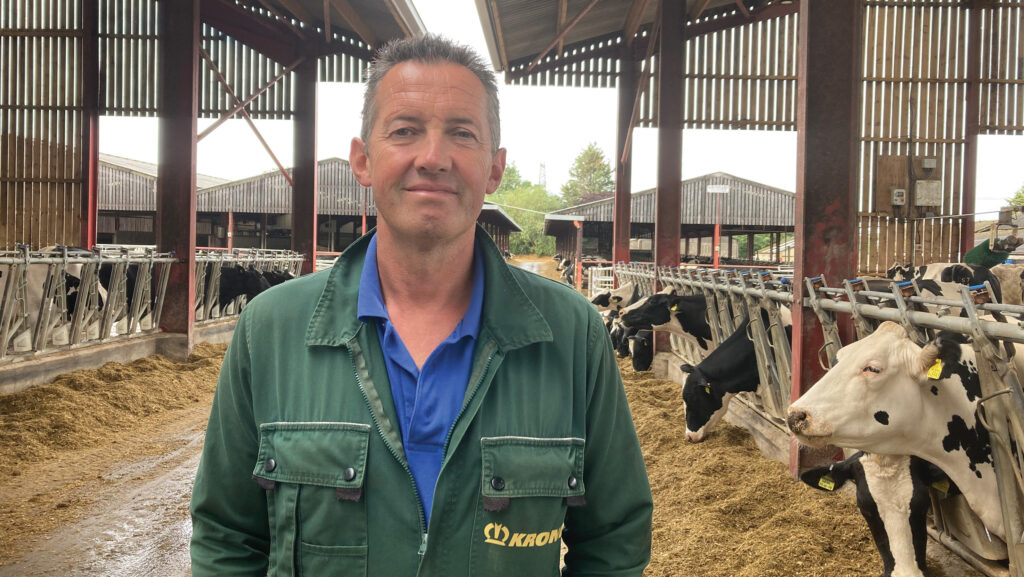
Mike King © AHDB
- Farming 725ha
- Milking 815 cows
- Yielding 14,062 litres at 3.49% protein and 4.18% butterfat (1,086kg of milk solids/lactation)
- Somatic cell count 110,000 cells/ml and Bactoscan of 12
- Three-times-a-day milking through a 32-point rapid exit parlour
- Pregnancy rate: 30%
- Conception rate: 35-45%
Growth with efficiency in mind
Over the next five years, the plan is to expand from 815 to 1,000 cows in milk, while increasing output a cow by 10% without compromising health and fertility.
But Mike recognises that youngstock are the foundation to improving business performance and reducing emissions.
“If we can do the best job possible with calves, and lower losses and improve growth rates, that will reduce our carbon footprint,” says Mike.
“We are hot on data, and if we look at underproducing heifers in their first lactation, it comes back to issues as calves.”
Calf feeding protocols at Two Pools
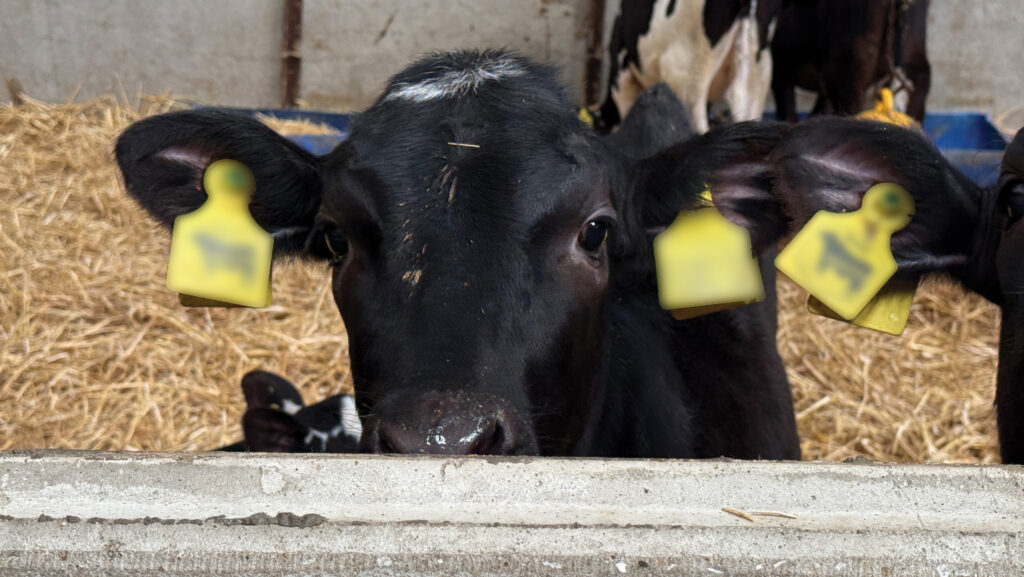
Two colostrum feeds are given on day one © Rhian Price
Day 1: Two feeds of colostrum (measuring more than 24% on a Brix refractometer). First 3 litres within two hours of birth, followed by further 3 litres within six hours
Days 3-5: 2 litres of transition milk fed once daily, alongside up to 6 litres of milk replacer
Day 5 until weaning at 66 days: Milk replacer fed via automatic feeders. Calves receive up to 10 litres/day across five feeds.
Data-driven youngstock performance
Youngstock manager Julia Townsend works closely with herd manager Jared Kloke to ensure heifers calve at 22-23 months – a key target for lifetime efficiency.
Regular weighing is critical to ensuring heifers are on track to reach this milestone.
They weigh animals three times and have clear targets:
- At birth – calves average 45-48kg
- At weaning – 90-110kg
- Pre-breeding (12 months) – above 400kg.
A rigorous vaccination programme is helping achieve low antibiotics use of 9mg/population-corrected unit, and youngstock mortality from birth to calving (excluding dead on arrival) is kept below 1.5%.
Calves are vaccinated against pneumonia and ringworm, and cows receive a coronavirus and rotavirus vaccine.
Management of ongoing disease challenges
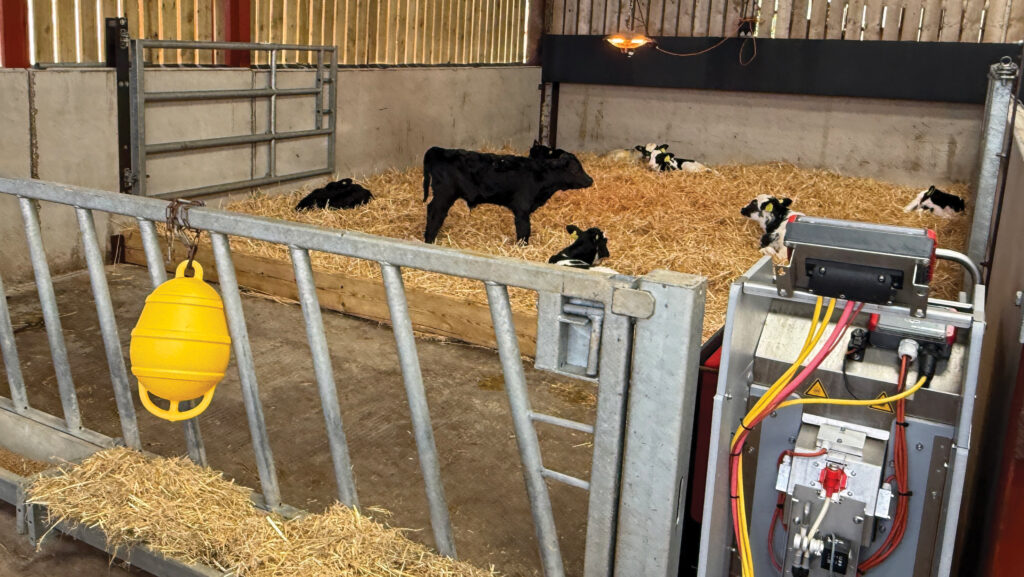
Calves will be paired for two weeks before moving into groups © Rhian Price
Despite robust housing, health, and feeding protocols, the calf team have been dealing with an ongoing cryptosporidium outbreak.
Since last October, cows have been vaccinated against crypto, and calves have been receiving transition milk for five days before moving to milk powder.
However, issues have persisted with calves still scouring and reluctant to drink, admits Julia. A further complication is that calves have been developing secondary pneumonia.
M&S has stipulated that they can only use category D antibiotics and, where evidence is gained, category C. This has prompted the team to adopt lung scanning with George Vets to assess treatment success.
Julia is also introducing changes to grouping to reduce disease pressure.
Calves are currently paired at day one and move into groups at five days of age, but they will now be paired for the first two weeks of life before moving into groups.
As part of the project, the farm is also exploring the use of ear tags to monitor temperature changes to improve early disease detection. It hopes to start genomic testing of heifers to enhance breeding decisions.
Pneumonia and the role of lung scanning
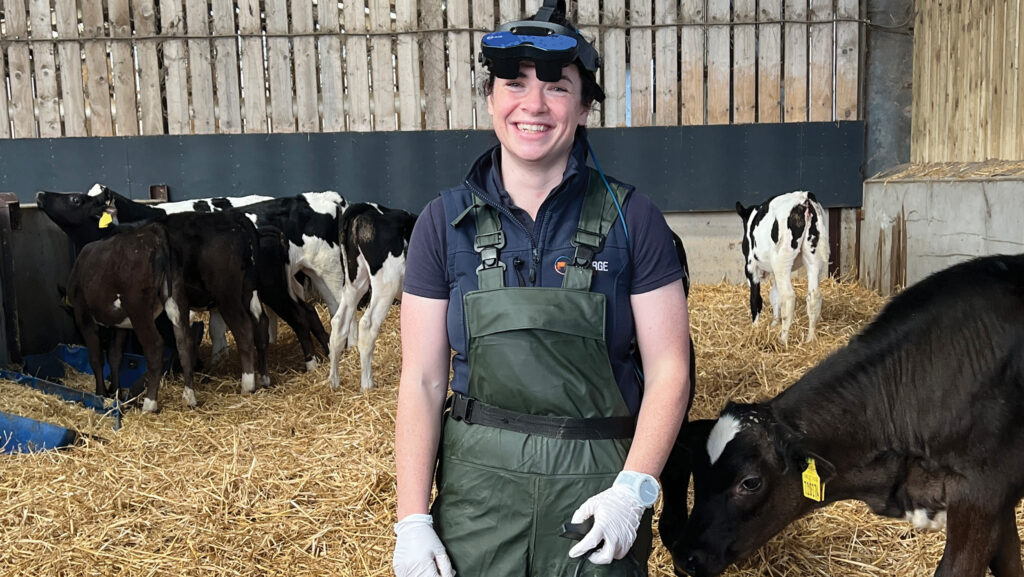
Zoe Williams © AHDB
Pneumonia is a leading cause of antimicrobial use in calves and its long-term impact on performance is substantial, explains vet Zoe Williams from George Vets.
Treatment costs £30-£80/case, but the hidden costs are often greater.
Affected animals will have issues for the rest of their life, including a two-week delay to first calving, a 4% reduction in first-lactation yield and an 8% penalty in second lactation.
There are also wider sustainability implications. Animals with pneumonia often have reduced life expectancy, and many subclinical cases of pneumonia are missed.
“For every three clinical cases treated, it is estimated another 10 calves have underlying issues that go undetected,” says Zoe.
“Early detection is key to preventing long-term damage. If you’re not quick off the mark, treatments will be less effective.”
Using a stethoscope to observe lung consolidation is only 60% sensitive, and detection on farms is variable and highly dependent on the rearer’s ability to detect symptoms, she adds.
Thoracic lung scanning can identify pneumonia much sooner. Vets use a portable ultrasound device to identify consolidation up to one week before clinical symptoms present.
Calves can be scanned from two to four weeks to about six to nine months of age – although the technique is less effective on larger calves, as the probe can only see 8-10cm into the lung.
“Work out when it is happening on your farm and scan two to three weeks before you’re seeing clinical signs,” Zoe advises.
Benefits of scanning
- Treat animals more quickly
- Understand the true level of pneumonia
- See if improvements/treatments have worked
- Identify seasonal trends in disease
- Identify affected animals so they can be monitored, and breeding decisions made
Three tips for preventing pneumonia
- Manage stocking density: give each calf 3sq m
- Minimise mixing of age groups to no more than a two-week difference
- Use calf coats to prevent calves from getting cold
Source: Zoe Williams, George Vets
Tackling cryptosporidiosis through better cleaning
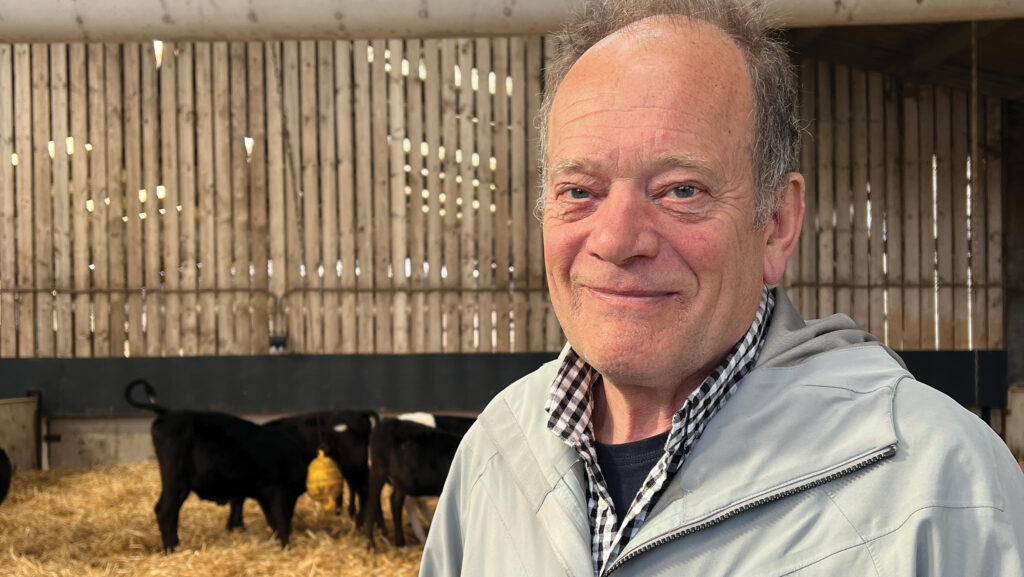
Jamie Robertson © AHDB
To tackle cryptosporidiosis and stop relying on the oral solution Halocur to treat and prevent disease, farmers must ramp up cleaning efforts inside calving pens and calf housing.
Housing and ventilation expert Jamie Robertson says: “The way farmers clean really doesn’t work. The way to get rid of crypto is to remove all organic material.”
He notes that no improvements could be made to the cleaning process at Two Pools Farm, but adds that many farms leave behind organic matter that chemically inactivates the disinfectant.
He says that once all organic matter is removed, sheds should be steam-cleaned at above 60C.
Then, the right disinfectant at the right dosage rate should be applied – only certain disinfectants are effective at killing crypto, he warns.
Jamie says hygiene is a critical part of good calf housing, alongside ventilation, which helps keep housing dry.
“If an environment is damp, calves will feel colder and it will increase disease risk. We want a minimum of four air changes an hour.”
To achieve adequate airflow, he advises that the inlet area (sidewalls) should be twice the outlet area (roof ridge).
Read more advice on creating an optimal calf housing environment on the AHDB website.
Mike King, Zoe Williams and Jamie Robertson were speaking at an AHDB open day on 11 March. The AHDB is part of the UK Dairy Carbon Network.
Explore more / Transition
During the series we follow our group of 16 Transition Farmers through the challenges and opportunities as they seek to improve their farm businesses.
Transition is an independent editorial initiative supported by our UK-wide network of partners, who have made it possible to bring you this series.
Visit the Transition content hub to find out more.
