

FW Awards: Meet the 2026 Sheep Farmer of the Year finalists
 Neil Brown, Ben Hughes and Alwyn Phillips © Richard Stanton, Hugh Nutt, Ioan Said Photography
 This year’s finalists run diverse systems, but all recognise the value of good grassland management and healthy stock.
See also: FW Awards: Meet the 2026 Poultry Farmer of the Year finalists
The finalists
- Neil Brown, New House Farm, Shropshire
- Ben Hughes, Grove Farm, Hampshire
- Alwyn Phillips, Penygelli, Gwynedd
The judges
- Moira Gallagher – A farm consultant with a specialist interest in sheep production, Moira is based at SAC Consulting’s St Boswell’s office.
- Tom Bird – FW’s Sheep Farmer of the Year 2025, Tom finishes lambs from his flock of 2,300 North Country Mules in Derbyshire.
- Judith Tooth – Judith is Farmer’s Weekly’s Livestock editor with a particular interest in the role of livestock in sustainable farming systems.
Neil Brown, New House Farm, Shropshire
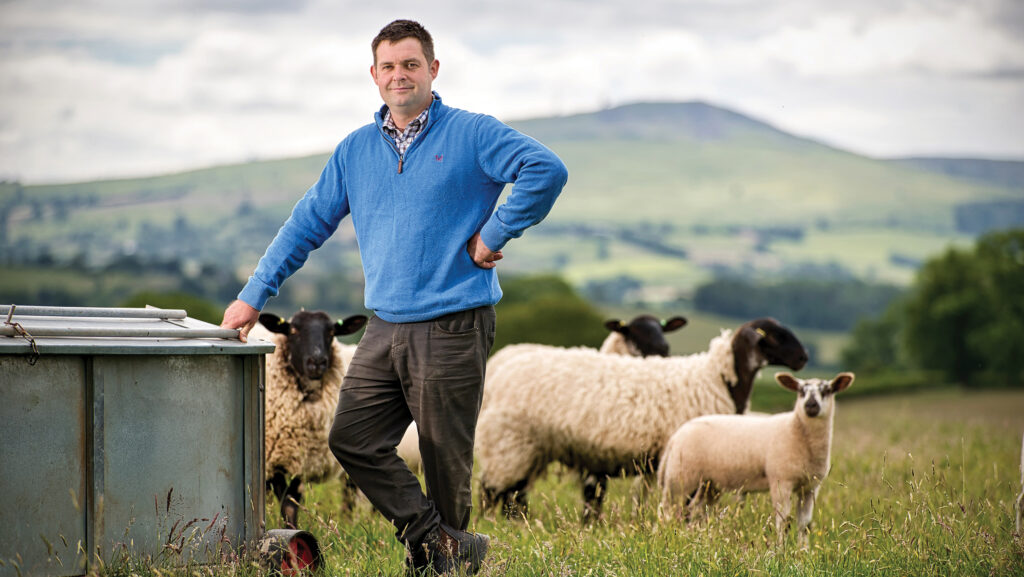
Neil Brown © Richard Stanton
A strong family team is the foundation for success at New House Farm where third-generation farmer Neil Brown farms with his dad, Lewis, his mum, Ann, and his wife, Emily.
Together, they run a flock of North Country Mules, bought as ewe lambs at Kendal market. These lamb as hoggs to home-bred Blue Texel tups for ease of lambing.
The following year, they are put to Suffolk tups, sourced from Bentley Suffolks, to produce crossbred flock replacements. Neil selects rams, bred for forage-based systems, using estimated breeding values for maternal traits and good muscle and fat depth.
Data-led decision making
The resulting ewe lambs are also put to a Blue Texel tup. Thereafter, they are tupped with terminal sires from the RamCompare project.
“It’s an opportunity to try different breeds of ram,” says Neil, who last year used two Hampshires, two MeatLincs, one Shropshire and an Aberblack, along with one of the farm’s Blue Texels.
Data on tupping and lambing, eight-week weights and mortality have been collected and will be added to carcass data to give comparative results.
The crossbred flock lambs from 15 March – the first batch indoors – and the North Country Mules two weeks later.
Student vets help during this period, collecting data for the RamCompare project and helping to make detailed records of lambing losses to inform future prevention strategies.
New House Farm was an AHDB strategic beef and sheep farm from 2019 to 2023, giving Neil valuable access to advice and support.
With mentoring from consultant Marc Jones, he introduced rotational grazing, starting with a 16ha field divided into eight paddocks for 200 ewes and lambs on three- to four-day moves. This system has since been replicated across other parts of the farm.
Herbal leys have been established via the Sustainable Farming Incentive, with full reseeds more successful than direct drilling into existing pasture.
Imported chicken manure is used in preference to artificial fertiliser for mowing fields, while farmyard manure from the beef enterprise goes on grazing ground.
Neil also had help from livestock data specialist Matthew Blyth on the use of electronic identification and has continued to benefit from his advice on interpreting flock data. Ewe body condition score and lamb growth rates are the current areas of focus.
Recent droughts have resulted in higher consumption of creep feed to finish all lambs by the end of October. This year, 400 had been sold by mid-July, averaging 43-44kg and achieving U and R grades at 3L and 3H fat class.
Flock health
As a practising farm vet, Emily is a huge asset and it’s no surprise Neil takes a preventive approach to flock health. No iceberg diseases are present in the flocks, confirmed by testing a sample of ewes each year.
All stock are vaccinated against clostridial diseases and pasteurellosis. Worm burdens and wormer resistance are monitored using the Fecpak faecal egg count system, alongside testing for liver fluke, with treatment when needed.
The farm is in a project area blood sampling for scab, with all ewes in the neighbourhood dipped annually to prevent outbreaks.
Ewes receive a bolus pre-tupping to supply selenium, copper and cobalt, and metabolic profiling is done pre-lambing to check nutritional status.
Future plans
More reseeding – this time with red clover-rich mixes – and a new sheep handling system are next on the cards.
Enhancing and monitoring farm biodiversity is also a priority, with new ponds, in-pasture tree planting and fenced-off watercourses among recent projects.
Neil also recently joined Clee View Farmers, a group linked to the Farming in Protected Landscapes programme in the Shropshire Hills.
The numbers
- 2% Barren rate
- 191% Scanning rate for ewes
- 11% Lamb losses from scanning to sale
- 1 Solar-powered pump to improve water supply at grass
- 15 Cost a head to winter sheep away (£)
Farm facts
- 121ha owned, all grass
- 800 breeding North Country Mules and Suffolk-crosses, plus 30 pedigree Blue Texels
- Finished lambs mostly sold deadweight to ABP, plus Ludlow market
- Former AHDB strategic beef and sheep farm
- 35 Simmental-cross suckler cows
- Bulls finished intensively at 12-14 months; heifers finished at 18-22 months
- Rotational grazing
What the judges liked
- A strong family partnership with a team approach
- Good at forward planning the year ahead
- Lambing losses recorded then used to inform future prevention strategies
- Willingness to take part in initiatives to improve business efficiency
- Open-minded attitude to learn from others
- Keen interest in improving farm biodiversity and monitoring progress
What the judges say
Neil and his family make a great team. They support each other and are open to developing their skills to progress the farm business, with a focus on strong, healthy sheep and improved grassland management.
Ben Hughes, Grove Farm, Hampshire
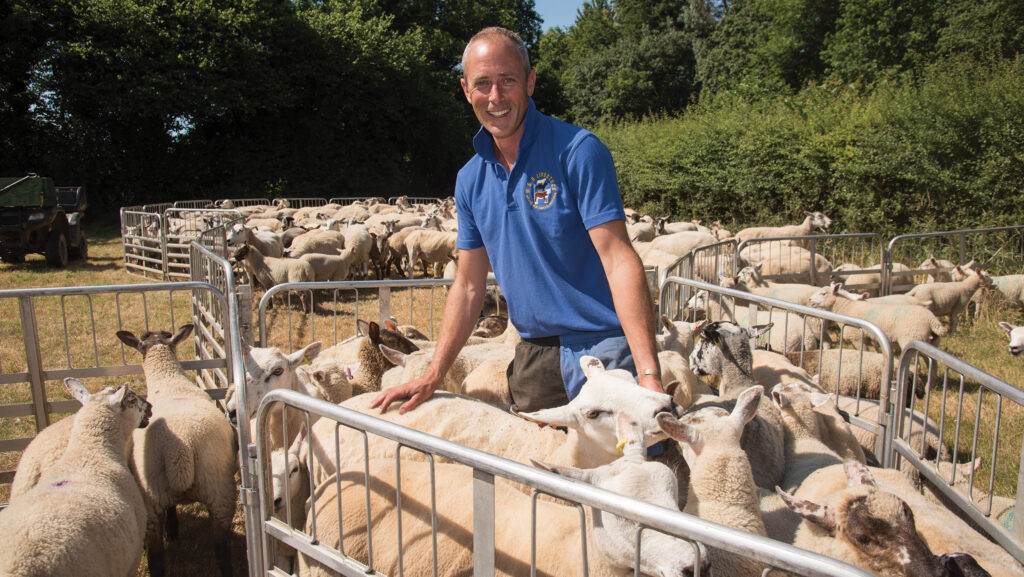
Ben Hughes © Hugh Nutt
Planning, communication and performance monitoring are top priorities for head shepherd Ben Hughes.
As a new entrant, Ben cut his teeth in dairy farming but transferred and developed his skillset to build a dynamic sheep enterprise.
There are several strands to the operation, which Ben has run for the Robinson Farm Partnership, based near Alresford, since 2022.
First is a mobile flock of 1,200 breeding ewes, which has more than tripled in size in four years, with lambs taken to finishing weight.
Alongside this, he contract-shepherds flocks of 800 Lleyns and 420 Romney/Highlanders on share-farming agreements and finishes an additional 3,500 lambs for other customers.
Opportunities
He meets daily with Ben Robinson to discuss management and longer-term plans. “Ben challenges me. I love being pushed, I thrive under pressure,” he says.
However, they recognised when extra hands were needed, and employed under-shepherd Nathan Parker when the home flock reached 1,000-head.
The setup is complex, involving about 30 landowners. Arable land in Sustainable Farming Initiative (SFI) agreements provides summer grazing on herbal leys and wildflower mixes, then SFI winter cover crops feed ewes and ewe lambs and finishing lambs graze turnips, forage rape and dairy grass all winter.
“We paddock graze keenly, constantly moving fencing, sheep and mobile water troughs,” says Ben.
To help logistics, they run three mobile sheep handling systems – 90% of the sheep are behind electric fencing at any one time.
At Grove Farm, where the main flock lambs, any surplus grass in spring or summer is cut for clamp silage or baled for single-bearing ewes.
Five weeks before lambing, ewes transition to a ration of ad-lib clamp silage plus 500g ewe rolls a head a day for triplet-bearing ewes and 400g for twins (none for singles). Silage quality is analysed to finetune rations.
Flock health
Detailed protocols for lambing, twin lamb disease, ewes with little or no milk, difficult lambing, watery mouth, and cleaning of pens set high standards of care in the lambing shed.
Mineral-lick lids are repurposed as lambing pen boards to record key lambing data and flag any issues using a system of colour-coded tape.
This information is also recorded in a lambing notebook. Wet adoption is used to put triplet lambs on single-bearing ewes – 173 this season, with none reared artificially, saving an estimated £11,764 in milk powder and labour.
Flock health is driven by a preventive strategy, helped by membership of a flock health club. Vaccinations are given to protect against lameness, clostridial diseases and bluetongue, while monthly faecal egg counts determine worming decisions.
Bought-in flock replacements – 200 a year, plus rams – are vaccinated, wormed, dipped, isolated and monitored for six weeks.
Home-bred North Country Mule cross Texel ewe lambs are kept for breeding if they weigh more than 42kg at tupping and are “sound in all respects”. They are put to a Beltex or Southdown ram for ease of lambing.
Performance
Early challenges of poor fertility and lamb growth rates have been addressed by refining grassland management, such as using fresh grass analysis to check metabolisable energy and protein content, and identifying early signs of poor-performing animals.
Ben records all aspects of flock management using the Flockwatch app and monitors and reviews performance against previous years’ figures.
Lambs are weighed monthly from five weeks of age, and daily liveweight gain and killsheet data are scrutinised to inform tweaks in management to maximise returns.
Benchmarking via the Tesco Sustainable Lamb Group, which he joined early this year, has given him the opportunity to compare performance and lamb quality with other producers in the group, to drive further improvements.
The numbers
- 194% Average scanning rate across two lambing blocks
- 3% Barren rate
- 40 Premium paid for lamb sold through Tesco Sustainable Lamb Group (p/kg)
- 5.74 Average lamb birthweight (kg)
- 4.7% Losses from scanning to weaning
Farm facts
- Grazing on 259ha herbal leys, 263ha rented permanent pasture and 718ha winter cover crops
- Mobile flock of 1,200 North Country Mules
- Using Texel and Charollais tups
- Lambing mainly indoors in March and April
- Contract shepherding two further flocks
- Also finishing 3,500 lambs
- Finished lambs sold to mainly to ABP (Tesco)
What the judges liked
- A system designed to fit the resources available
- Good collaboration and communication with neighbouring farmers with grazing land
- Open-minded approach to new ideas
- A firm grip on the costs that can be controlled
- Responds well to challenges
- Well organised and high attention to detail in husbandry, nutrition and grassland management
What the judges say
Ben has developed a low-cost system that matches the resources available. He has developed strong links with local arable farmers and has a strong drive to farm profitably as well as continually improve flock performance.
Alwyn Phillips, Penygelli, Gwynedd
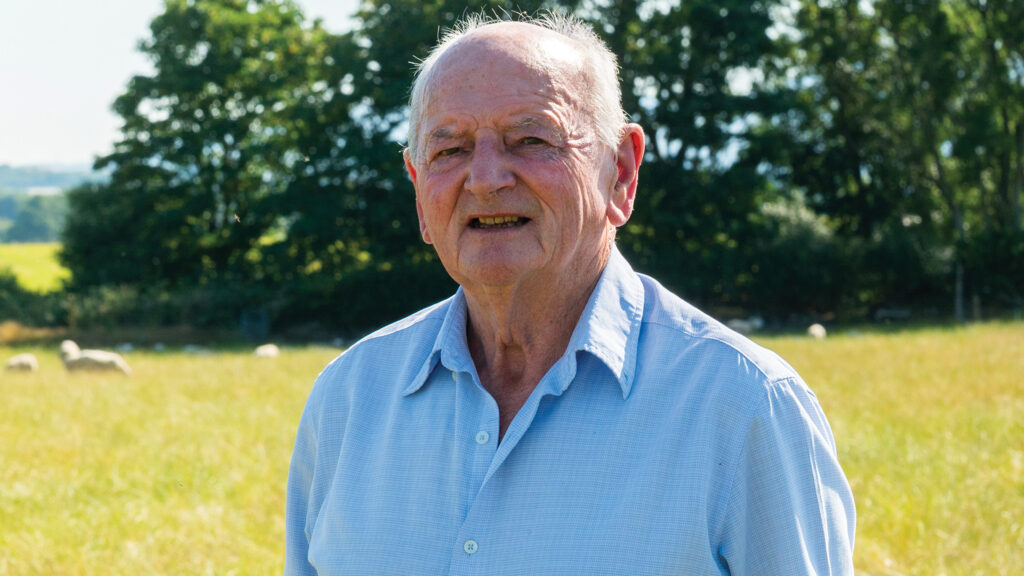
Alwyn Phillips © Ioan Said Photography
Healthy stock, genetic progress and productive grassland are the hallmarks of Alwyn Phillips’ sheep enterprise near Caenarfon. He runs two closed flocks: 200 Poll Dorset ewes lamb in early January, and 200 Texels in April.
The main focus at Penygelli is selling performance-recorded Texel shearling tups off grass to prime lamb producers. “Forget the show world,” says Alywn. “I’m not interested in ‘pedigree’ but in breeding high-quality rams.”
Carbon footprint for the sheep enterprise is low, at 16kg carbon dioxide equivalent/kg deadweight, which he attributes to high health status. “A healthy flock is an efficient flock,” he adds.
Breeding strategy
Lambing indoors simplifies tagging at birth and recording of lambing ease. Alwyn records Texel birthweights, lambing ease, eight-week weights and backfat scan results with Signet Breeding Services.
In addition, the best 20 ram lambs each year are sent for CT scanning – a total of 550 since 1996 – to generate carcass trait data.
DNA samples are also taken, and, for the past two years, genomic evaluations been used to help in selecting for hard-to-measure traits including foot-rot, worm resistance and mastitis.
The top two ram lambs from the CT scans each year are kept as stock rams and have achieved the highest estimated breeding value for muscle in the Texel breed, says Alywn.
“All four of our current stock rams currently rank in the top 10 of the top 100 stock sires list published by the Texel Society.”
Electronic identification has proved “invaluable” for recording data. New this year is a sheep handler with automatic drenching to ensure accurate dosing according to lamb weight.
Alwyn sees this as a key step in minimising development of further anthelmintics resistance, along with regular faecal egg counts.
His Poll Dorset rams sell well as teasers. “It’s good to use a different breed to bring ewes on – and Dorsets are fertile 10 months of the year,” he says.
Lambs from this flock are creep fed to target the new season market and sold deadweight. Finishing them early also frees up grass for the Texels.
Grassland management
Taking part in the Grass Check GB programme from 2018 to 2024 helped Alwyn improve the productivity of his grassland, from 7.3t/ha dry matter a year to 11.5t/ha.
At the same time, he has cut fertiliser inputs to a spring application of 50kg/ha of 27% nitrogen and 7% sulphur, while grass utilisation has increased from 66% to 85% in the past five years.
He continues to record weekly grass growth in each paddock and upload results to Agrinet software.
Sheep graze each paddock for two to three days on a 21- to 30-day rotation depending on time of year. The beauty of the system, says Alwyn, is that the sheep leave higher grazing residuals.
“Your feet are wet with dew in the morning, so the grass is holding moisture. It’s a godsend.”
A weather station on the farm supplies data on rainfall, windspeed, sunshine, and soil temperature, providing an early warning of drought.
Support
At Penygelli with Alwyn is his wife, Janet, who works for the Welsh government and is a director of the Royal Welsh Show, and son Huw, a self-employed agricultural contractor.
Huw does all the farm’s machinery work, as well as looking after the cattle and helping at lambing time.
They recently invested in a ground-source heat pump to provide energy for the farmhouse and office, and a 20kW solar array is planned for one of the shed roofs.
Planning permission has just been granted to extend another shed to give more flexibility for storage and sheep handling.
The numbers
- 38 Semi-permanent grazing paddocks
- 30 Years CT scanning ram lambs for carcass trait data
- 17 Days teasers spend with ewes before tupping
- 10% Soil organic matter
- 6.5 Target soil pH
Farm facts
- 66ha (of which 21ha rented); all grass
- Sandy loam soils
- 200 Poll Dorset ewes and 200 Texel ewes
- 60-70 shearling rams sold annually to commercial flocks
- Rams used in RamCompare project
- 30 Limousin suckler cows, breeding own replacements
- Surplus calves sold as stores at nine-12 months
- Part of AHDB’s Environmental Baselining Project
What the judges liked
- Commercial pedigree sheep on 100% forage system
- Early adopter of performance recording to drive the business
- Clear breeding goals
- Healthy, even tups with high genetic potential for commercial flocks
- Outstanding contribution to sheep industry through involvement in numerous progressive initiatives
- Longstanding appreciation for the importance of good soil health
What the judges say
Alwyn is achieving much on 66ha. His attention to detail in performance recording a wide range of attributes from birth to slaughter continues to drive genetic progress in his flock and produce top-performing commercial tups.
A word from our sponsor
 Dunbia is proud to support this category and celebrate the finalists who are continually improving flock performance and efficiency.
Their dedication to producing high-quality lamb while embracing innovation showcases the resilience of the sheep sector.
Leisia Tudor, agriculture manager, Dunbia