

6 tips on producing grass silage at optimal dry matter
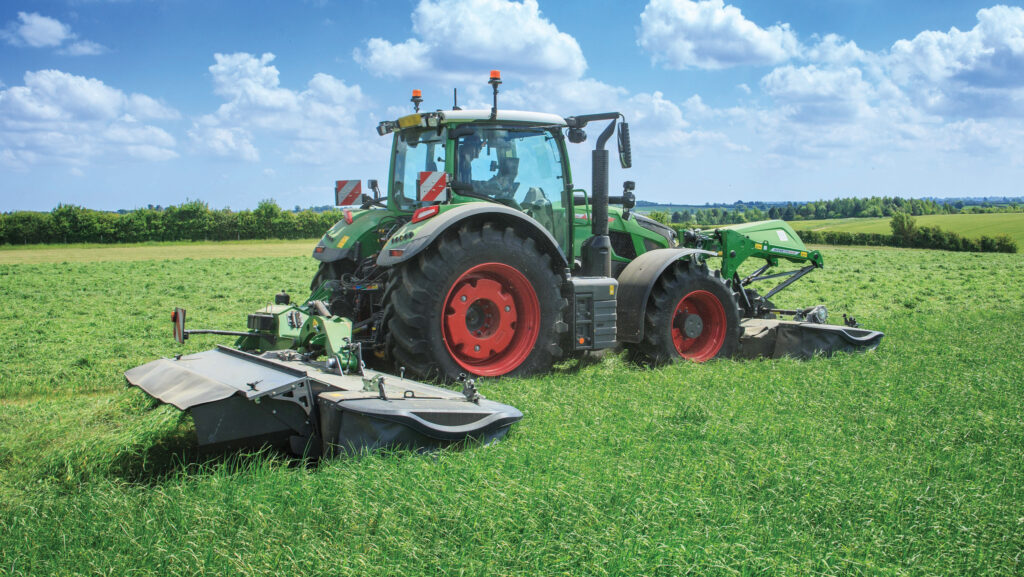 © Tim Scrivener
 Good-quality grass silage is the foundation of the winter ration for livestock, and throughout the year for housed systems.
A key metric for achieving the best intakes and performance from that fodder is dry matter value.
See also: How one dairy is managing forage stocks for weather extremes
There is a big variation in targets for dry matter (DM) in clamp and baled silage; whether these are achieved is often down to simple factors, including weather.
As growers increasingly contend with highly variable conditions, some struggle to produce silage at optimal DM, says independent silage specialist Dr Dave Davies.
“It can be a compromise between DM losses in the field with a long wilt to hit the optimum DM, and more extensive fermentation of a lower DM silage where the wilt was insufficient,” he says.
“Then in very dry weather, when the grass is too dry, we see major problems with poor compaction and aerobic spoilage at feed-out.
“These issues often result in reduced intakes, particularly in dairy cows.”
Dave, of Silage Solutions, advises how farmers can increase their chances of producing good silage, whatever the weather presents this summer.
1. Set dry matter targets
For most grass silage for clamping, set a target DM of 32-34% or, if there is a risk of aerobic spoilage, 30-32%.
Avoid wilting the grass for longer than 24 hours – if the target is not met in that time, start harvesting anyway.
Aim for 40% DM in baled silage from a maximum wilt time of 48 hours.
“Many sheep and beef farmers produce bales at 50-60% DM.
“They will tell me their sheep love it, but if they ran a trial with a lower-DM bale, they would find that sheep will eat more of it,” Dave points out.
2. Shorten wilt time
Many farms, irrespective of the weather, wilt for 24 hours or longer. Instead, they should focus on shortening that wilt time to reduce field losses.
This is because from the moment grass is cut, plant sugars are converted to carbon dioxide and water.
This means that during wilting the average farm can lose upwards of 0.5MJ/kg DM of metabolisable energy (ME).
The slower and longer the wilt, the greater the loss.
A heavy crop will have more grass/unit area when it is cut and spread, and more surface area to dry, which means wilting will be slower than in a light crop.
If the weather has been particularly dry, standing grass can already be 28-30% DM so, in the case of clamp silage, only cut when the machinery for the rest of the job is nearby, especially on a hot day.
The grass should still be spread with the mower using a conditioner.
However, make sure the forage harvester can be in the field within two hours, and the grass rowed up just in front of the harvester, so it has less time to lose sugar.
3. Determine DM before cutting
DM should be determined before cutting, especially in a particularly dry year.
To do this, walk across the field and take snip samples at random, at a height ideally no lower than 7.5cm, replicating what the mower will do.
Chop the samples into 5cm lengths, weigh, put 100g on a plate and place in the microwave.
Set to run for a maximum of two minutes, and only one minute if the grass feels dry.
Check the grass, then continue to microwave, reducing the time between checks until it reaches a point where it is drying (but if overheated, the grass may catch fire).
Weigh, microwave for 10 seconds, then weigh again. If the weight is unchanged, the grass has reached optimum level of dryness.
DM is established according to how much the weight has reduced. For example, if it is down to 30g from 100g, the grass is 30% DM.
“DM determination might seem time consuming, but it is simple and very worthwhile – so much so that I recommend sampling different fields, because there will be variation between them,” says Dave.
If possible, mow the dry field last and pick up first, to even out DM in the clamp.
If the standing grass is wet, DM can be as low as 15%.
In that situation, it is less critical to determine DM before cutting because there is such a long way to go to get it dry, but it is still advantageous.
The risk of having dry grass with the intention of clamping is that it will get over-dry at wilting and cause several issues, including compaction in the clamp and aerobic spoilage at feed-out.
4. Use a tedder
Ground conditions must be good to avoid issues with soil contamination.
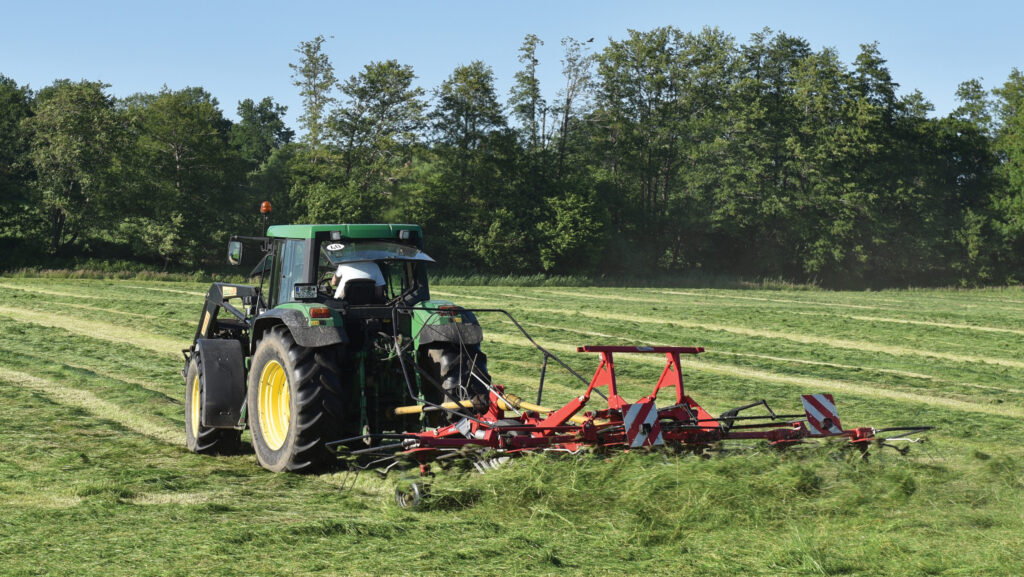
If the crop is wet, it must be spread behind the mower with a conditioner and tedded within two hours of cutting.
This is because the leaf pores are open and losing 100 litres water/hour from every tonne of grass.
They stay open for two hours after mowing; once closed, water loss drops to 20 litres/hour.
It is worth tedding a second time because those losses are not linear and the quicker the cut grass is dried, the sooner the losses will reduce.
© Adobe Stock
“Some farmers leave the cut grass in a tight swath if there is the risk of a shower [thinking] will be less surface area to get wet.
“But in that form, it will in fact soak up rain like a sponge and won’t wilt very quickly either,” says Dave.
“If you think there could be a shower but nonetheless want to take the gamble by cutting, you are better off spreading the grass, because the water will fall through it more quickly.”
5. Adjust protocols for baled silage
Most of the rules for baled silage are the same as for clamp, with the aim of achieving a rapid wilt as quickly as possible.
One important difference is that while grass for the clamp should be down in the field for no more than 24 hours, for baled it can be taken up to 48 hours if needed, to hit the 40% DM target.
A rapid wilt is still best, though, and 35% DM for baled silage after 24 hours will likely be better than 40% after 48 hours.
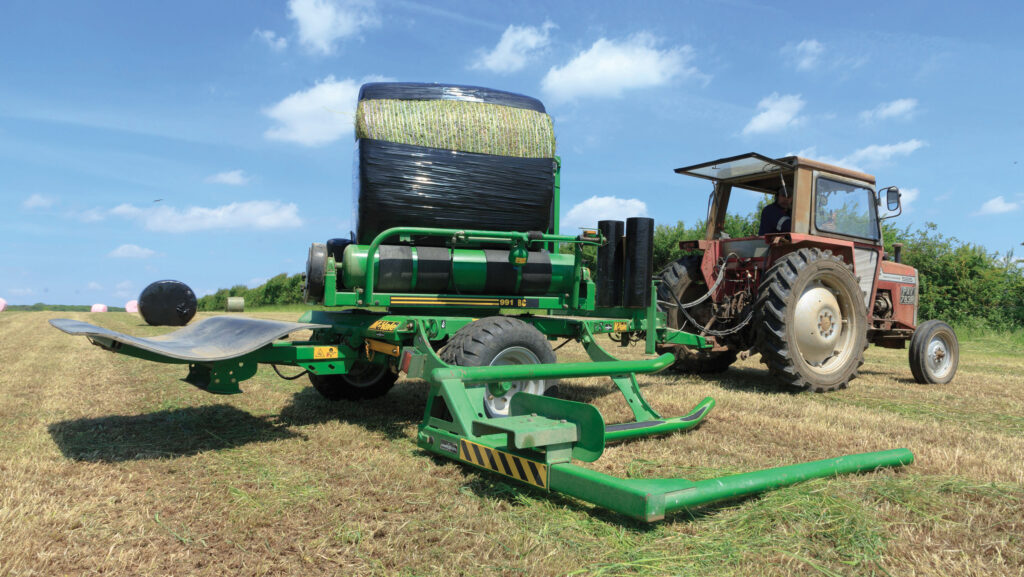
There is a benefit to having drier forage in a bale, as less wrap is needed and bales will maintain their shape better. However, drier than 45% DM and quality will be lost and intake potential reduced.
© Tim Scrivener
A higher DM bale will also create bigger problems if the wrap is punctured because the drier the bale, the further the air will penetrate.
And the drier the stubble, the greater the likelihood of puncturing the wrap when the bale lands in the field from the baler.
6. When the unexpected happens
Whether baling or clamping, events occur such as a machinery breakdown or the contractor failing to arrive on time.
If the forage is at the correct DM in the field, row up to reduce wilting to maintain forage as near as possible to that DM, particularly so for clamp silage.