

Farmer Focus: New arrival prompts fresh look at dairy goals
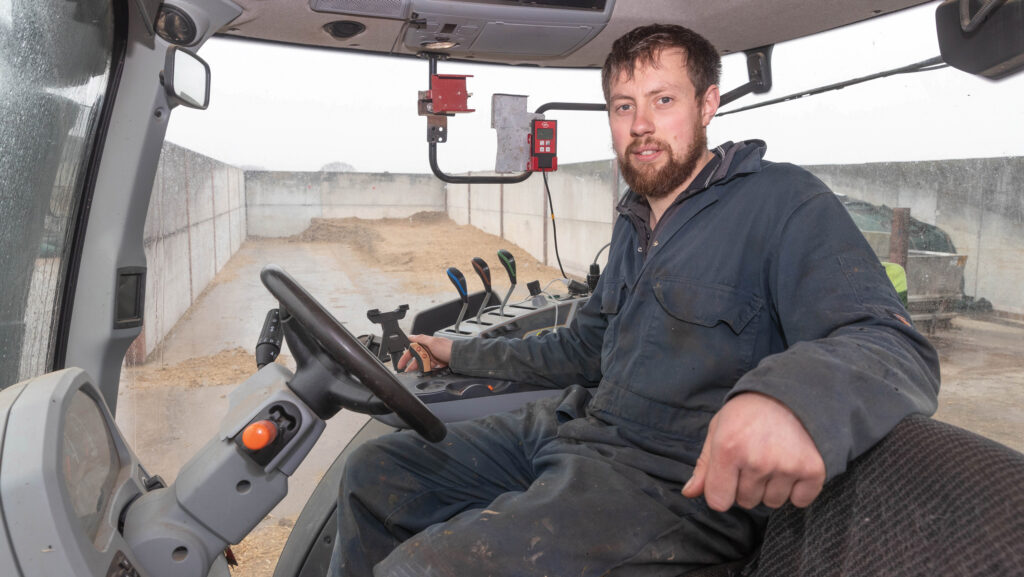 Tom Hildreth © Tim Scrivener
 This time last year I was busy with my building projects, installing slurry channels and starting to think about milking robots.
This year, something – or rather someone – has come along to keep me busy.
My wife, Sophie, gave birth to our daughter last month at Harrogate Hospital.
See also: Pros and cons of 5 dairy calf housing options
About the author

Elsie was born at the end of May, five days early and weighing 7lbs 7oz.
The dairy farmers in us know that she needs her colostrum as soon as possible, and that she got: within half an hour, she was latched on and feeding.
With our new arrival, I have been juggling my time between helping Sophie at home and the farm.
Fortunately, other than second cut and its following slurry application, the workload has been minimal – just the daily routine and the start of our busier calving period.
I am in a fortunate position where Dad is still active, and we have the robots to ease the workload. This has given me a large amount of flexibility.
I can do a couple of hours at the farm and come home at breakfast time for a couple of hours to give Sophie a bit of time to herself, which I think is important for a healthy family relationship.
A couple of months ago, I put in a planning application for my next project, which has been approved.
I thought it was time to upgrade our calf housing.
The current facilities were built when Dad built the farm more than 20 years ago, when we had 40 cows.
At that time, the calves would stay in those pens of five or six until they were several months old.
Now, we barely have the capacity to wean them without having to move several groups into temporary pens during our peak calving period.
The new shed will be 15.2m wide with a central passage, and pens both sides.
One of the pens will be a feed store/milk-mixing area, leaving me nine pens to hold (ideally) five calves each.
Once I have this done, the next job will be to take out the old parlour and calf pens and replace them with a close-up group and calving pens.
My goal is to make every job as easy as it can be, which might show Elsie in a few years that dairying isn’t a bad way to make a living.