

Advice on preventing two types of spoilage in silage clamps
 © Tim Scrivener
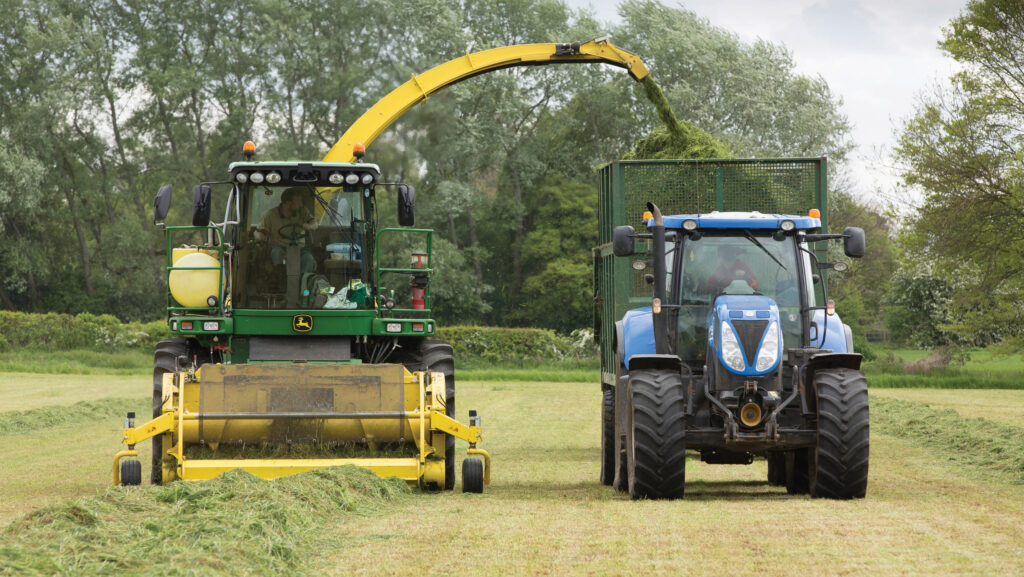
 Good operators are pushing production from forage by making top-quality, high-protein and wetter grass silages, which make it more challenging to prevent secondary fermentation.
Unfortunately, a misunderstanding within the industry is confusing secondary fermentation and aerobic spoilage.
Being able to correctly distinguish between the two is important if farmers are to make the correct management decisions when making grass silage this season, says independent silage specialist Dr Dave Davies of Silage Solutions.
See also: 6 tips on producing grass silage at optimal dry matter
Both cause spoilage and lead to poorer intakes, nutrient losses and, ultimately, lower animal performance.
But secondary fermentation occurs in a sealed clamp – in anaerobic conditions – and it is on the increase as more farmers chase higher forage quality and switch to a multicut silage system.
I see less aerobic spoilage than five years ago because farmers have got good clamp consolidation,” says Dave.
Poor intakes
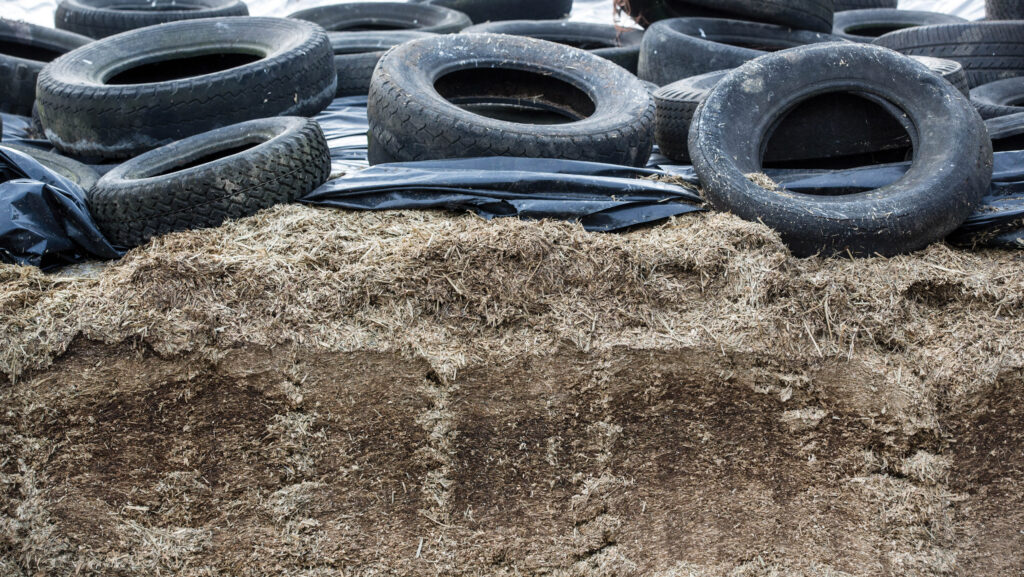
Cutting silage to leave a tight, tidy face prevents air ingress © Tim Scrivener
A secondary fermentation uses the primary fermentation product of lactic acid and ferments this to propanol and propan-1,2-diol, he explains.
“These end products of secondary fermentation have negative effects on protein quality, intakes and animal performance.
“Sometimes this is obvious and sometimes subtle – a total mixed ration could hide problems.
“But once you have got this silage, you can’t do anything with it – just dilute it with more concentrates or another silage to get the intakes.”
About 30 years ago, secondary fermentation was mainly a product of clostridia contamination, brought into the clamp via soil or slurry.
Poor clamp sealing encouraged clostridia action resulting in a thick sludge on top of the clamp.
“Producing butyric acid gives that awful smell of ammonia that makes you cough,” says Dave. “But farmers are doing a better job of consolidating and sealing, and more are using oxygen-barrier plastic as well.”
Choice of silage additive
Today, the risk of slurry contamination comes from cutting grass more frequently if the intervals between slurry spreading and mowing are too narrow (or cuts are taken in autumn).
However, Dave says the current problem has been driven by silage additives.
Although products are designed to help in situations where leafy, high-moisture grass (below 30% dry matter) is being clamped – and also in a wet season – some additives are being sold as “an insurance policy” for aerobic spoilage and contain the wrong type of bacteria for the conditions, he says.
“Secondary fermentation on wet silages is a bigger risk factor than aerobic spoilage. To prevent it, and protect silage feed value, you need to use the right product.
“This only contains homofermentative bacteria such as L plantarum and/or Pediococcus pentosaceus,” he explains.
“The mixed homo/heterofermentative-containing products just don’t do the job and still increase levels of these undesirable secondary fermentation end-products.
“It needs a relook at silage additives, not a switch back to traditional silage making.
“Even on a wet, traditional cut silage, you still have these issues. Multicut is doing a great job – this last step lets it down.”
Aerobic spoilage of silage
Aerobic spoilage, on the other hand, happens as soon as clamps are opened for feeding.
Yeast and mould (rather than aerobic bacteria) already in the clamp are ready to replicate as soon as oxygen gets in.
“Most people mistakenly call it secondary fermentation, but it is aerobic spoilage. The heat mainly comes as a by-product from yeast using sugar and lactic acid.
“It is very visual – usually a white mould – and in a typical silage analysis there will be around 10,000 individual yeasts a gram of fresh silage.
“But in a sample with aerobic spoilage this can rise to 10m/g explains Dave.
Poor consolidation, insufficient sealing and face management at feed-out all contribute; one factor is enough, though he reckons there are generally two involved.
“Consolidation is the main one at the start, as the yeast population grows for the first one to two days.
“As soon as the clamp is opened, air penetrates further into the clamp and the yeast can grow into the clamp, not just on the face,” he says.
Stemmier silage with lower digestibility value and higher neutral detergent fibre is more at risk of spoilage as it affects consolidation, he points out.
In addition, the dead material contains a higher population of yeasts and mould, which are effectively spread through the crop at pick-up.
Aerobic spoilage may be controlled at the clamp, only to be seen in the feed wagon or trough instead.
Mixing this silage with other feeds will spoil them, and there are mycotoxin risks with aerobic silage, which then require a binder.
“Propionic acid in the total mixed ration keeps it stable, but it doesn’t work if sprayed on the clamp face, as it can’t penetrate far enough for control,” he says.
Prevention measures
Aerobic spoilage can be prevented with narrow clamps that take no more than three days to work across the face.
Dave advises that shear grab tines need to be sharp and maintained at the correct length, because over time they wear away and the cutting mechanism has no edge to cut against, he says.
“A shear bucket with a solid bottom does a better job,” he adds.
It is also possible to create a flat, tight face by cutting at just half the depth with a block cutter to get across the clamp more quickly.
“Anyone building a new clamp should think about feeding out in summer and make sure the clamp face is not in the midday sun, and away from the prevailing wind in winter.”