

Advice on supplementing dry cows with magnesium
 © Debbie James
 Magnesium is an essential mineral in preventing milk fever in fresh calvers. When dry cow nutrition is based on a total mixed ration, magnesium can be integrated in the mix.
Unless a cow is off her food or intakes are inadequate, her needs are likely to be met.
See also: Advice on supplementing dry cow minerals without a wagon
However, there can be shortfalls in herds on forage or grass-based diets if these are high in potassium.
Potassium competes with magnesium for absorption by the plant roots and, when levels are excessive, it inhibits magnesium uptake.
This results in grass with a lower concentration of magnesium, advises vet Rhys Hopkins, of ProStock Vets.
High-potassium forages can be one of the biggest challenges in transition cow management if they are used at the wrong time, binding up magnesium when cows need it most.
This puts cattle at risk of milk fever and other metabolic disorders when they are grazing that grass or consuming silage produced from it.
© Debbie James
Sample forages to check magnesium and potassium levels
Potassium has an inhibitory effect in the rumen too – high concentrations will reduce magnesium uptake into the blood stream, which again creates a danger of metabolic disorders.
As a starting point, Rhys advises getting forages sampled. Grazed grass or grass silage is more likely to have high levels of potassium than wholecrop and maize silage.
However, if applications of fertiliser and/or slurry containing potassium are avoided within five weeks or so of the ley being cut or grazed, the risk of high levels is reduced.
“Maize has about one-fifth of the amount of potassium we see in grass silage or fresh grass, and straw about one-tenth.
“That really does make a difference in the dry period in terms of how much magnesium cows will be getting,” he says.
Analyse soils to inform fertiliser needs
Key is to have a good ruminant transition expert or soil scientist who understands the mineral profile of feeds.
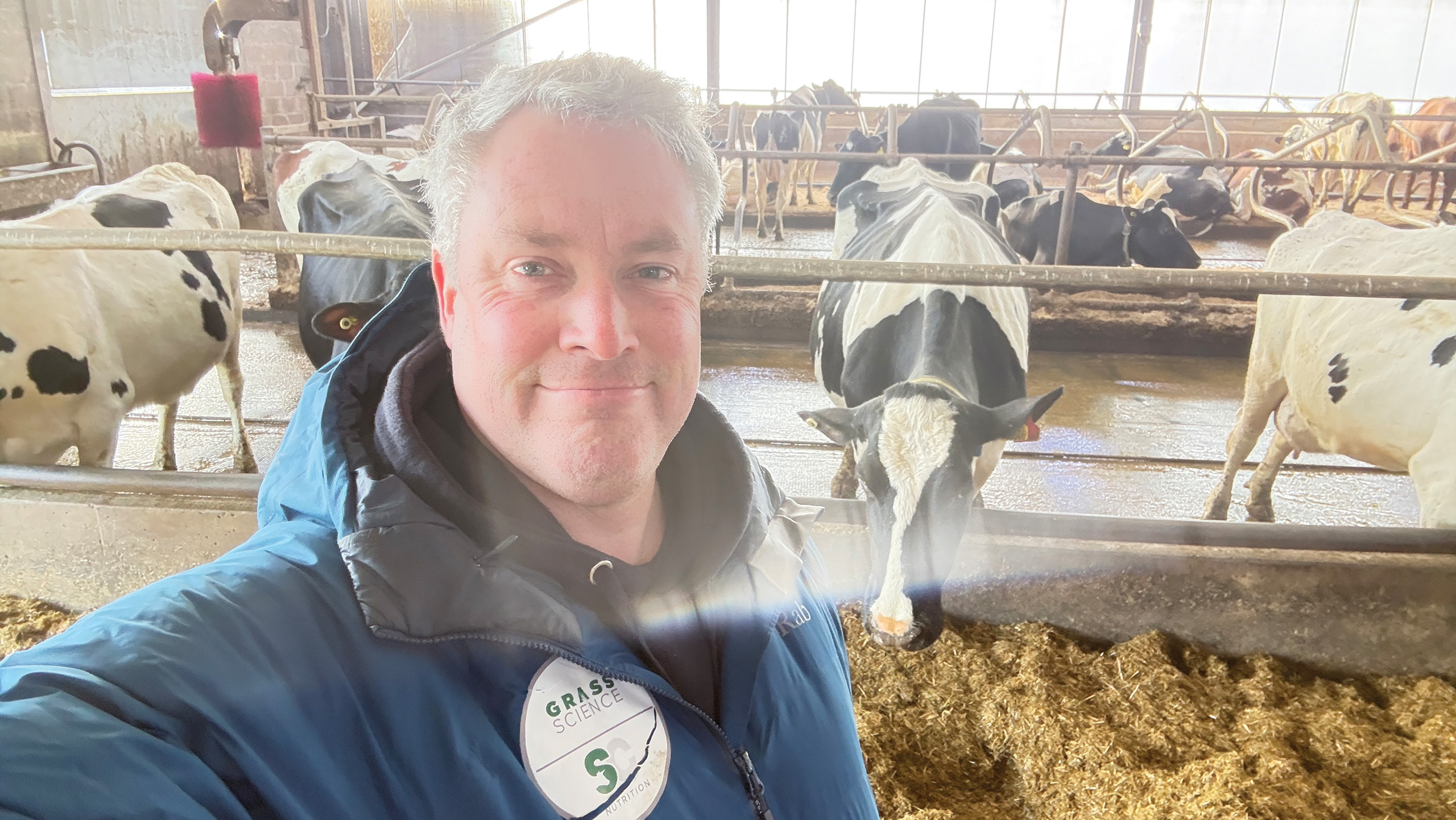
Independent ruminant and plant nutritionist Stephen Caldwell, of Grass Science Seeds and SC Nutrition UK, says it is important to have a baseline soil sample taken between November and February.
It should not be within five weeks of slurry being applied, because slurry is high in potash and would present a false picture of the true levels at other times of the year.
Soil analysis will identify when potassium levels are high; fertiliser applications can then be adjusted accordingly. Using balanced fertilisers that provide adequate levels of magnesium as well as potassium can mitigate the risk of magnesium deficiency, he adds.
He recommends producing different silages for different classes of stock: one that meets the needs of cows in the transition period and another for high-yielding animals.
Stephen Caldwell © Stephen Caldwell
Balance calcium and magnesium before calving
Aiming for dietary cation anion balance (DCAB) in the transition diet is a valuable strategy in preventing metabolic disorders, says Rhys.
DCAB – the balance between cations (potassium and sodium) and anions (chloride and sulphur) – is crucial in the pre-calving period because of the way magnesium interacts with calcium.
He advises keeping dietary calcium levels low and magnesium levels high before calving to help reduce milk fever risk.
“When cows rely on sourcing calcium from their feed, they are less likely to mobilise their own body reserves.
That becomes a problem when their intakes reduce due to calving or transitioning from a dry cow ration to a lactation ration,” he explains.
The feeding of by-products can further complicate the diet, he adds. “A small change can unbalance the mineral profile, and that [balance] is really important in the close-up dry period.”
© Debbie James
Practical pointers for meeting dry cows’ nutritional needs
Independent ruminant and plant nutritionist Stephen Caldwell, of Grass Science Seeds and SC Nutrition UK, advises focusing on the following points to avoid dietary imbalances in the dry cow diet.
1. Tailor the dry cow diet to the individual herd
There is no one-size-fits-all dry cow diet. The differences between herds might in some cases be small, but there is always variation.
This is down to the ratios and volume of forages cows are consuming and the milk output they are producing.
Potential stressors in the system, and whether the breed is more susceptible to milk fever and other metabolic disorders, should also be considered.
2. Diet formulations should not be static
There are factors that can change the diet – for example, some housed herds might turn their far-off cows out to graze grass.
That change can be significant and will affect magnesium levels.
It may also affect other factors such as early lactation milk yield or quality of colostrum, and these need to be considered too, particularly in herds that are averaging 9,500 litres a cow upwards.
3. Consider how magnesium is supplied in the diet
Rumen fill is important in pregnant animals, but so is magnesium.
It can be delivered as part of the mineral blend that goes into a total mixed ration (TMR) and tailored to the needs of the cow at that point in her production cycle.
If the TMR is forage-based, adding an unpalatable ingredient will affect intakes. Magnesium is unlikely to be added directly to a ration, as cows are likely to detect it.
Although the volume needed is very small, it relies on a mixer wagon mixing the amount required for each cow throughout the entire tonnage.
4. Remember magnesium needs vary between breed
Breed of cow must always be considered when assessing magnesium needs, as these can vary hugely between breeds and cow types.
The modern high-yielding cow is less likely to be prone to milk fever because nutritionists are basing diets on actual forage analysis.
5. Build a team to support nutrition decisions
Cow diet is so important that it should never be left to one person. And because every situation is different, Stephen suggests a joint approach is sensible during the dry period.
This would involve a ruminant transition expert, the farm vet and other members of the farm team.
For example, a vet may blood-test late-lactation cows to check mineral levels are correct, and then test the fresh cows to make sure they are actually getting those levels.