

Benefits of smart ear tag calf data for targeted treatment
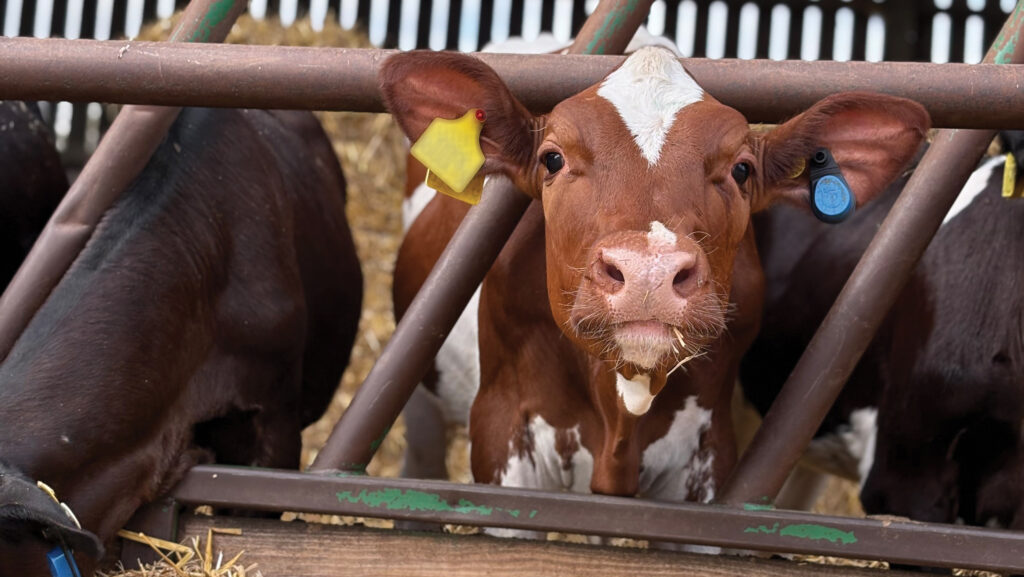 © Rachel Hulse
 Smart ear tags for calves can pick up signs of pneumonia at least 24 hours before they are obvious to humans.
But the advantage of this earlier disease detection will only be realised when a farm has worked out a treatment programme with their vet.
The ultimate benefit of smart technology is not necessarily a lifelong health record in one place, but instead to prevent problems. That is according to vet Lewis Hodgson from Nantwich Farm Vets in Cheshire.
See also: How smart ear tags are improving calf health and saving time
He says that software records linked to wearables will flag animals for assessment, giving the option to cull poor heifers before they reach breeding or calving age.
If only healthy, well-grown animals calve down, it should lead to a healthier, more productive herd.
Lewis has been working with several dairy farm clients using MSD Animal Health’s SenseHub Dairy Youngstock ear tags.
These tags are attached to a calf’s ear at birth and stay in place for 12 months, capturing data round the clock.
They are sensitive enough to pick up on abnormal behaviour, using a flashing light to indicate that an animal may be unwell.
This alert function, says Lewis, is particularly helpful when rearing large numbers of replacements, or trying to find single calves in large groups, and where multiple people are calf rearing.
New protocols
Lewis’s experience so far, however, leads him to advise anyone thinking of investing in smart ear tags to first discuss the implications for health management with their vet.
It takes some time to establish treatment plans and protocols, he says, and every farm needs to decide how they will use the tags and handle the data generated.
Crucially, protocols become essential for consistency on when to treat a calf, how, and with what: “One protocol doesn’t fit all farms – they are specific,” says Lewis.
Furthermore, he points out that not every calf flagged by a sensor tag will be ill.
This brings a risk of over-treating if every calf is medicated (which will increase the drugs bill), or under-treating if the alert is ignored.
“You’ve got to find a balance,” he says. “We treat [first] with an NSAID [non-steroidal anti-inflammatory drug] and monitor the calf for 12 hours.
“If it rapidly bounces back, then we leave it. If not, we do a health check, then may follow up with antibiotics.”
Early intervention
Nonetheless, finding pneumonia earlier allows for individual treatment and avoids giving drugs to a whole group.
Lewis explains this cuts antibiotics use, while saving time and labour. It is almost a form of disease prevention, he adds.
Early intervention gives a faster return to health without a relapse, plus it reduces the chances of secondary problems or a big impact on growth rates.
“Pneumonia is more difficult to pick up on visually, so if you can treat 24 hours before calves show signs of feeling sick, you get better success,” he explains.
“If you delay first treatment, you get longer-lasting damage, there is less production, and potential for more lung infections as an adult cow.”
Effective first-line treatment
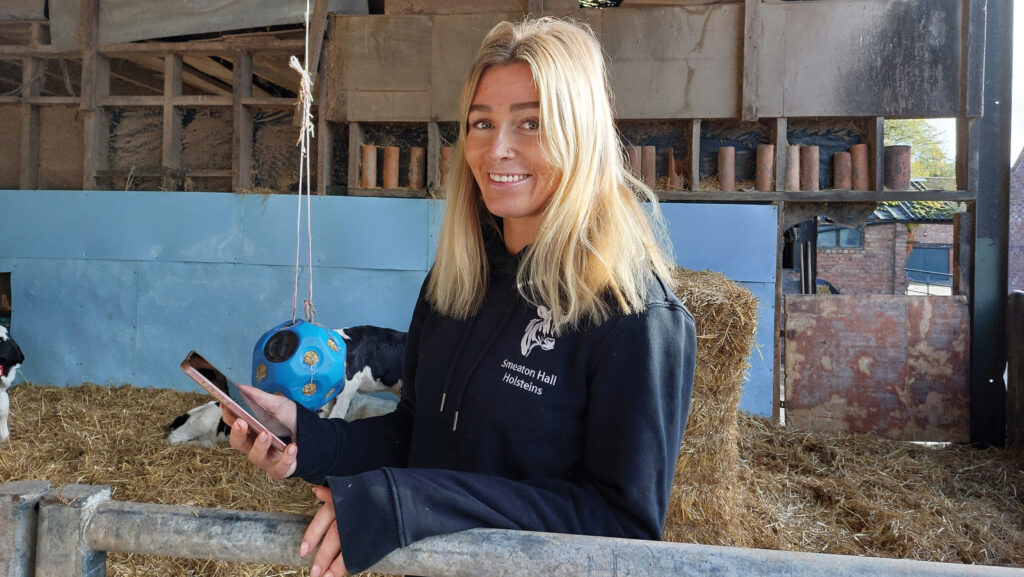
Rachel Hulse says the sensor tags picked up calves with pneumonia and scours more quickly © MAG/Shirley Macmillan
At Smeaton Hall near Nantwich, Cheshire, Lewis worked with the herd’s then calf rearer Rachel Hulse to set up SenseHub for the 180 followers she was rearing.
They soon discovered that the first-line drugs Rachel normally used for pneumonia had begun working better. Lewis says this is because the drugs were being used earlier so were more effective.
It meant Rachel did not need to rely on the second line of treatment and, as a result of treating 24-48 hours before clinical symptoms, the number of calves needing a second course of antibiotics fell to almost zero.
Smeaton Hall Farm, near Nantwich, Cheshire
- Farm rented by Richard Davenport (one of three dairies in Davenport Farming)
- 280 Holsteins
- 180 followers
- Beef-cross calves sold at four weeks
- Daily average 40 litres a cow
- Five robot milkers plus automatic feeding system
The sensor tags were introduced as a “trial run”, however Rachel says they were “fantastic” because they picked up pneumonia and scours sooner.
All dairy calves are now sensor tagged at one day old, alongside their yellow ear tag, with weaned heifers getting a retrofit tag.
The tag’s orange warning lights can be set to flash for one hour a day at feeding, which streamlines the work pattern, and Rachel knew to look out for them when she was working in the heifer sheds.
Even so, she learned that a calf might show no symptoms, have a normal temperature, and yet 24 hours later could be scouring.
Having set up a protocol with Lewis – based around the herd’s health history and drug products – she would inspect any calf shown on her phone app’s health report.
She would then take the calf’s temperature and assess it to decide whether she needed to intervene or treat according to the protocol.
Threshold for alerts
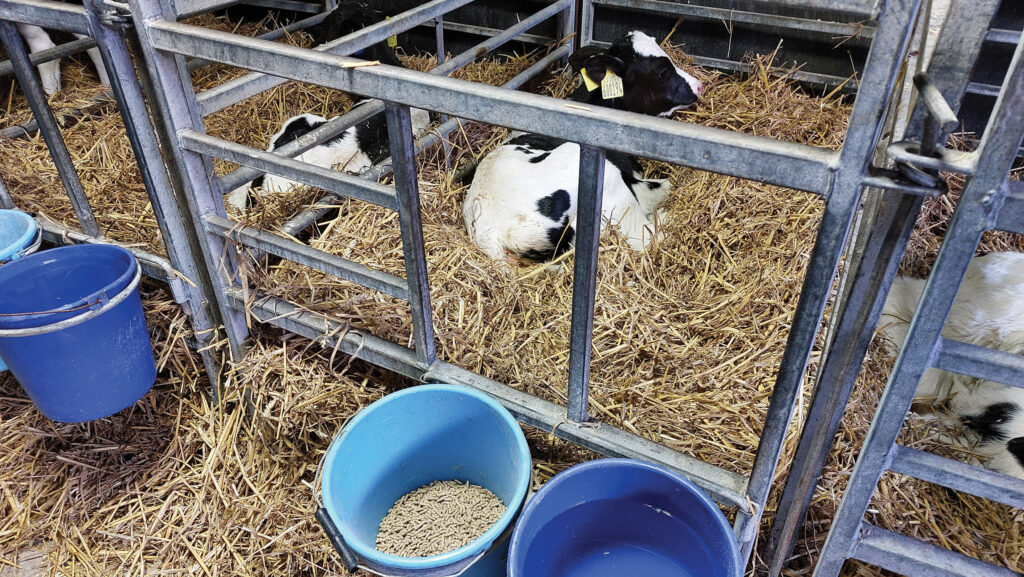
Newborn calves move from single pens into groups after about a fortnight © MAG/Shirley Macmillan
“I set the health index threshold at 88 [out of 100, which is for a completely healthy calf] for a sick calf alert. You can set it to any level – 88 works for us; I tried 85 but wanted it to be more sensitive.
“Sometimes it reaches 87 then bounces up again, especially if a calf has been running around, or maybe been a bit stressed from a group change,” she says.
Lewis checks the treatment protocols at his routine herd visit and reviews them in depth every six months.
All medicines, alongside dosage rates, are listed in the software program to make it simple when recording treatments on the phone app, or main office computer.
The information collected so far has helped pinpoint the age of disease onset, narrowing down possible causes to fix underlying issues.
First-heat detection
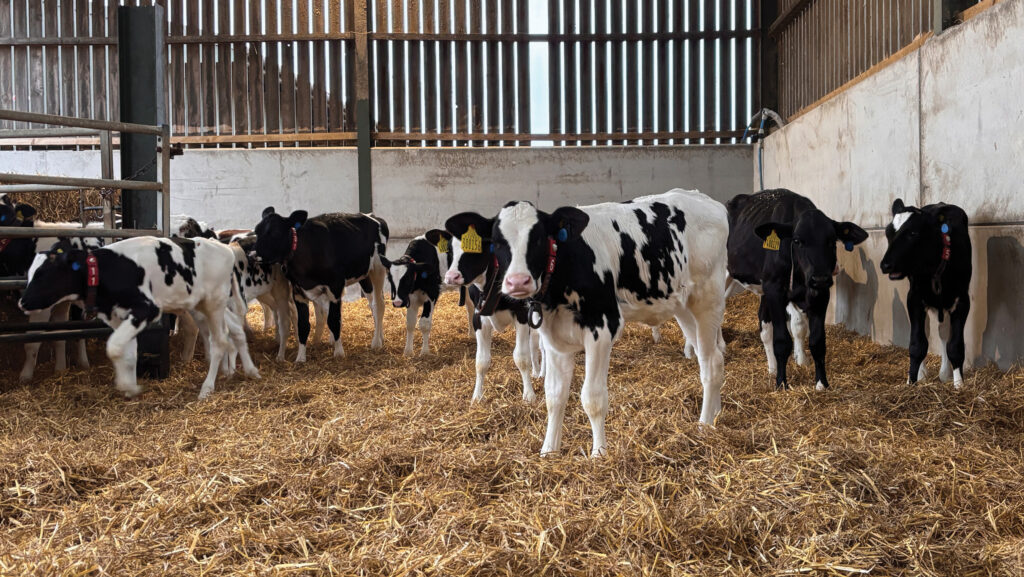
Health index thresholds can be set for sick calf alerts to use alongside treatment protocols © ABC Communications
An additional benefit from the sensor tags is being able to detect first (often unseen) heats in bulling-age heifers.
Once confirmed in-calf 60 days after service, a heifer’s tag will be replaced by a Lely collar using the same SenseHub technology.
Lewis says the younger a replacement is when she has sensor technology, the more accurate breeding is – and conception rates improve.
“If you grow calves well, you will see heat activity as early as nine to 10 months of age,” he says, adding that moving heifers to breed them, then fitting activity monitors, delays first oestrus on account of the stress involved.
Lewis is interested in the potential for the tag’s rumination behaviour monitoring to inform weaning age.
“There isn’t yet research to validate this, but it would be useful if you could say when there is obvious rumen activity. Weaning is very individualistic, whereas weaning as a group is a compromise,” he explains.
If calves are not biologically ready to go without milk, they will have a few hungry days, as their concentrate intake is not high enough.
The resulting stress impacts growth rates, as well as risking disease.
“It is less stressful overall if we could avoid the situation of a calf being weaned when it’s not ready,” he adds.
Heifer calf rearing at Smeaton Hall
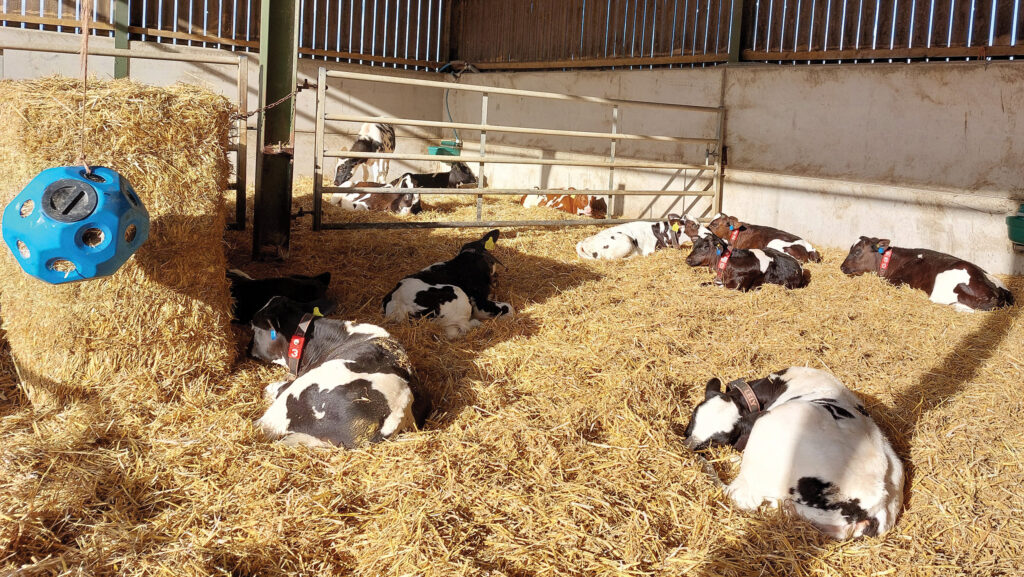
Calves are grouped in a ‘non-priority’ pen at 30 days of age © MAG/Shirley Macmillan
Every calf is teat-fed 4 litres of colostrum, by tube when necessary (a stock of frozen colostrum is on hand for overnight calvings).
Calves are then put into single, straw-bedded pens. Once drinking 4 litres of milk replacer twice a day from individual teat buckets, they are moved into group pens and onto an automatic milk feeder.
“I like to keep them in single pens for two weeks to be sure they are drinking well,” says former calf rearer Rachel Hulse.
Halocur (a cryptosporidiosis preventative) is given once a day for seven days; calves are vaccinated by the vet tech for pneumonia and disbudded.
Jackets are used when the outside temperature drops (up to about 30 days of age).
Calves first move to what Rachel calls the “priority” pen where 13-14 calves are grouped on deep straw bedding, with a Hesston bale to lie beside for warmth, and sheets on the shed’s open sides to cut draughts.
Fresh starter concentrate, water and chopped straw (in hanging balls) are given daily.
Monitoring of intakes
The calves wear collars for the automatic feeder, which supplies ad-lib, warm milk.
“They start drinking 2.5 litres/day. I’ve got calves visiting the feeder nine times a day and drinking 11.7 litres/day and another calf visits 13 times and drinks 15.5 litres/day,” says Rachel.
After 30 days, and when they are averaging more than 10 litres/day of milk, calves move on to the “non-priority” pen as a group.
There is an automatic step-down programme to wean at about 10 weeks (71 days).
“If there is a problem calf, such as it’s had pneumonia or is not growing well, then it has another two to three weeks of milk,” she adds.
Creep is given ad-lib, and Rachel finds that calves prefer a home-mix over a pelleted feed.
They learn to eat it from day one: “They like the mix and ignore the niblets,” she adds.
After weaning, they are moved again and fed a total mixed ration comprising a blend and silage bales with chopped straw at the feed barrier.