

Are farmers really to blame for water pollution?
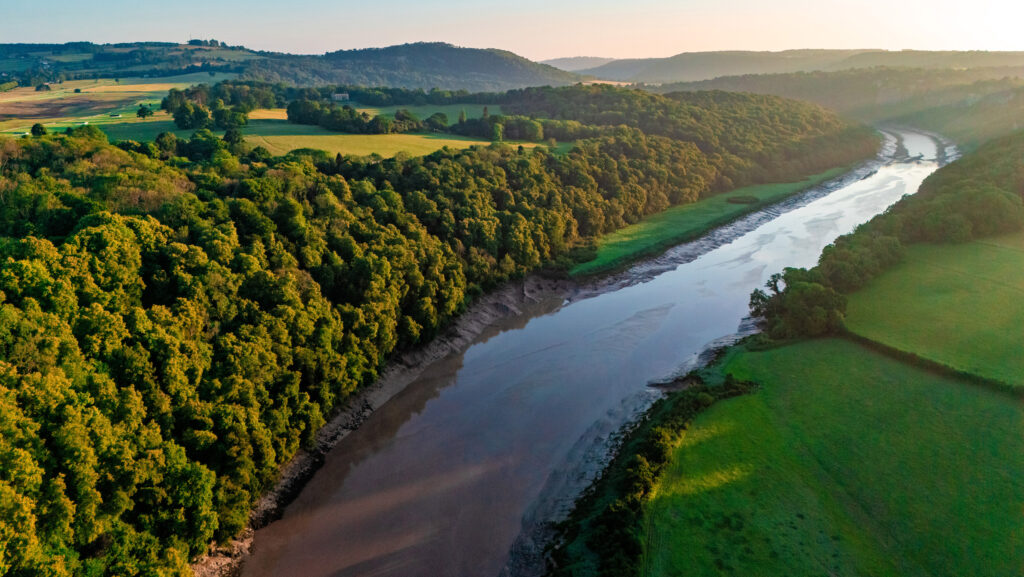 River Wye © Chunyip Wong/Istockphoto
 Farming has become the default villain in Britain’s water pollution story.
The narrative is familiar – nutrients in rivers rise, ecology declines and agriculture takes the blame.
But speak to the people who live inside the data – those who build nutrient budgets, pore over monitoring networks and work closely with farmer groups testing their own catchments – and a different picture emerges.
See also: Farmer wins landmark challenge to NVZ designations
They do not deny that farming contributes to the problem, but there is clear concern that government is leaning on incomplete, inconsistent and sometimes out-of-date evidence to justify major policy changes.
Under these circumstances, experts warn agriculture can become an easy target – especially when the monitoring framework itself is better at detecting some sources of pollution than others.
Sarah Belton, whose background in hydrogeology turned into years of work on agricultural water quality, says the modelling in this space is only as good as the data put into it.
She explains that England’s monitoring network is not designed to create an even-handed picture of all pressures in a catchment, which matters because where you locate a monitoring point determines what it captures or over-emphasises.
Designations
For farmers, this could mean being wrongly swept into nitrate vulnerable zone (NVZ) designations.
“The most common problem is the monitoring points being located immediately downstream of sewage treatment discharges, so you basically get a false reading,” she says.
NVZs, by design, are supposed to address agricultural nitrate.
But Ms Belton, who worked on NVZ appeals for NFU members and won most of them, says when she reviews designations, the reasons for pollution are often not purely agricultural.
“Everyone thinks NVZs are designated for agricultural input, but by area, in around 50% of those catchments, the urban contribution is bigger,” she adds.
This is neatly illustrated by the River Dove catchment in Derbyshire, designated because it flows into the River Trent.
“The Trent was significantly impacted by Birmingham discharge,” says Ms Belton.
“But the whole of the River Dove was designated NVZ because it flowed into the Trent, even though the River Dove had a really low average nitrogen concentration.
“It was a landmark win because the judge actually said ‘you’re using a sledgehammer to crack a nut here’.”
Dynamic changes
Ms Belton also points out that diffuse pollution surges with rain, soil moisture, flow, and management, yet much regulatory debate relies on annualised figures and static percentages.
“It is not static. It is a dynamic system, and sticking with one number I don’t think is particularly helpful,” she says.
“Taking one sample, which is one second’s monitoring, 10 times a year, is not really a very effective way of assessing impacts.”
Even when models are calibrated, uncertainty around diffuse contributions remains.
Ms Belton says: “Diffuse pollution only moves with water, so if you’re looking at the Wye on a summer’s day and it hasn’t rained for three weeks, most of that phosphorus is going to be point source or recycled from river bed sediments.
“But following a significant rainfall event, it might be up to 80% or 90%, for example.”
Historic buildup
Highlighting further complexity, water expert Lorna Davis suggests some of the phosphate and nitrate seen during summer conditions are likely to be historic buildups, released because of rising water temperatures.
Despite these caveats, policymakers continue to use national headline figures to justify reform.
Defra, for example, has continued to use the estimate that agriculture accounts for 61% of the total nitrogen in river water in England and Wales.
And around 28% of the total phosphorus load in Great Britain – despite the fact these figures are based on research that is 25-30 years old.
Ms Belton questions the usefulness of national averages, arguing government should instead focus on which catchments are actually pushed over ecological thresholds, and by what mix of sources.
Monitoring capacity
Kate Speke-Adams, a former regulator and catchment adviser now leading Herefordshire Rural Hub, says the problem is compounded by shrinking monitoring capacity.
“The monitoring that takes place has obviously reduced significantly over the past decade as the arm’s length Defra bodies and Welsh government have had their budgets cut,” she says.
“We’re trying to make decisions on less information.”
However, she notes that citizen science has expanded rapidly, with thousands of datasets now feeding into the Environment Agency’s understanding.
In some cases, this monitoring has shown that farms are not the source of pollution.
Without real farm data, government will continue to rely upon national datasets and standard assumptions, Ms Speke-Adams says.
If farms have improved, but the baseline hasn’t caught up, agriculture risks being judged on outdated evidence.
Balancing programme
To address that, her organisation has launched a farm-gate nutrient balancing programme across Herefordshire and parts of Powys.
“We’ve done about 200 farms, so it’s not thousands, but it has been really interesting to see what’s going on,” she says.
The aim is to reflect current practice rather than historic averages.
“The national data sets were showing that we had a 6kg/ha phosphate excess, but our local data set shows a -13kg/ha phosphorus deficit across the farms that were baselined,” she says.
If that trend continues, it raises questions about what exactly policy is regulating.
“It might have been representative of us 10 years ago, but farms have moved on and we need to be able to capture that in real time, because we can’t be the bad guys for 10 years while the data catches up with us,” Ms Speke-Adams says.
Costly regulation
For many farmers, the fear is that uncertain data will justify costly regulation without proportional gain. Environmental permitting for dairy and beef in England is just one new flashpoint.
Kate Mayne, a Shropshire-based agricultural consultant and lead of the North Shropshire Farmers Group, specialising in sustainable water management and soil health, says: “I can’t see how that’s going to improve water quality.
“I think it’s just going to be a massive cost burden to the dairy industry.”
Ms Speke-Adams is more nuanced. “Do I think permitting will be effective?
“Yes, but at a cost to both the government and to the farms,” she says.
From a Welsh perspective, Ms Davis questions whether regulation has been matched by adequate infrastructure funding.
“It’s managing risk,” she says, noting that while rules may focus on slurry storage or buffer strips, other pathways remain unaddressed.
“If you have a broken concrete yard and you’ve got cattle on that yard, that slurry is leaching into the ground below.
“But how many farmers can afford to re-concrete their yards? You’re still only capturing a portion of where the problem might occur.”
Taken together, these experts do not deny agriculture’s role in water pollution.
But they suggest that if government is serious about cleaner rivers, its evidence base must be as comprehensive for urban surfaces and highways as it is for fields and farmyards.
Without that balance, farmers will continue to feel they are being regulated on partial data, and policy risks targeting only part of the problem while broader pressures go unaddressed.
Multiple pollution sources all play a part
In Shropshire, agricultural consultant Kate Mayne is building a shared evidence base across two large farm groups.
Her teams have collected more than a year of data, but she describes the system as “hard to pick apart”.
The point is not to absolve farming, but to show why simple blame narratives are risky.
If policy assumes the source before it is identified, the wrong interventions may be prioritised.
At the same time, other experts argue some pollution categories are being undermeasured, particularly in urban and transport environments.
Water industry expert Lorna Davis points to highway run-off as a significant, but poorly scrutinised pressure.
“Highway run-off is directly affecting water quality, which then is contributing to nitrate and phosphate levels. But there’s no regulation covering it,” she says.
Unlike agriculture, highway outfalls are rarely sampled and there is no comprehensive national map of their locations.
Pollutants associated with road drainage – including polyaromatic hydrocarbons, metals and microplastics – are not consistently monitored at discharge points and catchment-scale impacts from multiple outfalls during rainfall events can be significant.
Faecal pollution
Ms Davis also highlights the need to identify the true source of faecal pollution.
“If you identify you have a nutrient load from faecal matter which is causing pollution in water, you can drill down into whether that faecal matter is bovine, canine or human,” she says.
“It seems odd to think canine, but with something like one in three households owning a dog, the amount of faeces that comes from dogs as well as other livestock does contribute.”