

Upland sheep grazing protects stable soil carbon, shows study
 © Adobe Stock
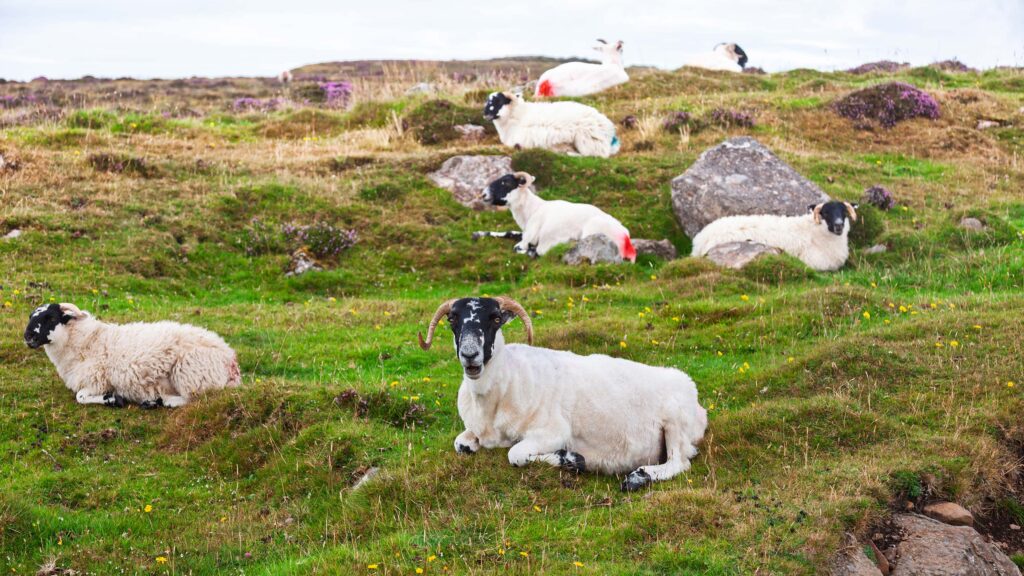
 A new study has highlighted the environmental benefits of upland sheep and suggests that their removal may negatively affect the long-term storage of stable soil carbon.
The Manchester University study, published in the Proceedings of the National Academy of Sciences, examined 12 upland grassland sites across an 800km south-north gradient in the UK, from Dartmoor to Glensaugh in Aberdeenshire.
It compared grasslands that had been ungrazed for more than 10 years with nearby areas that had been grazed for the same duration.
Findings showed the ungrazed grasslands tended to accumulate more short-lived carbon, they generally contained lower levels of long-lived organic carbon.
See also: Livestock farms could play big part in drive towards net zero
Dr Luhong Zhou, lead author of the study, said: “While ungrazed grasslands tend to accumulate more unprotected carbon in plants and litter, they are associated with lower levels of soil carbon protected by minerals, which is the form most resistant to warming-induced decomposition.”
The decline in long-lived soil carbon, the authors say, is linked to changes in vegetation following the removal of grazing sheep.
Dr Shangshi Liu, who co-led the study, said: “Viewing grazer removal as a universally beneficial strategy for carbon mitigation often overlooks the continuum of carbon durability within ecosystems, and the fact that not all carbon gains contribute equally to long-term climate mitigation.”
Timely findings
The findings arrive at a crucial moment for environmental management policy as governments work on land-use frameworks to achieve net-zero targets.
Prof Richard Bardgett of Lancaster University, who initiated the study, said: “Our results suggest that maintaining low-intensity grazing in upland grasslands, which cover large areas in the UK, is important for protecting the most stable forms of soil carbon.”
National Sheep Association chief executive Phil Stocker added: “This evidence, alongside other research, implies there are alternative management strategies for achieving climate targets, which should be considered in environmental policy and land use frameworks.”