

Scots farmers demand action over species management costs
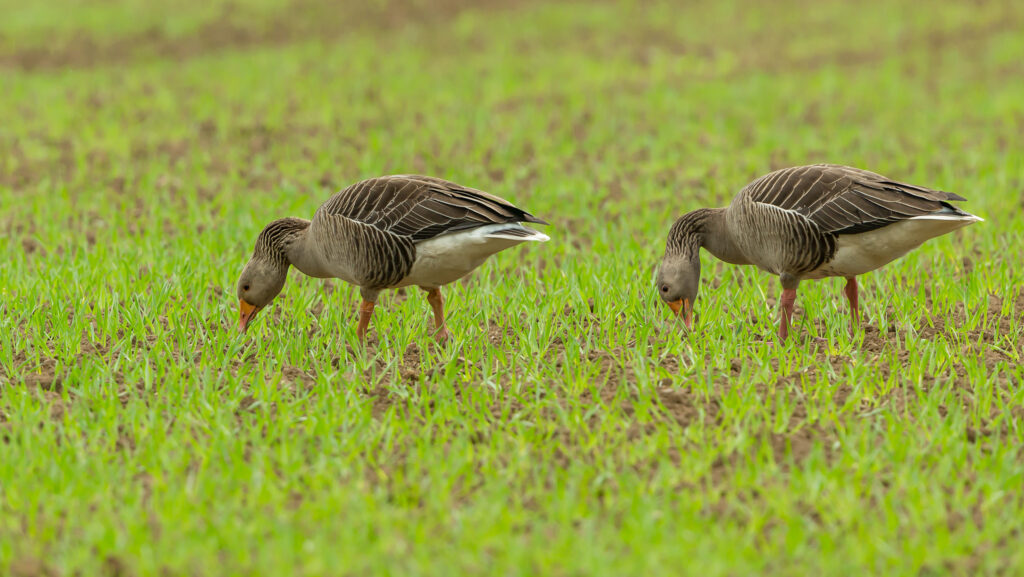 © Adobe Stock
 Farmers and crofters raised growing concerns over species management at the NFU Scotland conference, warning that delays to policy and a lack of funding are leaving agricultural businesses to absorb escalating costs linked to geese, sea eagles and beavers.
Speaking from the floor, Scott McBell of NFU Scotland’s Islay branch welcomed the first minister John Swinney’s reference to geese in his keynote speech, but said progress on the National Goose Policy Framework had stalled.
See also: Swinney pledges steady support for Scottish agriculture
The framework, first developed in 2022, remains in draft form with no confirmed funding or timetable for delivery.
Mr McBell said farmers affected by both protected and non-protected geese urgently need the Scottish government and NatureScot to allocate funding and staff to properly roll out the policy and local goose schemes.
He highlighted that Islay’s local scheme was last costed in 2015, when farmers covered about 60% of damage costs. Today, he said, farmers are meeting closer to 75% of the damage, describing the situation as “immoral and unsustainable”.
In response, Mr Swinney said the government recognised the impact geese are having on crops and farm viability and accepted concerns over the pace of progress.
He said the government would give the issue “as much priority as we can” and work to implement the conclusions of the policy review.
Meeting scheduled
Mr McBell added that while a National Goose Forum meeting is scheduled for 12 February, solutions must reflect regional differences. “The issues on Islay are different from the machairs… and from Orkney,” he said, stressing that goose management is not a one-size-fits-all issue.
The conference also heard strong views on other conflict species. Farmers raised concerns about the impact of sea eagles, while acknowledging a £1m NatureScot management scheme aimed at supporting affected businesses. Calls were made for longer-term certainty around funding.
Beaver damage escalating
Meanwhile, anger was expressed over beaver damage – particularly in Strathmore Valley, a large, fertile agricultural valley in east-central Scotland – where farmers described repeated flooding and massive restoration costs running into seven figures.
One speaker questioned why farmers are being left to shoulder the financial burden, while calling for changes to how lethal control licences are issued.
Mr Swinney acknowledged the scale of the damage and said decisions on population control and compensation must be based on robust evidence, including the impact on agriculture, adding that these issues must form part of NatureScot’s regulatory assessment.
Lynx reintroduction ruled out
In the interim, the first minister reaffirmed at the conference on 6 February that the Scottish government has no plans to reintroduce lynx, and made it clear that any groups claiming future compensation or financial backing for lynx reintroduction is not speaking with government authority.