

River Wye phosphorus study challenges case for destocking
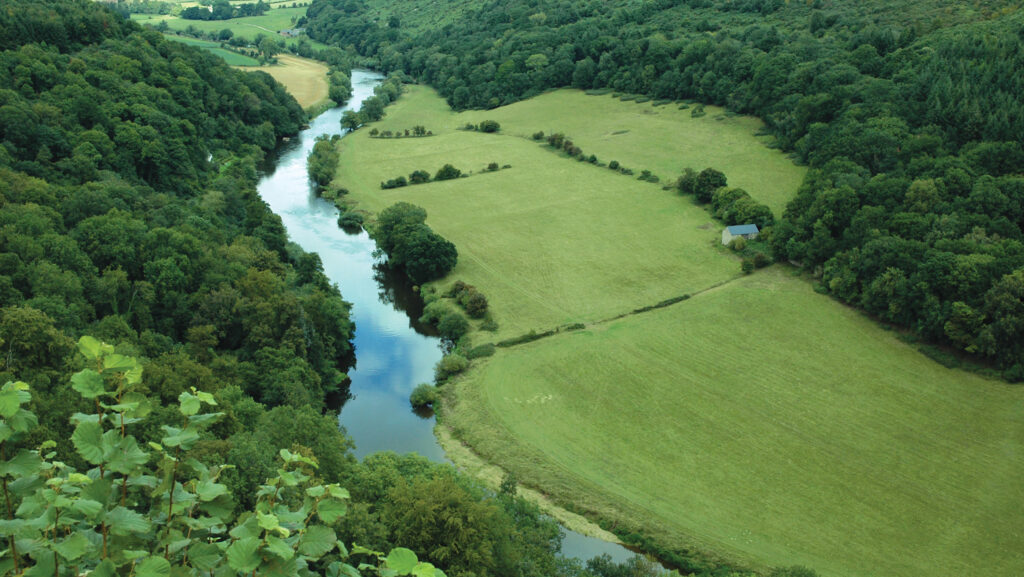 River Wye © Radnorgees/iStockphoto
 New farm-level data from the River Wye catchment has challenged assumptions about agricultural phosphorus surpluses, with seven in 10 farms recording a zero or negative balance.
The two-year FarmGate Nutrient Balance Programme assessed 145 holdings covering more than 28,000ha, using actual farm inputs and outputs rather than catchment-scale modelling.
Across the farms, the average phosphorus balance was effectively neutral at -0.5kg P/ha, compared with historic Rephokus modelling estimating a surplus of 6.2kg P/ha above crop need.
See also: Are farmers really to blame for water pollution?
The findings suggest there may be less scope than assumed to tackle phosphorus losses simply by reducing livestock numbers, and more by improving nutrient management.
Dan Smith, who ran the Herefordshire Rural Hub programme, stressed the findings did not mean farming had no environmental impact.
“We’d be naive as an industry not to recognise that we have an environmental impact, and within that, there is a nutrient impact.
“But your nutrient balance can often be directly connected to your profits and losses.”
Bought-in feed emerged as a major source of imported nutrients, while the results suggested stocking levels alone were a poor predictor of nutrient balance.
Mr Smith said farmers could cut both environmental risk and costs by making better use of home-grown forage, scrutinising bought-in feed and testing manures so their nutrient value could be factored into fertiliser decisions.
“We keep hearing that we should be destocking, but we didn’t see a lot of evidence that there was a need to destock.
“There is evidence that we need to be slightly better on our management.”
Nitrogen presented a different picture to phosphorus, remaining in surplus at an average of around 83kg N/ha.
Management gaps
Mr Smith said the results exposed management gaps around measures intended to improve environmental performance, with some farms growing nitrogen-fixing herbal or legume leys while continuing to apply fertiliser at rates designed for ryegrass.
The findings are being fed into discussions with the Environment Agency (EA) as it takes forward its new River Wye Diffuse Water Pollution Plan.
The EA’s accompanying implementation plan says evidence will inform future decisions as work progresses, while the FarmGate programme is now looking to build on the pilot with further work around nutrient use and farm management.