

Senedd backs ‘polluter pays’ call over contaminated land
 © AdobeStock
 The Senedd has backed calls for polluters to pay for contaminated land in Wales, amid concerns over the impact of historic pollution on farmland and water.
The debate on Wednesday (30 September), led by Plaid Cymru’s Niamh Salkeld MS, secured cross-party support for stronger action on historic contamination and urged the UK government to help fund investigation and remediation where costs cannot be recovered from those responsible.
See also: Are farmers really to blame for water pollution?
Farming and environmental organisations have also called for greater scrutiny of pollution entering agricultural land from historic industrial sources.
The Soil Association said farmers should not be expected to bear the cost of contamination originating outside the farm, while the Nature Friendly Farming Network (NFFN) Cymru said environmental standards should apply consistently across sectors.
The Senedd motion also called for a national framework to test and assess potentially contaminated land and for greater support to help local authorities meet their statutory responsibilities.
Historic contamination
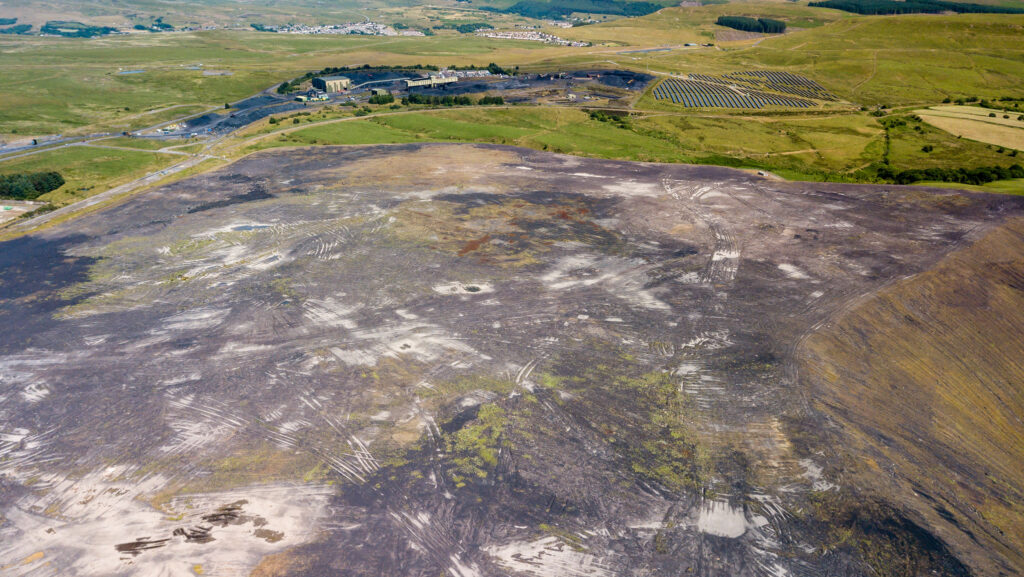
The debate follows renewed scrutiny of Wales’s industrial legacy after the release of the BBC documentary Buried with Michael Sheen, which examined historic toxic waste sites, including Ty Llwyd Quarry at Ynysddu.
Plaid Cymru estimates there are around 45,000 contaminated land sites across Wales.
Ms Salkeld said historic industrial activity had long-lasting impacts.
“Historic industrial activity means substance is left to seep into our land or waters for decades, and in the case of some chemicals, for generations – posing severe risks to human health, animal health and to the wider environment,” she said.
“While communities still face the consequences today, too often, polluters have been let off the hook.”
Impact on agricultural soils
The Soil Association said the documentary had raised questions about the impact of historic contamination on agricultural soils.
Head of policy at the Soil Association in Wales, Andrew Tuddenham, said: “Farmers are rightly expected to protect and improve soil and water, but they cannot be held responsible for pollution they did not cause.
“The issues raised by Buried strengthen the case for properly funded monitoring of farmland near known or suspected contaminated sites, alongside clear responsibility for remediation where problems are found.
“We need a much better picture of the legacy contamination affecting our soils.”
NFFN Cymru manager Rhys Evans added: “We need robust environmental standards across the board, with everyone held to the same level of accountability. The introduction of the ‘polluter pays’ principle into Welsh legislation could be an important step towards ensuring a level playing field.”
No routine monitoring
Natural Resources Wales (NRW) said agricultural land was not routinely monitored just because it was located near a historic industrial or waste site.
Instead, monitoring and investigations are carried out according to risk where there is evidence or concern that pollutants may be affecting water, land, wildlife or other environmental receptors.
NRW said a 2015 survey of local authorities identified more than 9,000 potential sites requiring further investigation, although not all would necessarily pose a risk.
The Welsh government said contaminated land was a “key priority” and pledged to develop a Wales-wide strategy to progressively restore post-industrial land.
It said this would include strengthening the “polluter pays principle” while continuing to press the UK government for funding to address contaminated land.