

Welsh graziers create wetlands to tackle wildfire threat
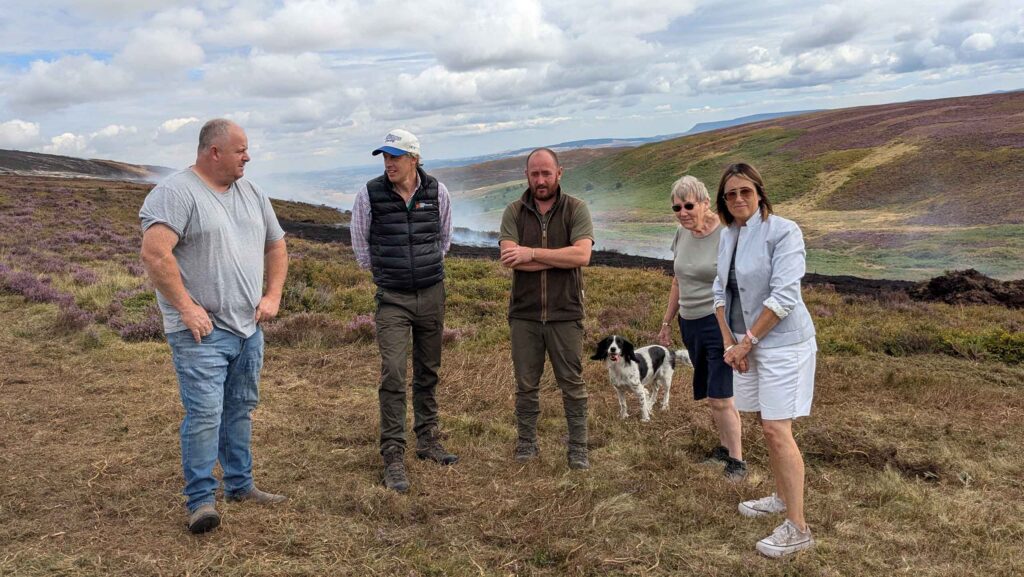 Graziers at the Glascwn fire © Catherine Hughes
 Livestock graziers on a Welsh common are helping to create 45 wetlands to protect their grazing land from the increasing threat of wildfires and water management issues.
A summer of severe drought after a period of record rainfall has thrown into sharp focus the resilience of farmland, including large areas of common land where fewer stock now graze, accelerated in part by changes to how farmers receive support payments, but also due to changing farming practices.
Graziers with rights to Painscastle Commons in Powys are now tackling this head on, securing Welsh government funding to create new ponds and leaky dams on the area grazed by the Llandeilo Graban to Glascwm Hill Graziers’ Association.
See also: Farmer fears wildfire damage could last generations
Glascwm Hill was the location of one of multiple wildfires that swept through the Welsh countryside in recent weeks.
Moorland manager Aaron Brookshaw described the 2026 summer as “our biggest wake-up call ever”.
“Thanks to our strong local farming community, tractors with water bowsers and flails acted as rapid first responders to contain the blaze,” he said.
“Moving forward, we are working closely with the fire service to map vulnerable areas and establish a coordinated plan to mitigate future ignition risks.”
Traditional farming methods have declined on the common over the past 25 years and fewer animals now graze there.
Bracken and gorse problem
Maureen Lloyd, a farmer and secretary of the Llandeilo Graban to Glascwm Graziers’ Association, said encroaching bracken and gorse now make accessing the hill increasingly difficult for the gathering of sheep or to quickly respond to wildfires.
The project she helped win funding for, which involves other land managers and community members, as well as the graziers, is part of the Welsh government’s Integrated Natural Resources Scheme, a collaborative funding initiative supporting landscape-scale environmental solutions.
In addition to ponds and leaky dams, the money will also pay for the creation of wader scrapes to retain hill water and support declining species such as the curlew.
Ms Lloyd hopes the initiative will engage the broader community to foster resilience for future generations.