

Below-cost SFI payments spark farmer backlash
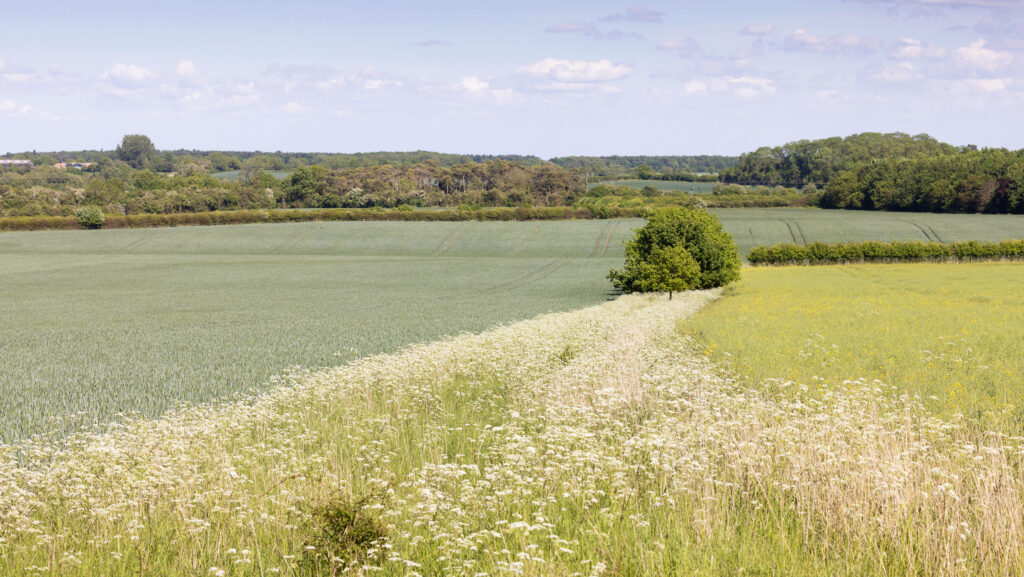 © Tim Scrivener
 Proposals to cut Sustainable Farming Incentive (SFI) payment rates to levels below income forgone have prompted stark warnings from industry leaders, who say the move would force some farmers out of business and derail delivery of environmental benefits.
Senior figures told Farmers Weekly that discussions within Defra suggest some SFI options could be repriced on the grounds they have been overused, that farmers will deliver them anyway because they “enjoy it”, or because the actions bring on-farm business benefits.
See also: Analysis – SFI returns in 2026, but doubts linger
Civil servants are also understood to be relaxed about only around half of farmers being in the new schemes.
Though the department has not yet set out any concrete plans, it is believed payments for actions such as establishing herbal leys or providing winter bird food could be slashed.
Any cuts would be delivered alongside caps on SFI payments, with Defra considering an overall cap on the total value of an agreement, as well as limits on individual actions or options.
‘Pointless’
George Dunn, chief executive of the Tenant Farmers Association (TFA), said the new ministerial team was reacting in a “knee-jerk” way to past mismanagement of the scheme.
He warned SFI would become “pointless” if payments failed to cover costs.
“We seem to be veering away from a position of making sure we are looking at both sides of this coin from an environmental perspective and from a farming business perspective,” he said.
Mr Dunn added that his members were already struggling with competition from imports, high costs and the loss of direct support.
“I’m having very deep and meaningful conversations about how much longer they can sustain their businesses,” he said.
Stark choices
Martin Lines, chief executive of the Nature Friendly Farming Network, echoed those concerns.
He warned that with profit margins in sectors such as arable and dairy effectively non-existent for some, farmers unable to make a return for delivering environmental benefits would face stark choices.
“Borrowing is going to go up, or farmers are going to go out of business. That’s the reality,” he said.
Joe Stanley, head of sustainable farming at the Game and Wildlife Conservation Trust’s Allerton Project, told Farmers Weekly it would be unethical for the government to “explicitly ask farmers to fund our national legally binding objectives around the environment from their own pockets”.
“One in three farmers is currently losing money as it stands, and many farmers are working, on average, for half the minimum wage,” he added.
“Even farms that are incredibly passionate about the environmental outcomes they can deliver alongside food production are going to be forced to take very difficult decisions.”
A Defra spokesperson said: “British farmers are central to our food security, our rural economy and the stewardship of our countryside.
“More than half of farmers are in our farming schemes, including 44,000 multi-year SFI agreements, helping them to adopt nature friendly methods which are good for their bottom lines.”
2027 and beyond: What happens next?
Beyond 2027, uncertainty over farm support is growing.
While government has indicated there will be an uplift in funding from 2027-28, there is no clarity on how the future budget will be split between different schemes such as SFI and Landscape Recovery.
Tens of thousands of existing agreements under Countryside Stewardship and Higher Tier schemes are also due to expire between now and 2028, creating a surge of demand for replacement support, without a clear pathway from legacy schemes into new ones.
Martin Lines, chief executive of the Nature Friendly Farming Network, said: “Many of the agreements that are coming to an end are whole farm, ambitious programmes.
“If they’re moving to SFI pick-and-mix, three-year options, that will not work, because nature needs more than three years to deliver outcomes.”
Political uncertainty adds another layer of risk.
A change of prime minister or Defra leadership could trigger further reviews, pauses or redesigns – though September is still expected to be the time that the new SFI fully opens.
“When she came in, our new farming minister, Angela Eagle, wanted to lift the bonnet and look at everything,” said TFA chief executive George Dunn.
“That certainly did stall the whole process and obviously, if we were to get a new team in Defra, I’m sure we will be in a very similar position.”
Explore more / Transition
During the series we follow our group of 16 Transition Farmers through the challenges and opportunities as they seek to improve their farm businesses.
Transition is an independent editorial initiative supported by our UK-wide network of partners, who have made it possible to bring you this series.
Visit the Transition content hub to find out more.
