

Drought package: What the £65m means for English farmers
 © Adobe Stock
 The government’s £65m drought package will provide some immediate relief, but experts say its long-term value will depend on whether ministers can remove the planning and abstraction barriers to securing water.
Announced by prime minister Andy Burnham and farming minister Stephen Morgan, the drought package includes an extra £50m for the Sustainable Farming Incentive (SFI), up to £15m for on-farm reservoirs, greater flexibility within Environmental Land Management (ELM) agreements and faster access to abstraction licence changes.
The £65m will be taken from the annual farming budget of about £2.32bn, but Defra says it was unallocated funding, so it does not affect existing farming commitments.
For many livestock businesses struggling with shortages of forage, fodder and bedding, the immediate benefit is likely to come from temporary changes to ELM.
Farmers can cut and graze land within SFI and Countryside Stewardship agreements where drought is affecting forage, fodder, bedding or grazing supplies, without risking scheme payments.
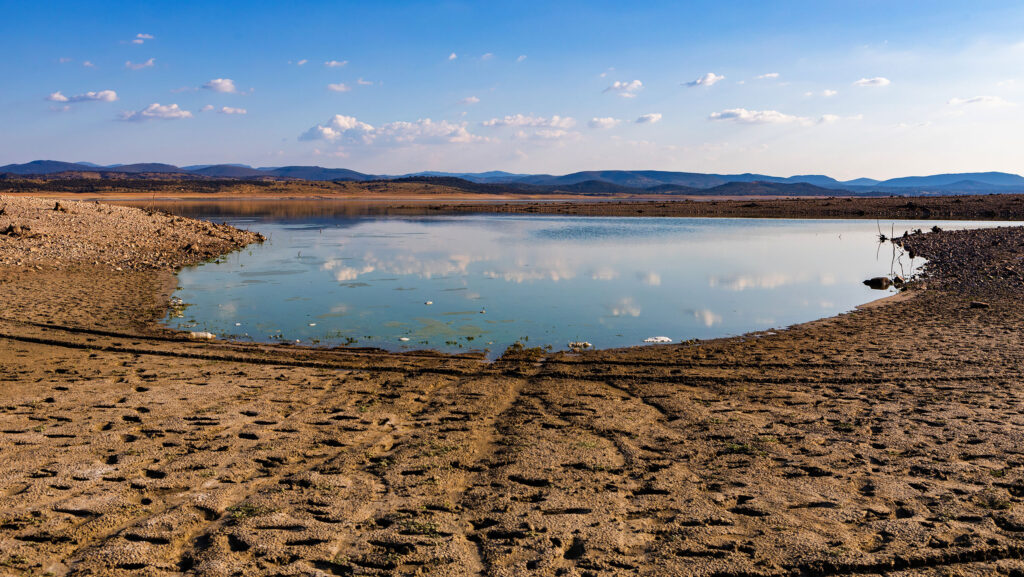
With drought or prolonged dry weather conditions affecting all counties in England, the move will help businesses that are already feeding winter forage stocks.
Extra SFI26 funding
The package also includes an additional £50m for SFI26 Window 2, taking the total budget to £290m ahead of applications opening in September.
Guy Coggrave, managing director of GSC Grays, said the extra SFI funding would be welcomed, but warned demand is likely to be intense.
He also questioned where the money was being found within Defra’s existing budget, with ministers confirming the package is being funded through reprioritisation rather than entirely new spending.
He said: “Farmers will welcome more support, but they also need confidence that providing additional funding now will not mean money being taken away from other areas.”
£15m for on-farm reservoirs
For some farmers, the £15m for on-farm reservoirs could ultimately be the most important part of the package.
But farming organisations say the grant needs to be viewed alongside the government’s proposed planning and abstraction reforms.
The money will be available through the Water Management Grant, expected to reopen in autumn, to help farmers build water storage, particularly for crop irrigation.
In practical terms, the aim is to allow farmers to capture water when it is plentiful and store it for use when rainfall fails.
For horticulture and irrigated arable businesses, reliable water can mean the difference between producing a crop and losing it.
But £15m will not help build enough reservoirs across the farming sector, as the British Farming Union notes.
The scale of investment required would be much higher if the government genuinely wants to improve water resilience across agriculture, its president George Brown stresses.
He also highlights that England has more than 94,000 active farm businesses, illustrating the relatively small scale of the intervention – £1,500 a business if divided equally across the sector – compared with the potential investment required.
Cost and complexity
However, the cost and complexity of getting a reservoir built remains a major issue.
Country Land and Business Association (CLA) president Gavin Lane said farmers are already spending about £45,000 getting reservoir projects to the point where construction can begin, often with no guarantee of approval.
“Farmers should be able to capture more water when it’s plentiful and store it for the dry months ahead,” he said.
“Instead, planning rules make reservoirs slow and costly to build.”
Jeremy Moody, secretary and adviser at the Central Association of Agricultural Valuers, agrees the current system remains too complicated.
“The frustrating interactions with both EIAs [environmental impact assessments] and the abstraction rights needed to fill reservoirs require a much more serious approach by government,” he said.
There is little value in helping farmers build reservoirs if they cannot fill them reliably, Mr Moody added.
He argued farmers need to be able to harvest water when it is available, store it efficiently and use it effectively as extreme weather becomes more common.
Access to water
Alongside the funding, the Environment Agency will prioritise short-term abstraction licence variations and simplify applications for longer-term access arrangements.
The NFU welcomed the package, describing it as an “important step” towards building water and food resilience.
But it warned further detail is needed on how the measures will operate in practice.
The package provides some practical flexibility for farmers facing the current drought.
But whether it represents a genuine change in government policy will depend on what happens next – whether farmers can actually get permission to build reservoirs, secure the licences to fill them and access the water when they need it.