

Middle East turmoil sparks renewed food security fears
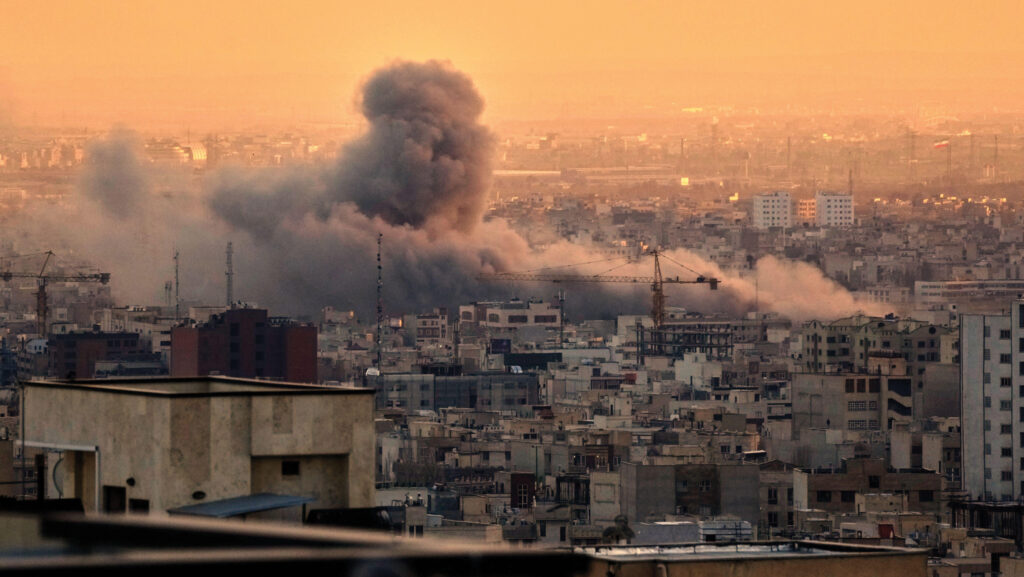 Smoke rising from bombed buildings in Tehran © Associated Press/Alamy Stock Photo
 Experts have warned that the risk of a UK food security crisis is growing, as the conflict in Iran continues to rock global fertiliser and fuel supply chains.
Concerns have intensified as other countries strengthen their strategic food reserves, with some governments stockpiling supplies and expanding grain storage.
Chris Elliott, professor of food safety and founder of the Institute for Global Food Security at Queen’s University Belfast, said several European nations were taking far more decisive action and urged the government to publish a national food production plan.
See also: Editor’s View: Iran war is yet another food security threat
“When I look at what other countries in Europe are doing, they are taking it much more seriously.
“The likes of Norway and Switzerland are building huge grain silos,” he told Farmers Weekly.
“Their governments have now realised that food security is a major part of national security and I don’t think it’s seen that way in the UK at all.”
Prof Elliott said repeated global shocks were testing food system resilience.
“It is shock after shock after shock. But how many shocks can you take until you’re on the ropes?”
Policy gap
Independent agricultural economist Dr Sean Rickard said the latest crisis exposed a long‑standing policy gap.
“The impact of the Middle East conflict once again confirms that we are long since past the point where the government should have published a comprehensive food production policy,” he said.
“If you were a Martian landing here, you would think the environment is the priority, food production is secondary and, by the way, we’re happy to import a lot of food from places like America, New Zealand and Australia.”
Tim Lang, professor emeritus of food policy at City St George’s, University of London, warned the UK remains dangerously exposed to shocks because it still lacks a coherent national food strategy.
“We haven’t got a linked-up food policy,” he said, adding that Britain has left the EU “with no food policy – you couldn’t invent it”.
Food security has risen up the political agenda as Middle East tensions push energy markets into turmoil, driving up key farming input costs.
Oil markets remain about 30% higher than a fortnight ago, with farm leaders warning that knock‑on effects are already being keenly felt by farmers.
Production risk
Farming groups warn rising fertiliser and energy costs could reduce domestic production if conditions worsen.
NFU Scotland has written to prime minister Sir Keir Starmer warning that volatility could force producers to scale back output.
NFU president Tom Bradshaw said the escalating conflict in the Middle East was a concern and the union was monitoring the situation closely.
“We’ve already seen how disruption to global oil and gas markets has influenced the price of fuel and fertiliser.
“Continued supply of these is essential for resilient domestic food production,” he said.
“This is reflective of cost pressures across the whole food supply chain which, if it persists, could lead to further food price inflation and is something the government needs to take very seriously.”
Ulster Farmers’ Union deputy president John McLenaghan warned: “We risk sleepwalking into a situation where our ability to maintain a stable food supply is seriously undermined.”
Government response
A UK government spokesman said: “We understand and are taking seriously the possible impacts of the Iran war on the food and farming sector.
“We have met with the NFU and are convening wider farming stakeholders to continue to gather information on the effects of the conflict on the industry.
“At present, we do not expect any impact on food availability for consumers and continue to monitor increases in fertiliser and oil prices, standing reading to take action to protect rural communities.”