

NFU leader urges government action on food security
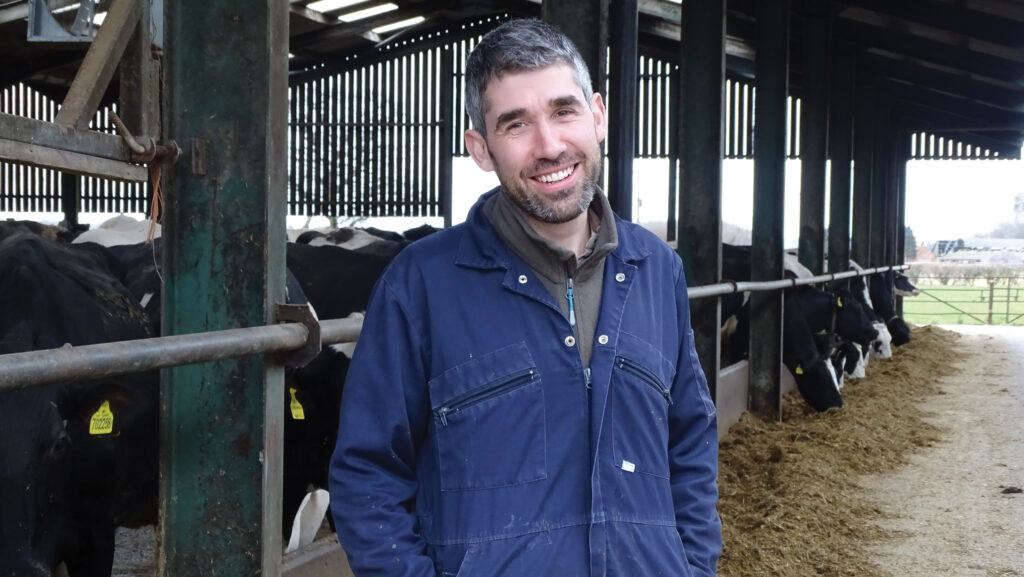 Paul Tompkins © NFU
 The government must match its rhetoric on food security with policies that support domestic food production, NFU deputy president Paul Tompkins has said.
Speaking at the University of Cambridge’s Cambridge Forum for Future Food Supply Chains on Thursday 4 June, Mr Tompkins warned food production should be treated as a strategic national asset amid climate change, geopolitical instability and rising costs.
“We often hear that food security is national security. But that only matters if it changes how we act,” he told policymakers, academics and industry leaders.
See also: Food security overhaul urged as volatility is ‘new norm’
Mr Tompkins, who runs a 234ha dairy farm in the Vale of York with 500 Holstein cows, said food security goes beyond full supermarket shelves.
“Food security is not about whether shelves are full this week. It is about whether we can continue to feed ourselves through disruption,” he said.
“A country that cannot feed itself reliably is not secure.”
He said farmers are on the front line of climate change, citing the wet conditions of 2024, which cost UK arable farmers more than £1bn, followed by the driest year in 132 years and a poor harvest.
Mounting challenges
Rising input costs were also a concern, with feed, fertiliser, fuel and energy bills increasing, alongside livestock disease threats such as bluetongue.
Mr Tompkins said farmers face mounting challenges while being expected to take on greater risk.
“Across the country, I see the same pattern. Farmers are asked to take on more risk, absorb more cost, and deliver more public goods, while having less certainty and less control in return,” he said.
He said food security concerns now extend beyond farming, citing former director general of MI5 Baroness Manningham-Buller and warnings from the National Preparedness Commission, the Climate Change Committee and military leaders about reliance on imports.
He pointed to policy barriers holding back investment, including grid connection issues for renewables and water access constraints.
Support for innovation
Mr Tompkins urged ministers to back precision breeding, which he said could make Britain Europe’s leader in the technology.
While welcoming efforts to reduce barriers to EU trade, he warned that excessive regulation was holding back innovation.
“The pathway from research to real-world farming remains too slow, too complex and too uncertain.”
However, he said innovation is being slowed by regulation. “The pathway from research to real-world farming remains too slow, too complex, and too uncertain,” he said.
Food a ‘critical infrastructure’
Concluding his speech, Mr Tompkins called for food production to be treated as critical infrastructure.
“Domestic production is not a nostalgic ideal. It is a strategic necessity,” he said.
“Farmers are ready. We are already doing the work, every day, in every part of the country. The question is whether government will match that commitment.”