

NFUS urges action on imports to protect home-grown food
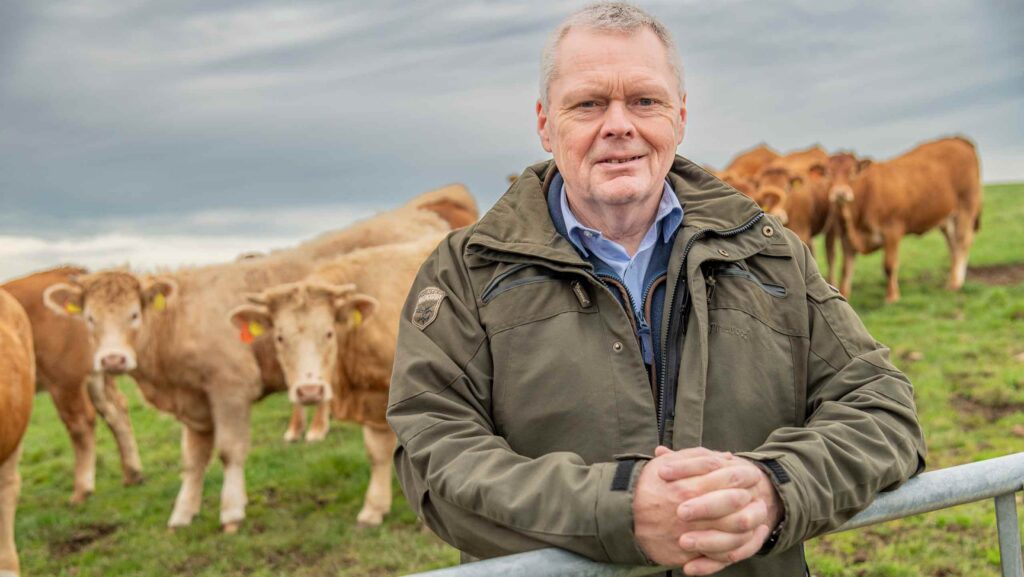 NFU Scotland president Andrew Connon © NFU Scotland
NFU Scotland has called for an urgent, independent review of UK food imports policy, warning that growing reliance on overseas production risks undermining domestic agriculture and food security.
Launching its new paper, Imports: Protecting Standards, Supporting Domestic Production (opens in PDF), at its autumn conference on Thursday, 29 October, president Andrew Connon said Scotland must protect its ability to produce food at home while ensuring imports compete fairly.
“The UK already imports about 40% of the food we consume,” he said. “Food imports have increased by 70% since 1997, while our food trade deficit has doubled since the year 2000. That’s an extremely worrying direction of travel.”
See also: Food price cap could push produce off shelves, NFUS warns
Mr Connon said Scottish farmers and crofters were expected to meet high environmental, welfare and production standards, which came at a cost.
“We cannot keep raising the standards expected of Scottish farmers, thus allowing imported food produced to different standards to compete against them,” he said.
The paper calls for a comprehensive review of existing trade agreements, tariffs, quotas, production standards and import controls, alongside stronger checks and greater transparency over food origins.
Mr Connon highlighted the gap between consumer expectations and available information, saying more than 80% of consumers considered food origin important, yet fewer than half believed they had enough information to identify where their food was produced.
He said: “More often than not, if the origin of a steak on a menu is missing you could ask where the meat in a restaurant comes from and you might be told it comes from a Scottish-based wholesaler supplier.
“But that tells us absolutely nothing about where it’s produced.”
The union is seeking equivalent core production standards for imports, stronger biosecurity and border controls, clearer country-of-origin labelling and greater transparency in food sourcing.
Build resilience
Mr Connon said: “We recognise the importance of trade to our food and drink sector, but we must also protect our ability to produce food here at home, because a resilient Scotland needs a resilient food supply.”
The paper argues that food security depends on maintaining domestic production capacity and protecting farmers from unfair competition, while continuing to benefit from international trade.
Mr Connon added: “We need a more strategic approach to imports that protects domestic production, maintains our high standards and puts food security at the heart of trade policies.”