

Farmer fined after digestate spill kills 1,600 fish
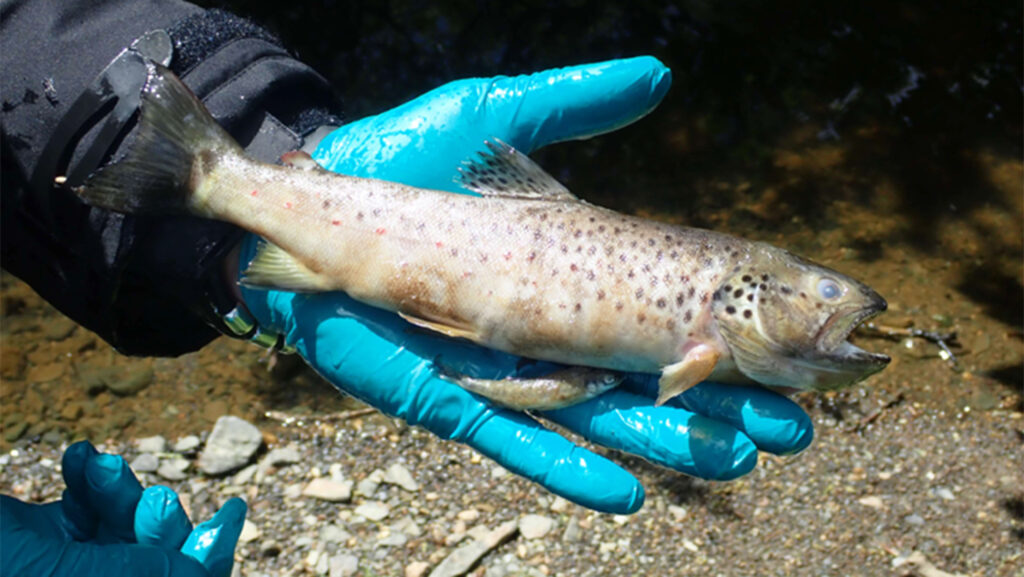 One of the estimated 1,610 fish killed in the incident © Environment Agency
 A Cornish farmer has been fined after a digestate spill from his farm caused extensive pollution and killed about 1,600 fish in the River Ottery.
Truro Magistrates Court heard that Norman Osborne, 57, of Tobarn, Jacobstow, operated a farm near Warbstow where the incident happened in May 2022.
Following a hearing on Wednesday 13 May, Mr Osborne pleaded guilty to causing a water discharge activity and was fined £215. He was also ordered to pay Environment Agency (EA) costs of £3,550, bringing the total penalty to £3,765.
See also: Welsh farmer charged £20k for SSSI damage
EA officers were called to the river on 22 May 2022 following reports of dead fish.
Investigators found that about 2,300 gallons of digestate had entered the watercourse from a tank on the farm.
The court heard that Mr Osborne had been transferring digestate into a tanker for spreading on farmland when a connecting hose failed, and the spilt material ran down a road and into a nearby stream.
The pollution worsened after the digestate was washed into the watercourse, and the incident was not reported to the EA immediately.
Lasting impact
Digestate, a by-product from anaerobic digestion plants processing food waste and organic material, is commonly used as a fertiliser but can be highly polluting due to elevated ammonia and nitrogen levels.
The spill affected about 3.5km of watercourse.
Investigators counted 471 dead fish, although the total number killed was estimated at 1,610. Species affected included Atlantic salmon, brown trout and bullhead.
The court was told fish populations had still not returned to historic levels two years later.
Preventing further harm
An EA spokesman said: “This pollution led to a major fish kill and lasting damage to the watercourse. Digestate is highly polluting and should be handled with great care.
“If a pollution does occur, farmers must contact us as soon as possible so we can provide them with guidance on mitigation or containment, and take action to prevent further harm to the environment.”