

Lowe and Defra chief clash over SFI chaos and food production
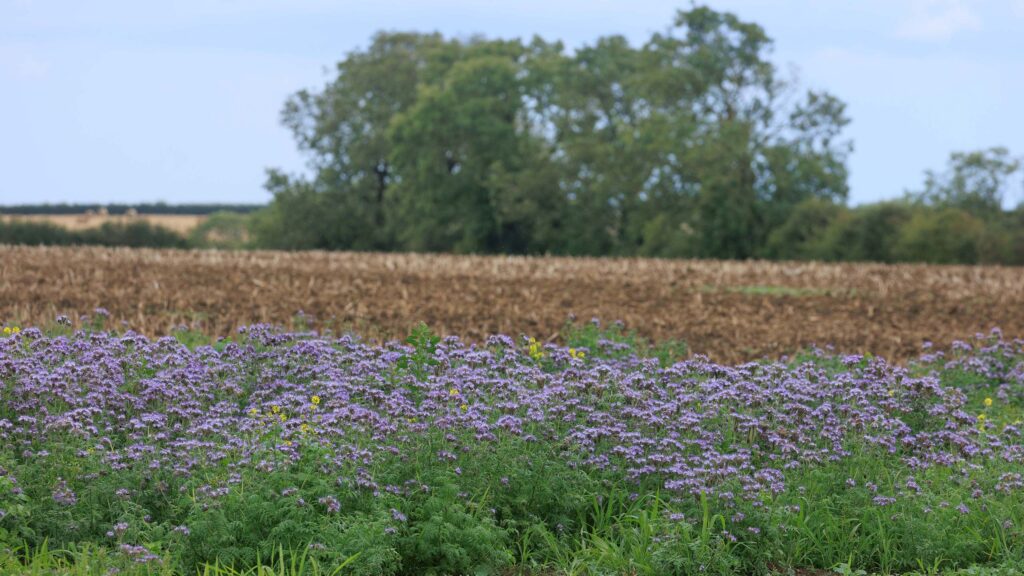 © Tim Scrivener
 Defra’s most senior civil servant came under sustained pressure from MPs on Thursday 15 October over the handling of the Sustainable Farming Incentive (SFI) and wider farm policy during a Public Accounts Committee hearing on UK food supply resilience.
Permanent secretary Paul Kissack was repeatedly challenged over the chaotic 2026 SFI application window on 22 September, which closed in less than six hours, leaving many thousands of English farmers unable to secure funding.
See also: Government policy deters farmers from growing food, MPs told
Rupert Lowe, the Restore Britain UK MP for Great Yarmouth who has farmed arable and sheep in the Cotswolds for more than 40 years, accused Defra of being “massively behind the curve” and contributing to a “manufactured crisis” in the countryside.
Committee member Mr Lowe revealed he had missed out on SFI26 funding himself, describing the second application window as a “bugger’s muddle” and a “charade”.
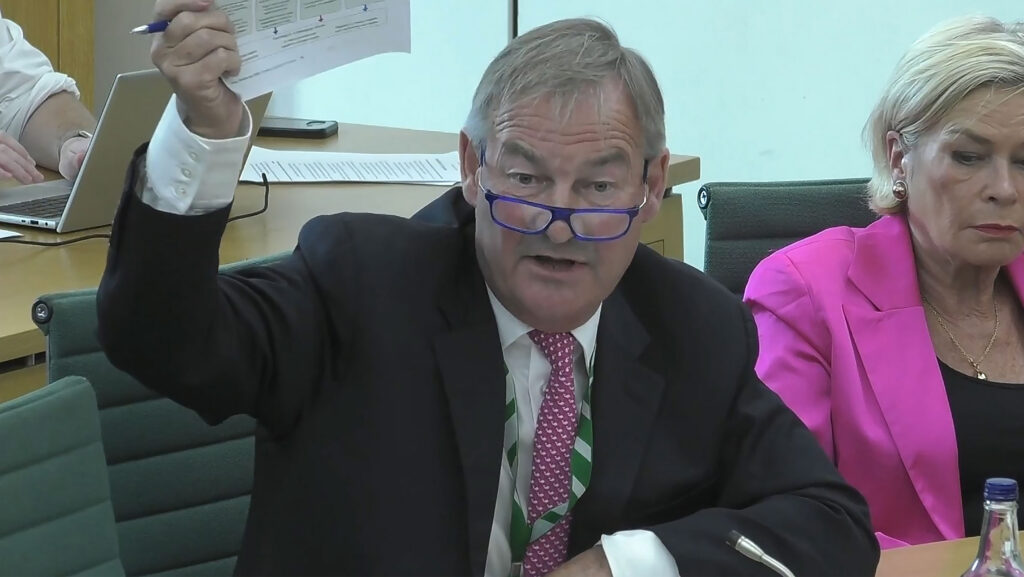
Rupert Lowe MP challenges Defra’s record on farming © Parliament TV
He argued that government policies were weakening domestic food production and claimed the countryside had been damaged by “decades of top-down eco-bureaucracy, ideological tax raids, structural underfunding and urban-biased planning laws”.
Mr Lowe said Defra had underspent its critical agricultural budget by over £350m across consecutive cycles while cutting direct support to farmers.
He also said Defra’s Farming Roadmap mentions resilience 15 times more often than income, profit or prices, and dismissed it as “verbal baby food”.
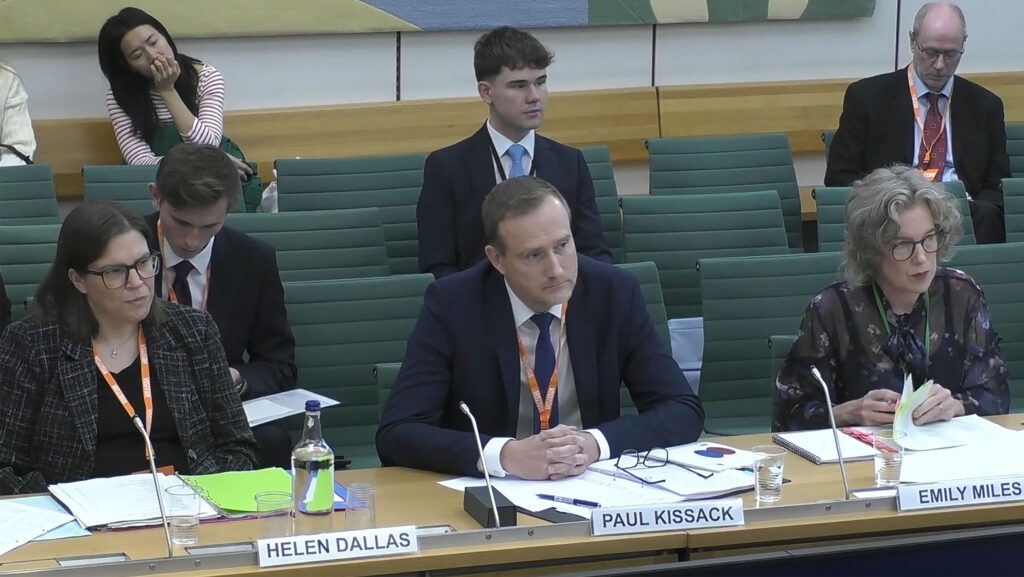
Senior Defra civil servants Helen Dallas, Paul Kissack and Emily Miles being quizzed by MPs © Parliament TV
But Mr Kissack defended the department’s record, insisting it was “getting an enormous number of things right”.
He said the Rural Payments Agency had processed a new SFI26 application every two seconds during Window 2, and that domestic food production has been rising over 10 years. British farming remained a “success story”, he argued.
“I think you are deluding yourselves,” Mr Lowe responded. “I have watched the state undermine farming. The question is: are you turning farmers into gardeners?”
Mr Kissack rejected the suggestion, telling MPs that the SFI was “specifically designed to work alongside food production”.
Committee chairman and farmer Sir Geoffrey Clifton-Brown was also critical of how the SFI26 scheme had been managed, describing the process as “appalling” and warned that farmers who missed out on funding would remove environmental features from their farms, resulting in a reversal of environmental gains.
Mr Kissack acknowledged the “frustration and anger” felt by unsuccessful applicants but said demand had far exceeded the available budget.
The first SFI26 application window, aimed at smaller farms and those without existing agreements, allocated £67m of a £70m budget.
A second round initially opened with a budget of about £180m, before receiving an extra £70m in funding and the £3m underspend from Window 1, boosting the total available for Window 2 by about 40% to £253m.
“If the committee has a suggestion as to what I do about that, I’m all ears, but I have to administer the budget I have got,” he said, adding that ministers were considering alternatives to the current first-come, first-served approach.
Food production concerns
The hearing followed evidence earlier this week from Cotswolds arable farmer Harry Metcalfe, creator of the Harry’s Farm YouTube channel, who warned that farmers were carrying all the risk of growing crops while government policy was “dissuading” them from producing food.
He told MPs that declining profitability in arable farming was pushing growers away from food production.
Cyber risks
Mr Kissack said cyber security remained one of his biggest concerns after hackers reportedly targeted supermarket refrigeration systems in France this week.
“I worry a lot about cyber,” he said. “Who would have thought that French fridges were going to be the subject of a cyber attack?”
Cyber threats top Defra’s risk register, but the department still operates a significant legacy IT estate. About 300 applications were identified as potentially vulnerable, with more than 200 since remediated.
Mr Kissack said the food sector’s diversity was both a vulnerability and a strength, arguing that other businesses could step in if individual operators were affected.
National blackout
A nationwide power outage was described by Mr Kissack as a “catastrophic” risk. “It is a good thing they are untested,” he said, referring to Defra’s contingency plans.
The department maintains a blackout playbook in hard copy form, but officials admitted there is currently no single cross-industry plan setting out responsibilities across the food sector.
Asked whether Defra had the detailed operational planning needed to manage a major disruption, Helen Dallas, interim deputy director for food preparedness, replied: “The short answer is no.”
She said work was under way on household preparedness, protecting vulnerable people and recovery arrangements following a major outage.
Mr Kissack said a new Food Readiness Group had begun work, while arguing that a national food stockpile did not clearly offer “value for money”.
The inquiry continues.
Rupert Lowe on Defra failures
During the hearing, Rupert Lowe rattled off a long list of Defra failures. He pointed to the following pressures on farmers:
- Agricultural property relief (APR) changes on agricultural land
- A fertiliser tax on top of large increases in fertiliser costs
- The banning of sprays such as pyrethroids and fungicides
- Planning complexities stopping diversification
- Energy costs which he said are now the highest in the world as a result of net zero
- No action on the supermarket oligopolies
- A farming workforce with an average age of around 63
He warned of a crisis facing farming, retail, agricultural merchants and machinery dealers “which is about to come and haunt” Defra.
Explore more / Transition
Follow the experiences of our 16 Transition Farmers and access in-depth supplements, expert webinars, live events and practical content covering the challenges and opportunities facing farm businesses.
Transition is an independent editorial initiative supported by our UK-wide network of partners.
Explore the Transition hub for the latest insights, resources and events.
