

Solar farm approved despite farmland concerns
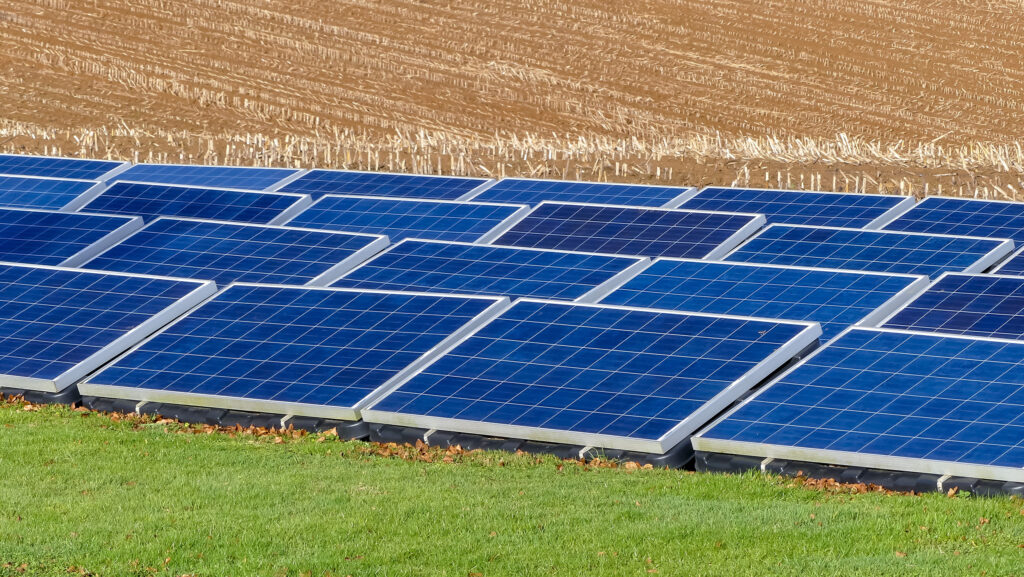 © AdobeStock
 A major solar farm approved by the government on Wednesday, 8 April, is set to power thousands of homes, but concerns remain over its impact on agricultural land in Lincolnshire.
The Springwell Solar Farm is expected to become the UK’s largest power-generating solar development, with the capacity to supply electricity to more than 180,000 homes annually – about half of all households in Lincolnshire.
The project forms part of a wider expansion of renewable energy, marking the 25th nationally significant clean energy scheme approved since July 2024.
See also: Record 157 solar farms approved amid food security fears
While the government has highlighted solar power as one of the cheapest forms of energy and central to reducing reliance on volatile fossil fuel markets, the scheme has prompted concern over the loss and use of high-quality farmland.
North Kesteven District Council objected to the development, citing its impact on “best and most versatile” agricultural land, with close to half of the site falling into this classification.
The council also raised issues relating to landscape, biodiversity, and the long-term use of rural land.
Council leader Richard Wright said the authority supported renewable energy in principle, but maintained that developments must be appropriately located.
He said: “Those objections we did raise were mainly in respect of how the scheme impacted on best and most versatile agricultural land.”
He added that mitigation measures should be prioritised. “We would still ask that, through careful location of the panels and on-site infrastructure, this is kept to a minimum, and also to consider battery technologies that have lower environmental impact and are demonstrably the safest,” he said.
The government has defended the project as part of a broader effort to strengthen domestic energy supply amid global instability, including conflicts affecting international fuel markets.
Energy minister Michael Shanks said: “Solar is one of the cheapest forms of power available and is how we get off the roller-coaster of international fossil fuel markets and secure our own energy independence.”
Opposition remains from some political figures, including Reform UK MP Richard Tice, who called the decision “disgraceful” and “appalling”.