

Wales enters nationwide drought as dry weather hits farms
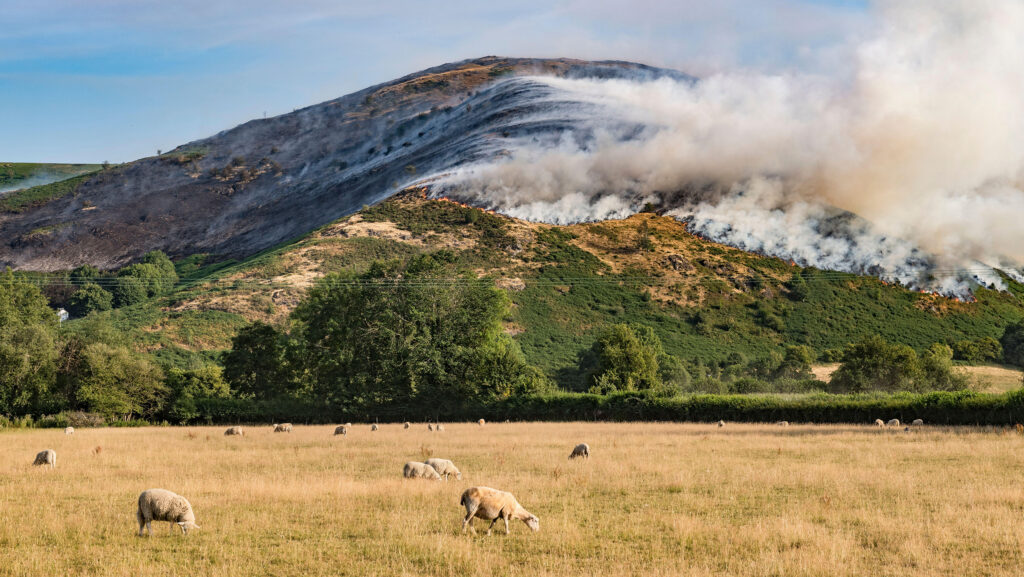 © Alex Ramsey/Alamy Stock Photo
 Natural Resources Wales (NRW) has declared the whole of Wales in drought after prolonged hot, dry weather intensified pressure on farms, rivers and wildlife.
The decision, announced on Thursday 30 July, follows last week’s drought declaration for North Wales and the Upper Severn.
Wales has received just 8% of its long-term average July rainfall, putting the country on course for its driest July since records began 190 years ago.
See also: Drought declared across England’s key farming regions
NRW said rivers including the Wye, Usk, Teifi, Clwyd, Conwy and Cleddau are at exceptionally low levels, while groundwater continues to decline.
The regulator warned the dry conditions are affecting crop growth, grazing and livestock water supplies, alongside drying riverbeds, fish in distress, algal blooms and an increased wildfire risk.
Reservoir releases, abstraction controls and other drought measures have been introduced to protect river ecosystems.
Growing impacts felt
Rhian Thomas, NRW sustainable water and nature manager, said conditions were changing rapidly.
“Our teams are closely monitoring forecasts and river flows and responding to increasing environmental concerns and incidents across Wales,” she said.
“The toll on the environment, our land and agriculture is clear to see, with many of our teams still dealing with the aftermath of extensive wildfires which have devastated forestry, grassland and special habitats.”
NRW said it is working with water companies, the Welsh government, the Environment Agency and the Wales Drought Liaison Group, including monitoring cross-border rivers such as the Wye, Severn and Dee.
Harvest fears grow
The announcement comes after more than half of England entered drought status this week.
Country Land and Business Association president Gavin Lane said many growers were facing one of their toughest harvests in years.
“Farmers are telling us this is the worst harvest in years. A sodden winter followed by drought has left wheat at half its usual height and some crops not worth harvesting,” he said.
Calling for greater government support for the industry, he said: “Farmers have shown again and again that they can adapt and deliver solutions, but resilience has limits.”
Water storage calls
Industry leaders are also urging ministers to make it easier for farmers to invest in on-farm water storage.
HCR Law partner Rory Hutchings said reservoirs should be treated as strategic infrastructure to improve resilience for livestock and high-value crops.
“The availability of water is now a core part of farm business resilience, and it needs to be considered and planned for.”
The NFU has likewise called for planning reforms and greater investment in on-farm reservoirs, with deputy president Paul Tompkins saying: “Food security starts with water.”