

Drought declared across England’s key farming regions
 © Tim Scrivener
 Half of England has officially been declared in drought, with arable farmers in particular facing mounting pressure after one of the driest Julys on record and an exceptionally early harvest.
The Environment Agency (EA) has declared drought across seven areas of England – East Anglia, Hertfordshire and the whole of London, the Thames Valley, Hampshire and the Isle of Wight, Devon and Cornwall, the West Midlands and Wessex (covering Dorset, Somerset, Wiltshire and south Gloucestershire).
Several other areas remain in prolonged dry weather status.
See also: Defra under pressure over drought grazing rules
Southern and eastern England have been hit hardest, although prolonged dry conditions are now affecting farms across much of the country.
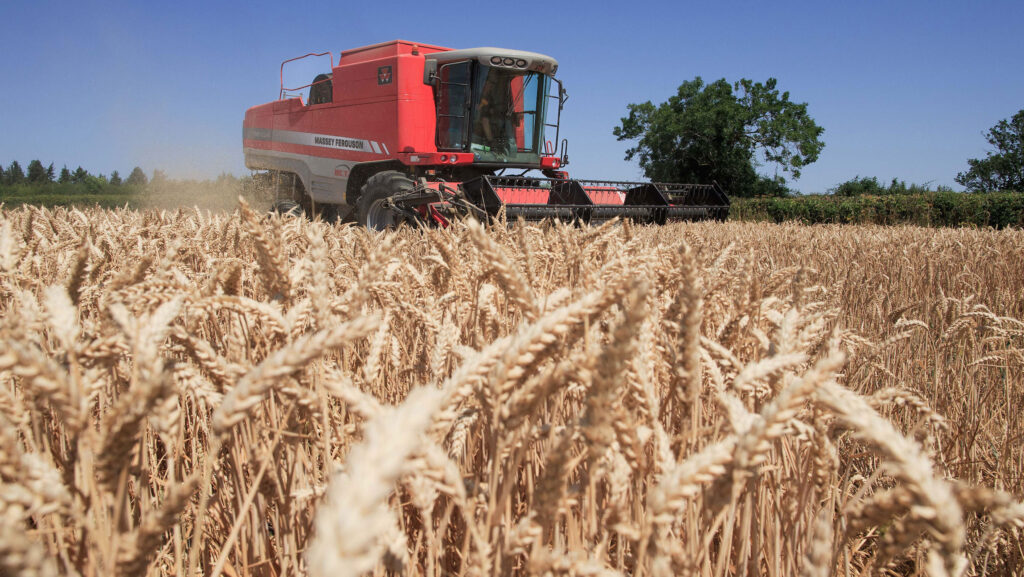
For many cereal growers, the lack of rainfall and repeated heatwaves have accelerated crop ripening, bringing combines into fields weeks earlier than usual.
However, the early harvest has come at a cost, with reduced yields reported in many crops and growing concerns over soil moisture and water supplies for the rest of the season.
Livestock farmers are also struggling, with grass growth hit by the barren spell and feed costs rising.
July has received just 7% of its average rainfall, dropping to as little as 1% across parts of southern England.
The Environment Agency said 78% of rivers are now below normal levels, while more than 1,500 abstraction licence restrictions are in place as irrigation demand remains high.
Farm reservoirs are also declining rapidly, raising concerns for growers relying on stored water.
Helen Wakeham, the EA’s director of water, described a second consecutive summer drought as “an exceptionally serious situation” with lasting consequences for agriculture, wildlife and the wider economy.
Reaction
The NFU called for urgent action from the government to improve access to water and water resilence for farmers.
It wants faster planning for on-farm reservoirs, more flexible water abstraction rules and better support for vulnerable farm businesses.
NFU deputy president Paul Tompkins said: “Water is a vital ingredient in food production, and without a secure supply, we cannot build resilient farm businesses or strengthen the country’s food security.”
The Association of Independent Meat Suppliers (AIMS), which represents UK abattoirs and meat processors, called on the government to ensure the sector is included in drought planning.
“The recent lack of water at the 2 Sisters site in Devon is unacceptable in terms of operational requirements, food safety and hygiene and animal welfare and must be repeated with any abattoir and processing site in the UK,” said AIMS’ spokesman Tony Goodger.
‘No sign of sustained rain’
The Met Office warned there is little sign of the sustained rainfall needed to ease conditions, despite the possibility of isolated showers during early August.
The drought is the third to affect England in five years, following similar events in 2022 and 2025, highlighting what ministers say is becoming a “new normal” as the climate changes.
The EA said it was working closely with the NFU, particularly in East Anglia, to support farmers and manage dwindling water resources.
It is also increasing checks on abstraction and has renewed calls for investment in on-farm reservoirs to help agriculture become more resilient during prolonged dry spells.