

Drought tests flexibility of Welsh farming schemes
 © Adobe Stock
 Welsh farmers are calling for greater flexibility in environmental scheme rules as drought leaves soils too dry to establish crops and meet habitat requirements.
The Welsh government has reported an increase in drought-related derogation requests from across Wales, covering sowing dates, early harvesting and sward-height requirements under the Sustainable Farming Scheme (SFS).
See also: Welsh farmers urged to tap grants as dry weather bites
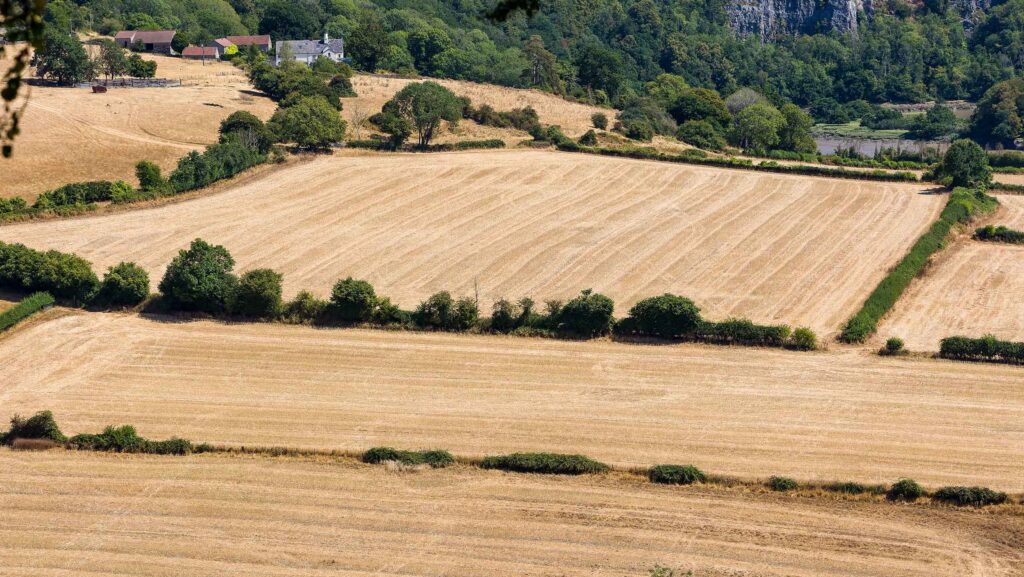
Merfyn Parry, an agronomist based in Clwyd, North Wales, said prolonged dry weather had left fields brown and soils too hard to cultivate, leaving farmers reluctant to buy expensive seed when successful establishment was uncertain.
“You couldn’t plough them [fields] because they’re that hard,” he said.
“What they don’t want to do is order the seed and then decide they can’t put it in, or they can’t get the grant for that seed.”
Blanket derogation
A blanket derogation introduced on 14 August extended the sowing deadline for mixed ley and red clover options under the 2026 Growing for the Environment scheme from 31 August to 15 September.
Mr Parry welcomed the extra time, but questioned whether it would be sufficient without substantial rainfall.
“We’ve got to have some flexibility in working with the seasons, and if the seasons are going to change, I think the schemes have got to be flexible to work with the seasons we’re getting,” he said.
Some Growing for the Environment crops established this spring had already failed because of drought, he added.
“A lot of them have failed because they’ve gone in in the spring, and they haven’t had any rain. I would say lots of them are dead.”
The Welsh government said farmers concerned about meeting grant conditions should contact Rural Payments Wales (RPW) as soon as possible with supporting evidence.
Cases will be considered under exceptional circumstances provisions and, where correct sowing dates and methods can be demonstrated, claims are “highly likely” to be paid, regardless of crop condition.
Habitat pressures
NFU Cymru president Abi Reader said the union had raised concerns with RPW since early July and welcomed reports that derogations were being handled pragmatically.
“Farmers across the country have been battling wildfires, seen crop and forage yields plummet and spent significant time ensuring that their livestock have had access to sufficient water, feed and shade,” she said.
With “little growth and bone-hard soil conditions”, NFU Cymru wants RPW to continue looking favourably on derogations, particularly around SFS habitat requirements.
“We would also ask that proper consideration is given to the effect of the extreme weather in meeting SFS requirements for any inspections that take place for the SFS in 2026,” Ms Reader said.
The union also wants greater flexibility within universal action 5 on habitat maintenance and universal action 6 on temporary habitat creation.
Flexible approach
The Welsh government said it was taking a “flexible approach”, including approving later sowing and early harvesting of maturing crops.
Farmers unable to sow Growing for the Environment crops in 2026 can withdraw from contracts without penalty. The government said further derogations would be considered where appropriate.