

Dry April leaves crops reliant on May rain
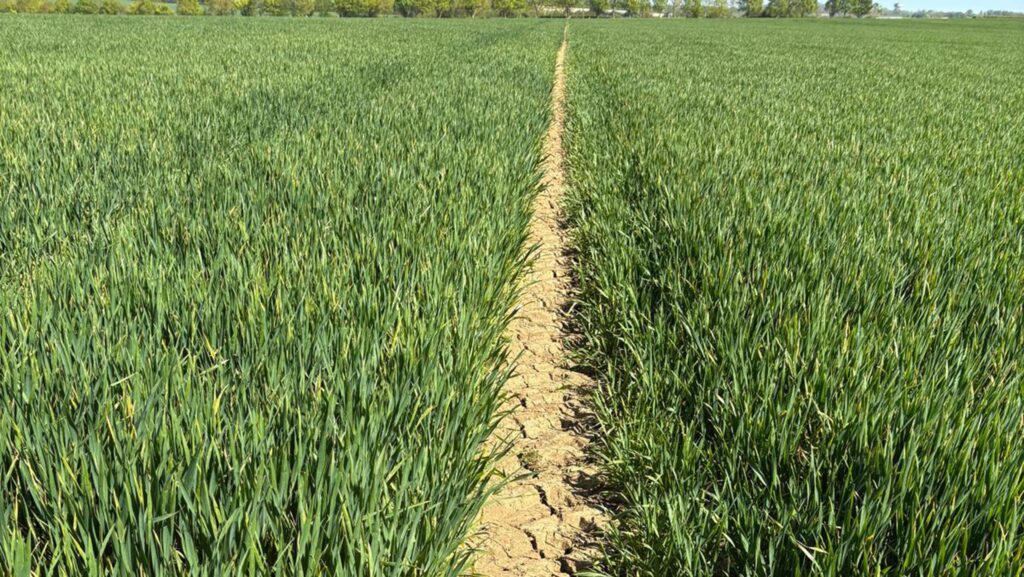 Dawsum winter wheat at Troston Farms near Bury St Edmunds, Suffolk © Edward Vipond
 Arable farmers across England say a very dry April has left crops reliant on May rainfall, warning the coming weeks will be crucial for yields and already tight margins.
Soil moisture is being depleted rapidly across central and eastern regions as crops enter key stages, raising fears that further dry weather could lock in yield losses.
The pressure comes as farmers face elevated diesel and fertiliser costs, driven by ongoing tensions in the Middle East, with red diesel above 120p/litre and ammonium nitrate fertilser about 25-30% higher than earlier this year.
See also: Crop Watch: Protecting OSR yields and weevil damage in pulses
In Suffolk, Edward Vipond, farms director at Troston Farms near Bury St Edmunds, said just 8mm of rain fell in April, following 23mm in March.
“We’ve gone from one extreme to the other,” he said.
“February was so wet we were making a mess getting on land, and now those ruts are like concrete.
“Crops still look well because we’ve got moisture at depth, but it is being drawn on quickly.
“Significant rainfall in May is now critical for grain fill. At least an inch would be a lifesaver.”
As the flag leaf emerges on early-drilled winter wheat, he said growers face difficult spending decisions.
“We’re about to spend more money on crops you hope are going to return something.
“But without meaningful rain, you’re looking at lower yields again – and the prices don’t give you much room for error.”
Crops stressed
In Cambridgeshire, arable and sheep farmer Tom Martin said conditions had turned unseasonably dry at Village Farm in Haddon.
“It looks like July in some fields,” he said. “Blow-away dust and big cracks. We’re losing yield as things stand.”
The dry spell follows a wet winter that has left crops poorly rooted.
“When you go from saturated soils straight into dry conditions, that’s a recipe for trouble,” he added.
Livestock systems are also feeling the strain. “People are getting antsy about forage,” he said.
“We’d normally be taking a first cut of silage now, but there’s nothing there.”
Further west, Shropshire farmer Andrew Groves said recent rain had stabilised crops, but risks remain.
“The grass isn’t growing like it should, and if it carries on another few weeks, we’ll be in trouble again.”
Scotland, Wales and Northern Ireland have seen more rainfall, leaving crops generally healthier than in the driest eastern counties.
Anna Bromley, an agronomist at Ceres Rural, warned persistent winds are accelerating moisture loss and could force changes to management.
“Ideally, we need a steady 15mm of rainfall followed by another 15mm about 10 days later,” she said.
“If we don’t get much rain in May, growers may need to rethink T2 and T3 fungicide strategies, with potential cutbacks.
“For crops still to receive fertiliser, there is also a question over reducing doses without compromising quality.”
She added that oilseed rape is performing well in full flower, though some growers are considering a second fungicide spray.
However, spring-sown crops are particularly exposed, especially later-drilled forage maize.
Weather outlook
The Met Office said eastern England has seen well below-average April rainfall, while western Scotland has been closer to or above average.
May is likely to start more changeable, with warmer, more settled conditions possible later, it added.