

Farmers help out as wildfires spread
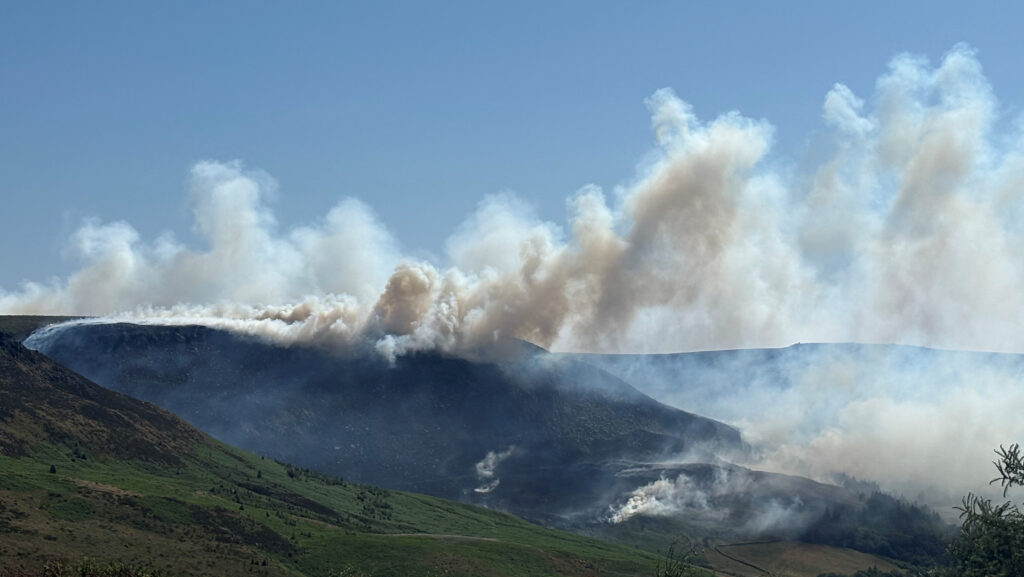 Wildfire at Dovestone Reservoir © James Crowther
 Farmers, gamekeepers and emergency services are battling wildfires across northern England and Wales as prolonged dry weather and suspected arson fuel a series of blazes.
Three grassland fires in North Yorkshire on Sunday (12 July) are believed to have been started deliberately, while firefighters remain on Conwy Mountain in North Wales after a large blaze on Sychnant Pass.
Greater Manchester Fire and Rescue Service is investigating the wildfire above Dovestone Reservoir near Saddleworth, believed to have been caused by youths setting off fireworks in memory of a friend.
See also: Sheep needed to reduce risk of wildfires, says NSA
Hill farmer and gamekeeper James Crowther, whose family has grazed sheep on the Saddleworth moors for almost 70 years, joined neighbouring farmers and gamekeepers to tackle the fire overnight on Sunday.
Mr Crowther, who helps run about 3,000 sheep alongside grouse and pheasant shoots, believes reduced grazing on surrounding moorland has increased wildfire risk.
“These moors are a ticking time bomb because there’s that much fuel on the ground now.
“It only takes one match, and there’s no fire breaks. There’s nothing now to make any firefighters’ lives easy.”
Traditional land management
Merseyside arable farmer Olly Harrison, who said smoke from both Saddleworth and Conwy was visible from his farm 40 miles away, argued that traditional land management used to help reduce wildfire risk.
“The gamekeepers used to do controlled burns, and you had natural fire breaks and grazing with sheep kept it short, but now people who haven’t left the M25 are trying to tell us what needs to be done, but don’t understand what the reality is.”
Referring to suspected deliberate fire-setting, he added: “There will always be stupid people, and you need to manage that risk. Managing the moors is as good as putting fire extinguishers in schools.”
Former specialist aerial firefighter Chris Ruddy from Saddleworth, who has fought moorland fires for more than 30 years, said dense vegetation and slower access to aerial support were making incidents harder to contain.
“The vegetation is so thick now, you can’t beat it out.
“That means you need to move fast, but they have given the contracts to companies much further away now, so there is no helicopter around Saddleworth anymore. They travel from Scotland and take hours to get there.”
Prevention strategies
On Conwy Mountain, North Wales Fire and Rescue Service said crews remained on scene maintaining firebreaks and monitoring conditions, supported by six fire engines, specialist wildfire equipment and partner agencies.
Farmer Gareth Wyn Jones, whose ponies graze the mountain, described the blaze as the fastest-moving he had witnessed.
“We need to look at preparation for these events and create fire breaks, but we also need to get the message out there to people to follow the countryside code and to be vigilant,” he said.
“It was scary. I’ve been in the job a long time, and this was a violent and fast fire – a bit like something out of a film.”
The Game and Wildlife Conservation Trust Cymru said warmer, drier summers required a broader approach to wildfire prevention.
Policy director Sue Evans said managing vegetation through a combination of prescribed burning, cutting, grazing, peatland restoration and public education was essential because most wildfires were caused by human activity.