

Yorkshire in drought as farms brace for wet autumn
 © Adobe Stock
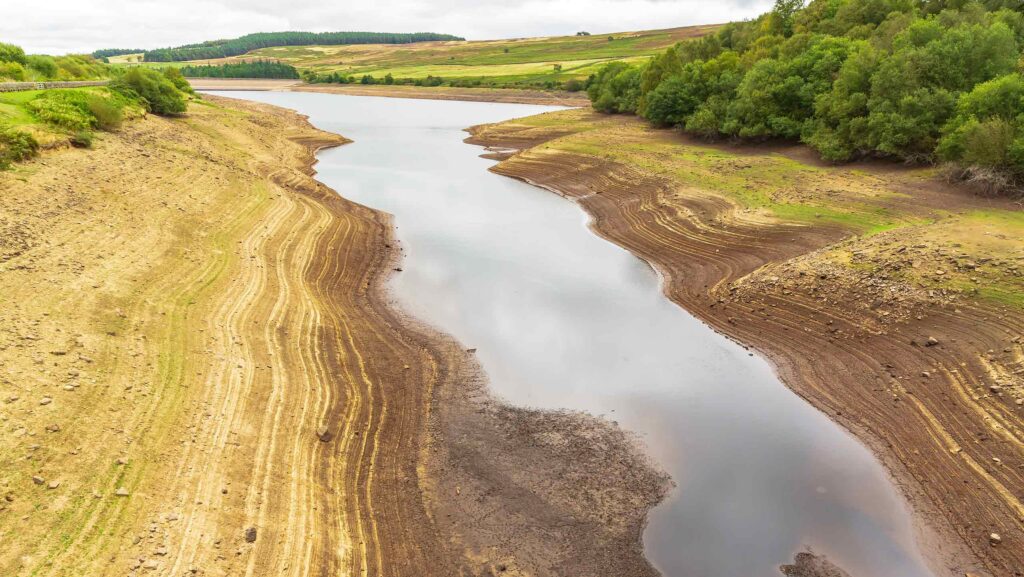
 Yorkshire has entered official drought status after months of exceptionally dry weather, but farmers are now being urged to prepare for the opposite extreme as wetter, more unsettled conditions move in.
The Environment Agency (EA) declared drought in Yorkshire on Friday 9 October after the region recorded its fifth-driest April-to-September period on record.
England’s reservoirs held 54% of capacity in the week to 6 October, 21% below the seasonal average. Levels at Yorkshire reservoirs were also low, with Grimwith at 44.3%, Scar House at 35.8%, Thruscross at 33.9% and Langsett at 23.3%.
See also: English farmers gain out-of-season reservoir access
Yorkshire joins central, southern and eastern England in drought status, while the North East and North West remain in prolonged dry weather.
It is the third drought in five years, following those of 2022 and 2025. Research suggests it would take rainfall equivalent to 120% of the long-term average over seven months to lift all of England out of drought.
Managing the shift
The Met Office says there is a “heightened potential” for wetter, stormier weather this autumn.
Rain would help ease pressure on depleted water resources, but recovery is unlikely to be immediate. Heavy downpours can also increase surface run-off and soil erosion, particularly where soil conditions limit infiltration.
After prolonged dry weather, some soils can become compacted or water-repellent, increasing run-off during heavy rain. This can carry soil and nutrients into ditches and rivers rather than allowing water to infiltrate the ground.
For farmers, the challenge is to make the most of available rainfall while protecting soils, managing drainage and preparing for periods of intense rain.
What farmers can do
Make use of water-storage opportunities The EA is allowing eligible holders of existing abstraction licences, subject to conditions, to take water outside their authorised period to fill reservoirs for subsequent spray or trickle irrigation. The temporary concession runs until 31 October.
Farmers should check their licence conditions before abstracting, as restrictions remain in place and many rivers are still experiencing low flows.
Maintain drainage Clear and service ditches and drains ahead of periods of heavy rain, while taking care to avoid accelerating run-off or transferring flood risk elsewhere.
Protect soil Cover crops and practices that improve soil structure and organic matter can help reduce erosion and run-off.
Check ground conditions Assess fields before spreading slurry or manure, avoiding conditions in which run-off could carry nutrients into watercourses.
No single measure removes the risk, but combining appropriate water storage, soil management and effective drainage can help farms cope with changing conditions.
Government response
A new Flood and Drought Resilience Taskforce is due to meet for the first time on Wednesday 14 October.
It brings together more than 50 organisations, including the NFU, Met Office and EA, and will work alongside the National Drought Group, which now meets weekly.
The government is spending £1.4bn on flood defences in 2026-27, estimating that each £1 invested saves about £8 in flood damage. It has also pledged £65m to help farmers improve resilience and is seeking to make on-farm reservoirs easier to build.
Water minister Emma Hardy said recent rainfall was not enough to replenish the water used during spring and summer. The EA has also warned that even several weeks of rain may not quickly reverse the effects of prolonged dry weather.