

Wildlife Trusts complete purchase of Rothbury Estate for £30m
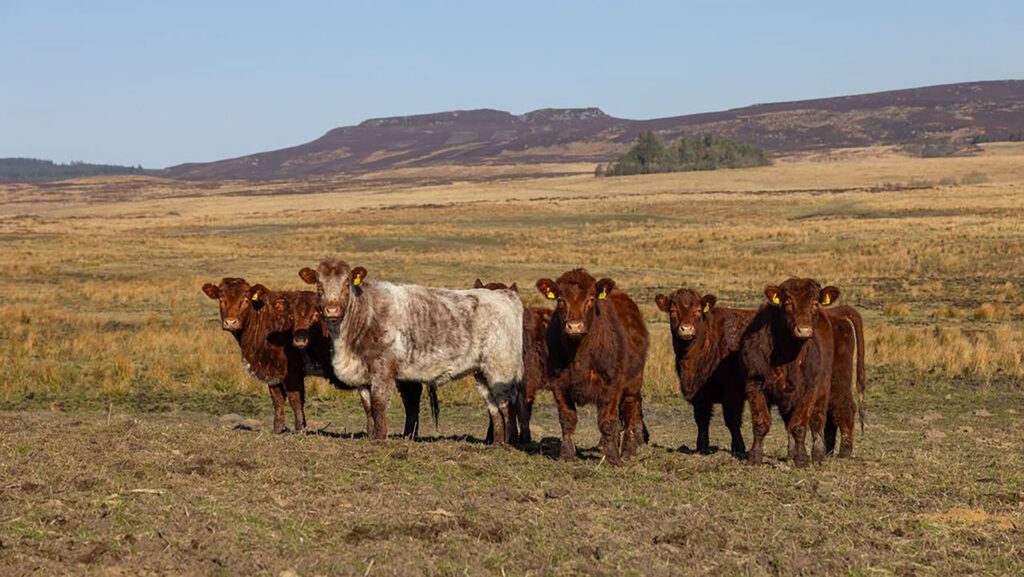 Cattle on the Rothbury Estate © John Millard
Northumberland Wildlife Trust has promised that it will leave tenant farmers to manage the land as they see fit, having completed the purchase the 3,800ha Rothbury Estate in Northumberland on Friday (30 October).
The estate was first put up for sale by the Duke of Northumberland, Lord Max Percy, in July 2023, prompting fears it might be broken up into smaller, disjointed units.
See also: Defra under scrutiny over £1.94m Rothbury Estate pledge
The Wildlife Trusts secured a part of it in October 2024 but were keen to purchase the entire block of land as part of a project to restore nature, improve public access and introduce more “regenerative” farming to the area.
As well as more than £17m secured from the general public, the charities won a £5m grant from the National Lottery Heritage Fund, various charitable grants, and earlier this week £1.94m from Defra.
Craig Bennett, chief executive of The Wildlife Trusts said the purchase provided an “incredible opportunity to restore nature at scale”.
It forms part of a wider plan to create a new 40-mile “nature corridor” from the north-east coast to the Kielder Forest on the central Scottish border.
Farming impact
Northumberland Wildlife Trust’s conservation director Duncan Hutt said changes were under way on the third of the estate the charity has already taken in-hand.
These areas had been heavily grazed by sheep in the past, leading to short pastures, he said.
“We want to see a bit more roughness to that landscape, with longer vegetation and a greater variety of plants and more trees,” said Mr Hutt.
“We will therefore be reducing sheep numbers and increasing our use of cattle, and we’ll be opening up areas so there is more ranging of animals across the landscape,” he said.
“There will be also more trees in the landscape and wetter areas as well to provide a mix of habitats, but still farmed and using cattle as the tool in a regenerative farming approach.”
Once complete, the transition is expected to see sheep numbers reduced from 1,500 to 500, and cattle numbers increased from 50 to 200 on the in-hand land.
Tenancy issues
However, Mr Hutt insisted that the eight active tenants – who hold a mix of Agricultural Holdings Act tenancies and Farm Business Tenancies on the remaining two-thirds of the estate – will not be put under pressure to change the way they farm.
“They will be free to manage the land as they always have done or as they wish to change it,” he said.
“We’d love to work with them to help support their long-term sustainability and to improve the nature value of those farms – but that will be up to them as to how much they wish to engage. Tenancies will be honoured within that process.”
Tenant Farmers Association chief executive George Dunn said it was right that tenants should be fully engaged in shaping the Rothbury Estate’s future management, with their experience informing future decisions.
“Changes to grazing should be evidence-led,” he added. “Decisions about livestock numbers should consider the wider ecological consequences, including wildfire fuel loads and the role of grazing livestock in supporting wider biodiversity.”
Mr Dunn was also critical of the £1.94m put into the purchase by Defra as part of its wider environmental ambition, saying that money would have funded about 70 additional Sustainable Farming Incentive agreements, benefiting roughly twice the acreage of the Rothbury Estate.