Cereals 2026: OSR growers to benefit from new slug pellet
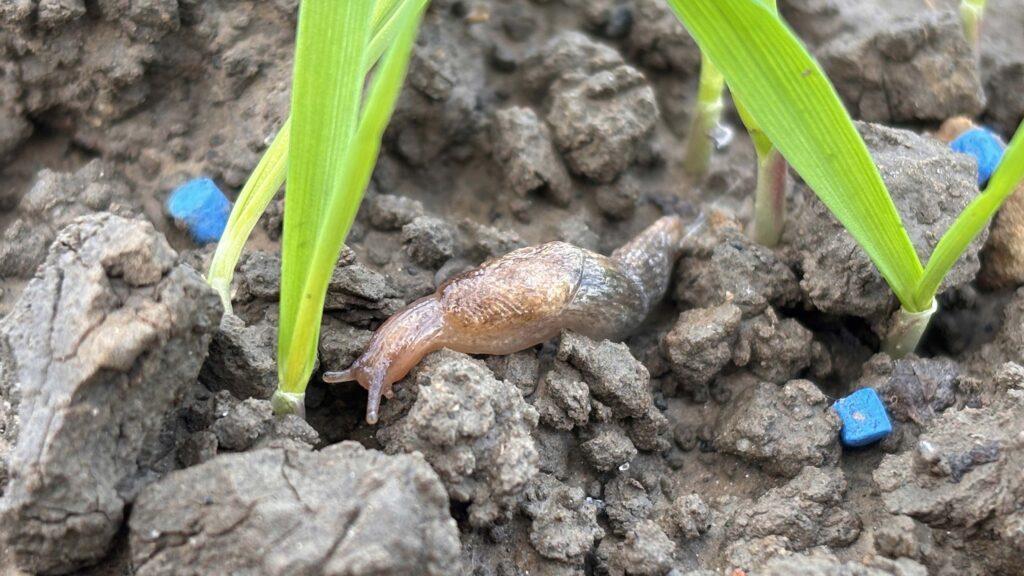 © Adama
 Oilseed rape growers are set to benefit from a new-mode-of-action slug pellet this summer, offering more rapid and effective control of the pest than ferric phosphate.
Containing elemental iron, Ferrabait differs from ferric phosphate as it is not pre-chelated, explains Adama product development manager Catherine Whaley.
Ferric phosphate is already chelated in the pellet while the iron in Ferrabait chelates in the acidic conditions in the slug’s stomach – effectively making it a stomach poison.
See also: UK oilseed rape crop: Why there’s growing optimism in 2026-27
She adds that it bridges the gap between the old standard metaldehyde, which gave very rapid results, and ferric phosphate.
The result is that while it still takes a bit longer than metaldehyde did, it is more effective and quicker than ferric phosphate, which translates into greater feeding protection in the field.
In another change, the pellet drying process gives anti-moulding properties and more weather resistant pellets, so farmers may not need not reapply. The pellets also contain humic acids, which slugs like.
Catharine says farmers will benefit from the more durable pellets combined with more rapid and greater efficacy from the active. Half a pellet is sufficient to kill a slug, removing the variable of slugs having to consume more than one pellet.
Adama has a Ferrabait spreader tool on its website that allows farmers to select the applicator they are using, spreading width and target kg/ha, and it then tells them the setting for their machine.
Targeted pelleting
Farmers could reduce slug pellet use by 50% by using patch spreading maps based on soil electro-conductivity maps.
Reducing slug pellet use is the primary goal of the Slimers (Strategies Leading to Improved Management and Enhanced Resilience against Slugs) project, and to help farmer achieve this, it has been developing digital mapping and autonomous monitoring to identify slug hotspots in a field.
Instead of treating the entire field, farmers can target the specific 10% to 20% of the area where slug numbers are exceptionally high.
Initial validation work on 19 fields showed reductions of 19-86.5% in slug pellet use by using the slug-risk map while achieving the same level of control.
The Slimers website has more information.