Why earlier wheat drilling prompts grassweed control focus
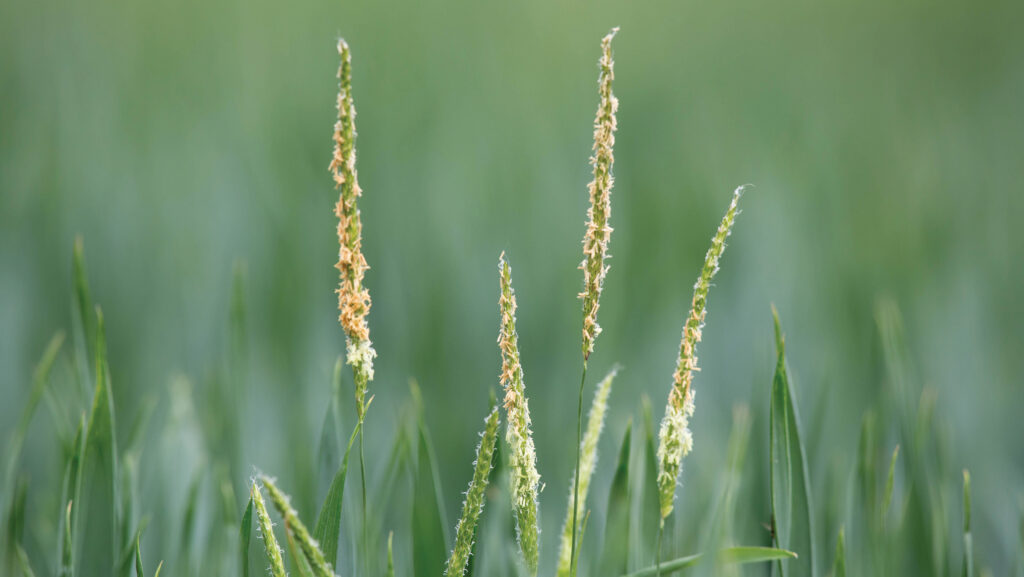 Blackgrass flowering © Tim Scrivener
 The higher yields and greater resilience targeted by earlier sowing of winter wheat must be balanced with an appropriate approach to grassweed control, growers are advised.
While a large, up-front spend on herbicides is unlikely to appeal in the current economic climate, it’s important to change the risk profile of the crop if you want to spend less money, says Adas principal weed science consultant John Cussans.
“Unless there has been a concerted effort to reduce grassweed numbers and manage the seed bank over a number of years, drilling in September usually means herbicide expenditure has to be higher,” John points out.
See also: Endophytic grass shows promise against sugar beet aphids
“That may not be what farmers want to hear, but this investment should be paid for in more yield and greater consistency.
“Appreciate that you are committed to a higher spend if you drill early.”
Without this focus, he warns there are some years and situations where weed control will be very hard to achieve, especially with high weed numbers and resistant populations.
Seed bank management
Herbicides are just one part of an overall weed control strategy across the whole rotation.
An important element of any strategy is maximising weed seed losses on the soil surface through a combination of predation, germination and desiccation, or by burying them.
Although John accepts that the drought in 2026 affected blackgrass, due to its shallow rooting, that shouldn’t change what farmers do this autumn.
“Don’t expect too much help from lower dormancy weed seed. The conditions in the field drive weed germination and should determine your approach,” he says.
Dry conditions
In the South and East, in such a dry start to the season, wheat growers are rapidly coming up against the back of the drilling window to get good results from stale seed-beds.
“It’s all about time. Ideally, you wait three to four weeks after creating a stale seed-bed before spraying it off, but that has been more difficult this year, meaning there could be a higher risk to the crop,” recommends John.
As a result, his advice is don’t overestimate what can be achieved with a stale seed-bed this year and manage your expectations going into the new cropping year.
“If it stays dry, make sure you use the whole window. Once you have drilled, opt for the chemistry that will give you the best activity in those conditions – there are actives such as aclonifen and tri-allate that give useful results irrespective of soil moisture.”
Priorities
According to John, this autumn’s weed control priorities are three-fold:
- Control the weeds that germinate early, so that you are moving in the right direction and the crop gets off to the best start.
- Never skip the pre-emergence treatment as that’s where the best results come from – equally, don’t drill more wheat than you can spray in a reasonable timeframe.
- And finally, application matters. Using the right nozzles, the right speed and the right water volume will improve results and safeguard the crop.
Agronomists’ view
Weed control does cost more in early drilled wheat crops but there are savings that can be made, agree agronomists.
Those savings won’t come from cutting corners or using less herbicide, suggests ProCam’s Rob Adamson, but by choosing the cleaner fields and using situation-specific treatments, or reducing cultivations on heavier soils.
“We’re in a good place with wheat herbicides. Things have moved on and the arrival of cinmethylin-based products gave us a reset and better field performance.”
The flufenacet situation in Europe also means that growers are getting very good value for money from the active ingredient, which forms the basis of many treatments, he points out.
Spending £150/ha, or up to £200/ha where ryegrass is also present, on the pre-emergence stage is required for persistency, adds Neil Harper of Agrii.
“This is all about balancing risk and reward,” he explains.
“Early sown wheat should bring higher yields and more resilience, but you may need to cover a longer weed germination period with your residuals.”
The 2026 drought confirmed that contact herbicides have limited activity in dry conditions, so Neil’s view is that any intended spring expenditure is often better used in the autumn.
“The residuals have different uptake mechanisms so you can mix and match them accordingly for best results. The final order will depend on the field.”
Mark Hemmant of Agrovista notes that crops become higher risk with September drilling, but that herbicide programmes can still work well, providing attention to detail is paid at application.
“At this level of expenditure, you must do it well. You can lose up to 10% of your weed control by not using the right water volume, selecting the wrong nozzle or travelling too fast”.
Herbicide prices are very similar to those of last year and it’s unlikely that less can be used on early drilled crops, he adds.
“We’ve seen some good weed chits from the use of straw rakes this season and we know that herbicide programmes are only part of the solution.
“Having the right practices in place is just as important as the actives employed.”
Proclus label change
Aclonifen works well in dry conditions and the Proclus label change allowing a split application of 1 litre/ha pre-emergence followed by 0.4 litre/ha post-emergence will be useful this season, believes Rob Adamson.
While the maximum dose remains at 1.4 litre/ha, the product can now be applied post emergence up to the 4-leaf stage of winter wheat, whereas it was previously restricted to pre-emergence only.
“There’s no drop-off in activity from splitting it,” he confirms.
“The flexibility this change provides in a dry year could make a difference – it’s a persistent molecule that mainly works by shoot activity, so its ability to hold weeds back gives other actives longer to work on the roots.”
Farmers Weekly was talking to weed control experts at Bayer’s R&D farm in Great Chishill, Hertfordshire.