3 technologies to measure farm soil health and function
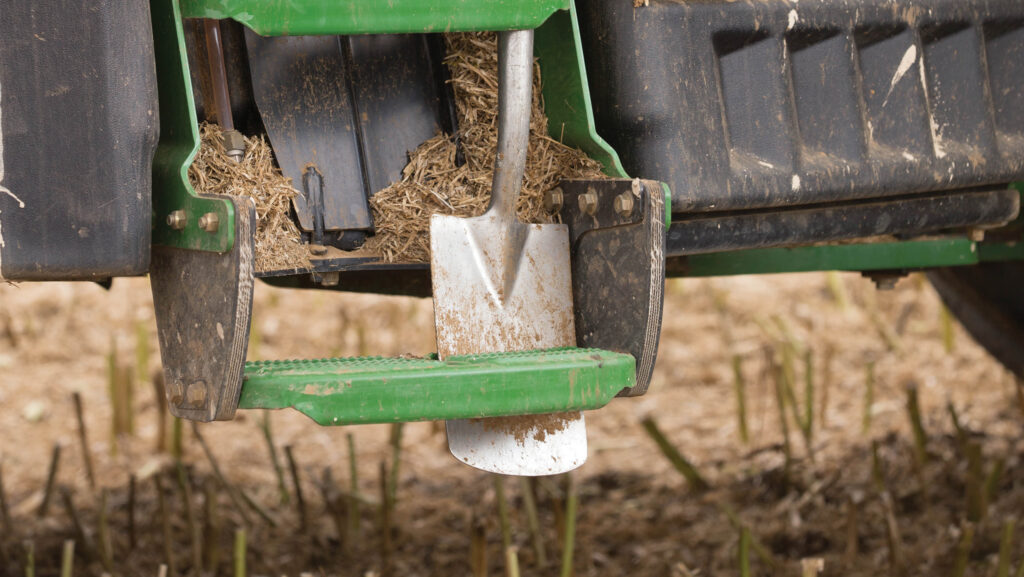 Physical, chemical and biological components all determine soil health © Tim Scrivener
 While traditional soil testing has focused on chemistry, a growing range of tools are now available to help farmers assess the biological and structural function of soils.
Soil health relies on the balance between physical, chemical and biological components. If one fails, the system can become compromised.
Karen Fisher, farming and soil adviser at the Soil Association, talks us through emerging technologies and digital apps which could benefit farmers. However, she stresses the importance of using technology alongside field observations.
See also: How project is helping French growers adapt to climate change
“Despite technology advances, field observations remain essential. Testing is only the first step. Results must be interpreted carefully and combined with field observations to inform practical decisions,” she says.
1. Microbiometer kit
The Microbiometer is a portable device which estimates soil microbial biomass, giving users a view of soil biological changes over time in a rapid and cost-effective manner.
The patented technology extracts microbes which bind to soil particles to form stable soil aggregates.
The app measures the colour intensity of theses microbes against a test card.
Microbial biomass is reported as micrograms of microbial carbon per gram of soil, while fungi-to-bacteria ratio is estimated as a percentage.
All soils and cropping vary, but as a rule of thumb productive mixed cropping systems soils function best at a ratio of 1:1.
Fungi are responsible for breaking down complex organic matter and high carbon substrates like cellulose and lignin, which in turn improves soil structure. Fungi are particularly good at retaining nutrients.
Bacteria break down food sources which are high in nitrogen and are highly effective at nutrient cycling.
Cultivations and fungicide applications destroy fungi, favouring bacterial dominance in soils. Maintaining the balance between these populations is important to optimise crop production.
2. Sear (DigitSoil) test
The Sear (Soil Enzymatic Activity Reader), is a portable, handheld soil sensor designed to measure soil biological activity.
The system measures soil enzymes and nutrient release potential, helping to estimate how much nutrition is available to crops.
The tool analyses four key enzymes:
- Leucine aminopeptidase (nitrogen)
- N-acetylglucosaminidase (nitrogen/carbon)
- Glucosidase (carbon)
- Xylosidase (carbon).
The data collected is used to quantify soil mineralisation potential to support in-season management decisions.
The app matches this to specific crop requirements, providing tailored fertiliser recommendations.
The first crop model is available for oilseed rape. In June this year, the predictive model will be expanded to other key crops in the rotation.
The device was developed by the Swiss AgTech startup DigitSoil.
3. The Slakes app
This is a free mobile app which assesses soil structure by using a smartphone camera and a simple water-submersion test.
Aggregate stability is a simple and useful indicator for understanding soil health quickly and holistically.
Users collect aggregates by removing an intact clod from the top 5cm of the soil. This should be split apart into pea-sized aggregates and dried overnight.
Photographs of the soil aggregates are then taken before and after they are submerged in water for 10 minutes.
The app automatically captures the images and calculates a soil aggregate stability index value for the sample, with results displayed immediately after.
The tool was designed by the Soil Health Institute and the University of Sydney.
Why healthy soils need accurate soil sampling
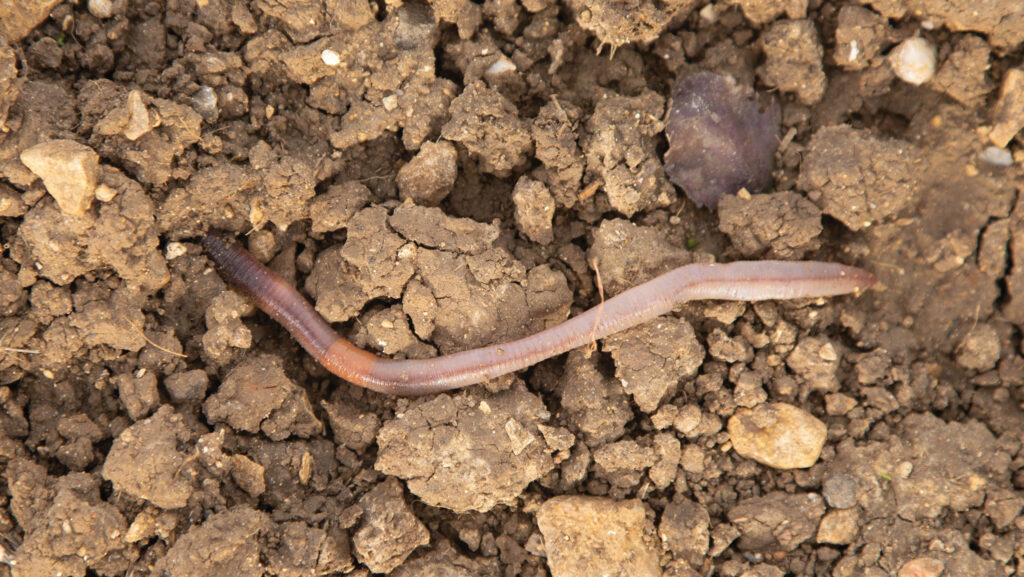
Earthworms are a key indicator of soil health © Tim Scrivener
Good soil data starts with good soil sampling. Regular testing helps track nutrient levels, avoid over-application, improve crop performance and support environmental objectives.
However, even the most advanced analysis is only as good as the sample collected, explains Karen Fisher.
“Poor sampling remains a common issue, whether through shallow sampling, unrepresentative areas such as gateways or headlands, or taking too few cores.
Mixing different soil types into a single sample can also distort results,” she says.
To improve accuracy, samples should be taken in a W-pattern across the field, collecting 15-20 cores/field.
For arable land, sampling to a depth of 15cm is standard – although deeper sampling may be needed in min-till systems.
In grassland, a 7.5cm depth is typically sufficient. For soil organic carbon testing, deeper sampling to 30cm is essential, although this can be challenging in dry conditions, says Karen.
Healthy soils typically show a good crumb structure and rapid infiltration rates.
Growers should monitor earthworm numbers, soil structure, rooting depth, compaction and water infiltration.
Soil health should be tracked over time, with testing carried out every three to five years.