

Scottish farmers told to debunk meat and dairy myths
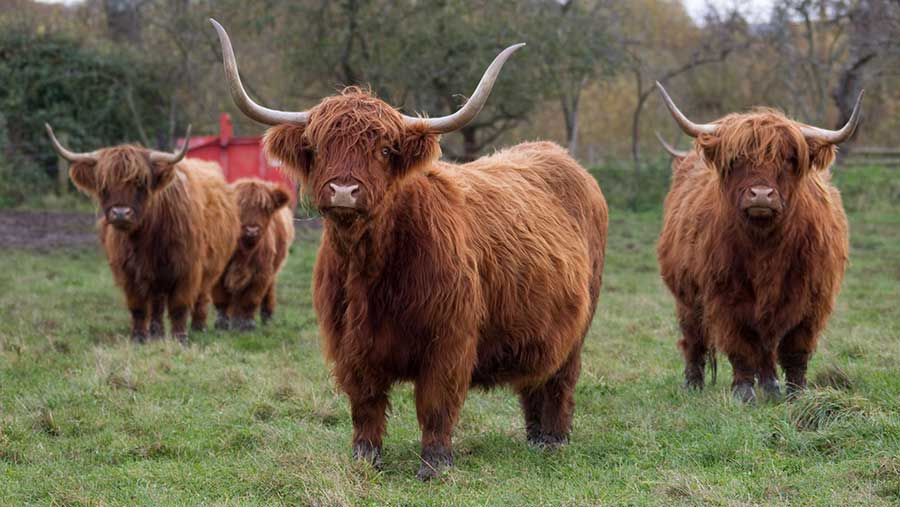 © Tim Scrivener
 Scottish farmers must raise their game to debunk common myths about livestock production systems to gain wider acceptance from consumers for their industry.
Sustainable livestock farming expert Jude Capper issued the rallying call to Scottish farmers and crofters while speaking at NFU Scotland’s autumn conference on Thursday (28 October).
“We have all got to be better, whichever part of the industry we’re based in,” said Dr Capper, the ABP chair in sustainable beef and sheep production at Harper Adams University.
See also: QMS launches toolkit to debunk myths about red meat
Dr Capper said the livestock industry felt at times like “everybody is against us”, with retailers promoting plant-based foods or dairy alternatives.
She said the popularity of campaigns such as Veganuary made it seem that “everybody is going vegan”. But this was not supported by the figures.
Last year, only 582,538 people worldwide pledged to take part in Veganuary 2021. Despite a global campaign, when placed in context, this figure was slightly smaller than the population of Sheffield.
Additionally, roughly 62% of participants were already vegan, vegetarian or pescatarian, she estimated.
Plant-based meat or dairy alternatives had often been cited as having a 300%, or even 500%, increase in support in recent years, she said, but when you drilled down into the data, this still represented a very small percentage of the market.
When faced with the Covid lockdown, however, supermarkets stocked up massively on milk, suggesting the switch to plant-based diets may be over-hyped.
“While we see in the media, ‘everyone is giving up milk, meat and eggs’, when we actually look at buying behaviours, particularly when food is scarce, it seems to indicate it [veganism] is not quite as much of a threat as we think it is,” she said.
A survey carried out by YouGov in 2019 found that just 1% of the UK population identified themselves as vegan. However, 15% said they were flexitarian, 81% said they ate meat or fish regularly, while 3% were vegetarian.
Consumers considering giving up milk, meat and eggs cite animal welfare, environmental impacts and human health as their three top concerns, according to the YouGov survey.
Beef production versus flights
Dr Capper said in terms of carbon footprint, taking a return flight from London Heathrow to Sydney, Australia emitted the same carbon emissions as it did to produce 172.1kg of beef – or nine years of an average individual’s beef consumption.
“For me, I would take the nine years of beef every time over a long haul flight,” said Dr Capper. “We’ve got to put it into context for people.”
Defra data shows that 65% of UK land is not suitable for growing arable crops. For Scotland, the equivalent figure is 80%. These areas can, however, be used to graze livestock to produce high-quality milk and meat.
“Ultimately, when we have the conversation, we have to keep it positive,” she said. “We have got to share our values, we have to say, as a farmer, ‘This is why it is important that you understand what I do’.”
Jude Capper’s five tips for positive communication
- Share your values
- Stay positive, polite and personal
- Keep it short, simple and see-through
- Focus on the important
- Know when to walk away
Explore more / Transition
Follow the experiences of our 16 Transition Farmers and access in-depth supplements, expert webinars, live events and practical content covering the challenges and opportunities facing farm businesses.
Transition is an independent editorial initiative supported by our UK-wide network of partners.
Explore the Transition hub for the latest insights, resources and events.
