How Scottish secure tenancy sales will test the market
Two sizable Scottish tenancies are about to be offered for sale on the open market, testing a system brought in five years ago to enable tenants to sell their right to a tenancy in perpetuity.
These leases are held under the Agricultural Holdings (Scotland) Act 1991, with the sales arising as a result of the tenants’ retirements and the landlords declining the opportunity to pay out those exiting tenants.
See also: How greener, longer term farm bsuiens tenancies are gaining momentum
The legislation enabling this is part of the Land Reform (Scotland) Act 2016. However, this element only came into force in February 2021 with the introduction of a new section to the act.
Under these provisions, the tenancy can be relinquished to the landlord, with financial compensation to the tenant, also accounting for agreed dilapidations and the value of any tenant’s improvements.
However, if the landlord does not wish to or cannot afford to gain vacant possession this way, the tenant has to the right, subject to a statutory procedure, to assign their tenancy to another person for a financial sum.
In 2021 there were an estimated 4,000 tenancies of this type.
While there have been some private sales and a few open market offerings, land agent Tom Oates, who is handling the sales, says the market hasn’t really been tested openly yet.
He believes these two are some of the first truly commercial holdings to come to the open market, save for a 100-acre farm and a 3,000-acre hill unit able to carry about 700 sheep.
“These are most certainly the first tenancies that are realistic good farming units in their own right,” says Tom, director of property adviser and agent Oates Rural.
Whether a relinquishment or assignment, the statutory procedure includes strict time limits and a valuation process, the cost of which the tenant covers.
Who can bid
Only new entrants and those with very limited interests in existing farming businesses can bid for the tenancy and landlords can object to a potential new tenant on certain grounds.
Opportunities to buy secure farm tenancies of this type are likely to grow as more tenants retire, says Hamish Lean, a partner in law firm Shepherd and Wedderburn, who is already seeing a growing volume of work on relinquishment and private sales.
Pressure on farm incomes, changes in policy, lack of successors and the opportunity to realise a cash sum to fund retirement are among the reasons why a tenant with a secure 1991 Act tenancy might consider relinquishment or assignment, he says.
“There is a bit of pressure on tenants to act sooner rather than later, as the valuation formula for compensation for relinquishing the tenancy to the landlord has to assume the tenant will remain on the farm until their death.
“Therefore, the older the tenant, the shorter their potential term and the smaller the potential compensation value.”
Equally, there is a range of reasons why a landlord might opt to allow assignation, including the challenge of finding a cash sum to pay out the tenant.
Hamish points out that at review, the rental value for a 1991 Act tenancy is always less than for open market tenancies in Scotland such as Modern Limited Duration Tenancies.
“The reason a 1991 Act tenancy rent is lower than an open market letting is because the rent review test requires the effect of scarcity as a result of lack of supply on an open market letting being used as a comparable to be identified and discounted.”
Landlords can object
“Landlords are entitled on certain grounds to object to an assignee [buyer] of the tenancy.
“This might be because they are not of good character [for example if they have committed fraud], or they don’t have the resources to fund the farming business and pay the rent, or they may lack the necessary skills and experience to run the farm.
“However, that last requirement can be overcome by the assignee signing up for a farming course at college, provided they can cover the farm work some way in the meantime.”
Hamish suggests that the capital requirements of buying the lease and equipping the farm mean that younger members of established farming families who are not current owners or part owners of farming businesses are likely to qualify as new entrants to buy this type of tenancy.
The advantage to themselves and to the landlord is that they may be able to call on the financial resources of the family to support them.
The farms
The first farm to be offered, Milton of Larg, lies just east of Stranraer in Dumfries and Galloway and has just over 423 acres of permanent pasture and rough grazing.
Until 1991 it was a dairy unit but it now runs a 120-cow beef suckler herd and overwinters sheep.
The holding has a five-bedroom farmhouse and modern and traditional buildings.
These include a 100-head cubicle shed, a slurry lagoon, a general-purpose steel portal frame shed and earth-banked silage pit, all identified as tenant improvements in a completed amnesty.
The annual rent is £11,500 and the guide price for the tenancy is £400,000.
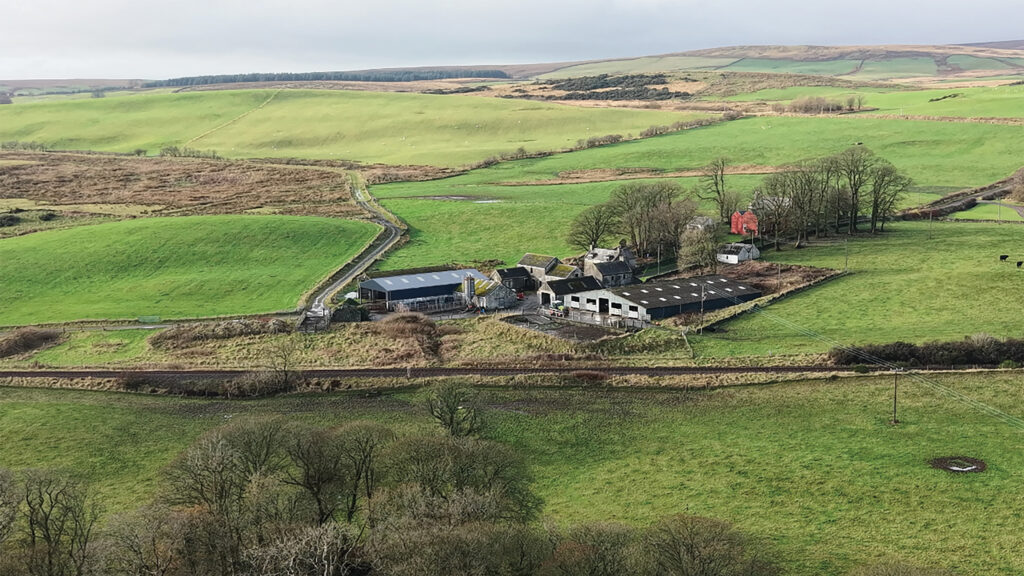
Milton of Larg © Nigel Forster
The second farm, Bemersyde, near Melrose in the Scottish Borders, is about 488 acres, with 430 acres of this arable and 53 acres permanent pasture.
There are traditional and modern buildings, a five-bedroom farmhouse and three cottages.
There is permission to sub-let two of the cottages. The tenancy has a guide price of £950,000, and here the rent is under review and expected to be agreed shortly.
“Importantly there is also a tenant improvement amnesty in place at Bemersyde,” says Tom.
“The tenants’ amnesty process was introduced by the Land Reform (Scotland) Act 2016 and provides tenant farmers with the chance to document their improvements, even if made without the landlord’s consent.
This enables compensation for certain improvements to be paid to the tenant at the end of the lease.
It applies only to improvements carried out prior to the introduction of the amnesty on 13 June 2017. The opportunity to engage in the process ended in June 2020.
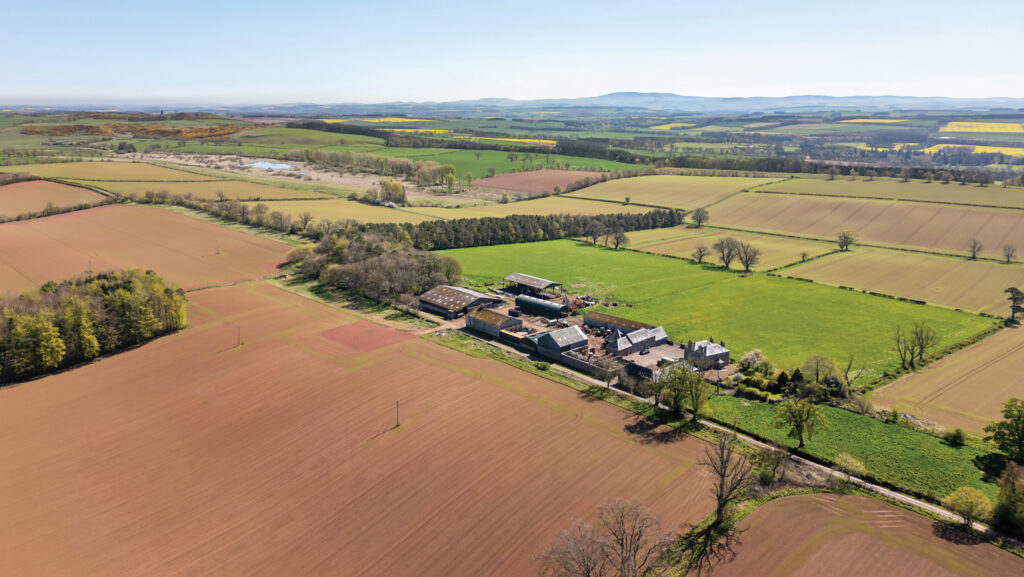
Bemersyde © Filmworx
The tenancy sales on these two farms, which are both prompted for genuine retirement reasons, will be by formal tender.
Tom has conducted more than 50 successful relinquishment negotiations worth a total of more than £30m, and a few private sales of 1991 Act tenancies, some of these transactions within families.
“This type of tenancy goes on in perpetuity, so you are acquiring an asset that you can potentially sell on yourself.
“While the lump-sum value of the tenancy may be a considerable amount to find, it is an asset that should hold its value and is a much cheaper proposition than buying a farm of equivalent standing,” says Tom.
Scottish Tenant Farmers Association chairman Christopher Nicholson says the relinquishment and assignation provisions have been a success for the tenanted sector, with the process now well accepted and underpinned by guidance from the TFC.
“Confidence in these provisions is growing and we expect increasing use as an alternative to traditional waygo [end of tenancy] arrangements.
“To date, the majority of cases have resulted in the landlord purchasing the tenant’s interest in the lease.
“However, we are now seeing a rise in tenancies being assigned for value to progressing farmers, allowing secure tenancies to continue.
“Overall, the provisions are encouraging tenants without successors to retire on fair terms and in good time, while also creating new opportunities.”
Tenant Farming Commissioner (TFC) Rob Black says: “The formal process, involving the TFC, is largely a backstop where agreement cannot be reached.
“In the five years since the provision was introduced, 20 notices of relinquishment have been submitted to the TFC.
“Anecdotally, this is just over 20% of relinquishments, with around 80% privately negotiated.
“However, there is still no comprehensive, up-to-date picture of the total number of 1991 Act tenancies or how these provisions are being used in practice.”
1991 Act tenancies – the relinquishment and assignation processes
Relinquishment
Provided a tenant has not already been served a notice to quit or has failed to comply with provisions of the lease, they can relinquish the tenancy for a compensatory payment from the landlord.
To proceed, the tenant serves a notice to relinquish on the landlord, and on the Tenant Farming Commissioner (TFC), who will appoint an independent valuer to assess the tenancy value within eight weeks of their appointment.
The value of the holding is assessed on both a vacant possession basis and with the tenant in occupation.
The amount payable to the tenant is half of the difference between those two sums, with tenant’s improvements or dilapidations calculated separately and added to or deducted from the compensation payment.
If the valuation is accepted by both parties without further representations or appeal, a notice of acceptance is issued to the tenant and the TFC by the landlord in a prescribed form, and compensation must be paid to the tenant within six months of receipt of the valuation.
Assignation
If the landlord rejects the valuation or withdraws their acceptance, the tenant can instead assign the lease to a new entrant or progressing farmer.
The 2016 Act closely defines a new entrant as someone who does not hold or have a relevant interest in an existing agricultural tenancy and has not done so within the five years immediately preceding the assignation.
A progressing farmer is someone with only limited interests in agricultural land; these interests are also set out in detail.
The tenancy must be assigned within 12 months of the initial valuation following the relinquishment notice.
The value of the tenancy is negotiated between the incoming and outgoing tenants.
Tax implications
The lump sum paid by the landlord or a buyer of the tenancy will be subject to capital gains tax (CGT), excluding the part representing compensation for tenant’s improvements.
Sometimes there is an advantage to doing a private deal with the landlord outside of the statutory provisions as this may provide an opportunity to mitigate CGT, says Hamish Lean.
A landlord buying out a lease and an incoming tenant purchaser may both have to pay land and building transaction tax.