NFU presses Defra over stalled crops fairness review
 © Tim Scrivener
 The NFU has urged Defra to press ahead with its review of fairness in the combinable crops supply chain, arguing that greater transparency and better data are needed to secure arable farmers a fair return.
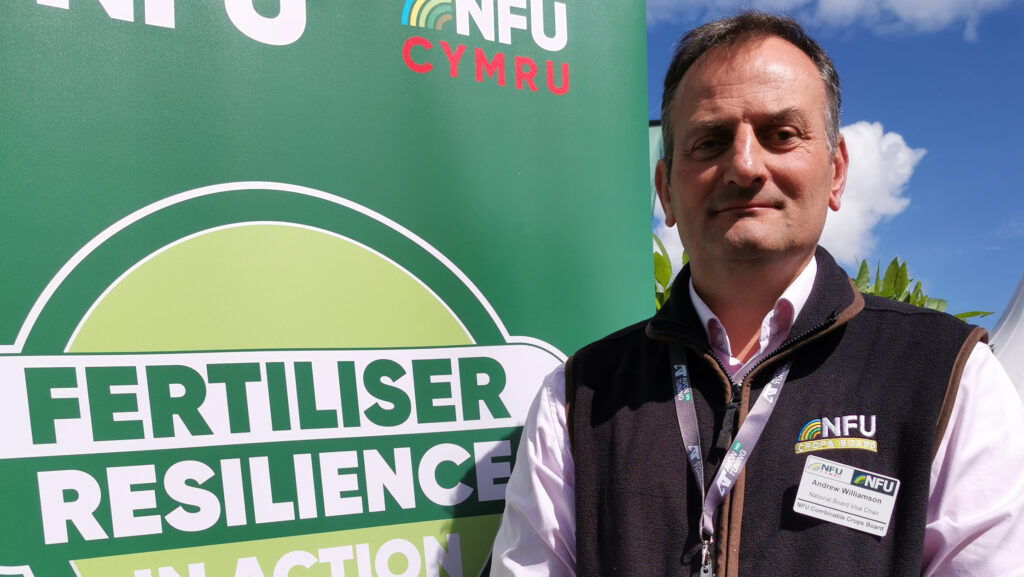
Speaking at Cereals 2026 at Jeremy Clarkson’s Diddly Squat Farm in Oxfordshire, NFU Combinable Crops Board vice-chairman Andrew Williamson said growers had welcomed the government’s strategy work on the sector, but progress had stalled.
See also: NFU session exposes deep flaws in crops supply chain
Andrew Williamson © MAG/Philip Case
“We’ve had a great opportunity launched to give us, the farmers, a strategy review for the combinable crops sector, and part of that strategy review from the government is to look into the fairness of the supply chain,” he told reporters.
But he added: “The people within Defra have been moved elsewhere to deal with other issues.”
The review follows a public consultation on fairness in the combinable crops supply chain, which closed in February. Defra has yet to publish its response.
Mr Williamson said the industry needed clearer understanding of how value was distributed through the chain.
“We need to get a better understanding of where the supply chain works, where it doesn’t, how we get a fair return for our risk and investment going forward, and make sure it’s fair right the way from the grower all the way through to the end consumer.”
A key NFU demand is the introduction of a digital grain passport, which Mr Williamson described as a “red line ask”.
He added: “The NFU is really in favour of the digital grain passport, and that is our red line ask to move forward.
“We have to have real-time, immediate data returned for every single load we send off the farm.”
Mr Williamson said growers currently lacked sufficient feedback on crop quality once grain left the farm gate, leaving them at a disadvantage compared with other sectors.
“It’s absolutely the data that is the critical part to be able to get a fair return.”
SFI clarity plea
Alongside supply chain reform, Mr Williamson raised concerns about uncertainty around the Sustainable Farming Incentive (SFI), saying farmers needed clearer direction from government about the long-term future of the scheme.
“We definitely need that, but we also need to bring in the fact that we can deliver for the environment and produce food at the same time,” he said.
“At the moment, the goalposts are not even on the pitch, so we don’t know which direction we’re going.”
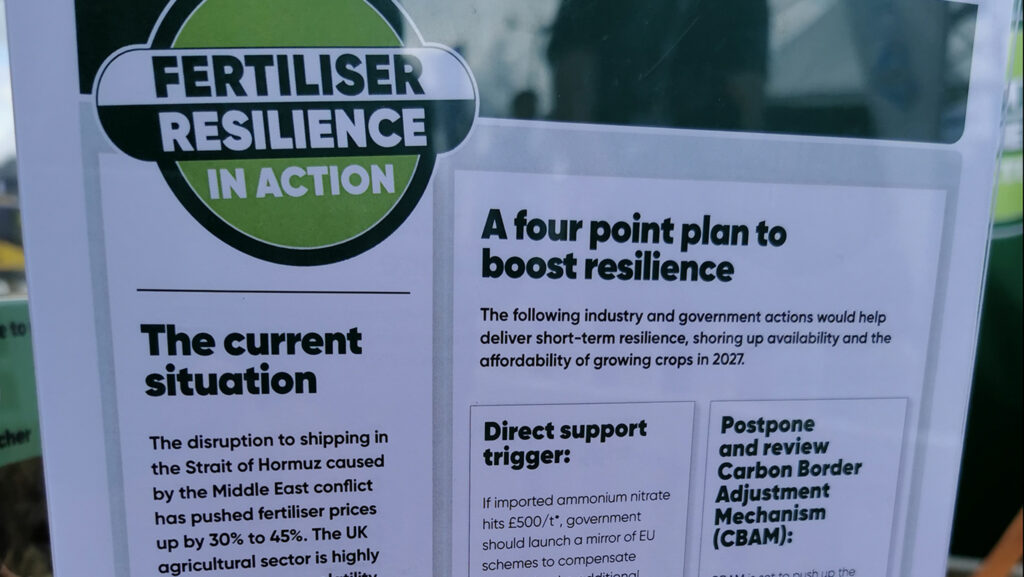
The NFU also used the Cereals event to set out its new Fertiliser Resilience Plan, which calls for government support mechanism if imported ammonium nitrate reaches a trigger price of £500/t.
The union is also encouraging greater use of home-grown protein crops to improve resilience and reduce reliance on imported inputs, provided there is sufficient market demand.
© MAG/Philip Case
Glyphosate dispute
On crop protection, Mr Williamson rejected calls from the Soil Association and others to ban glyphosate as a pre-harvest desiccant.
“There is no science behind the fact that glyphosate isn’t safe to use as a pre-harvest desiccant,” he said.
He also warned that closer UK alignment with EU sanitary and phytosanitary rules could ultimately restrict the UK’s ability to set its own rules on the use of glyphosate and other important plant protection products unless exemptions are secured.