

RPA repayment demand sparks Exmoor farmer’s fury
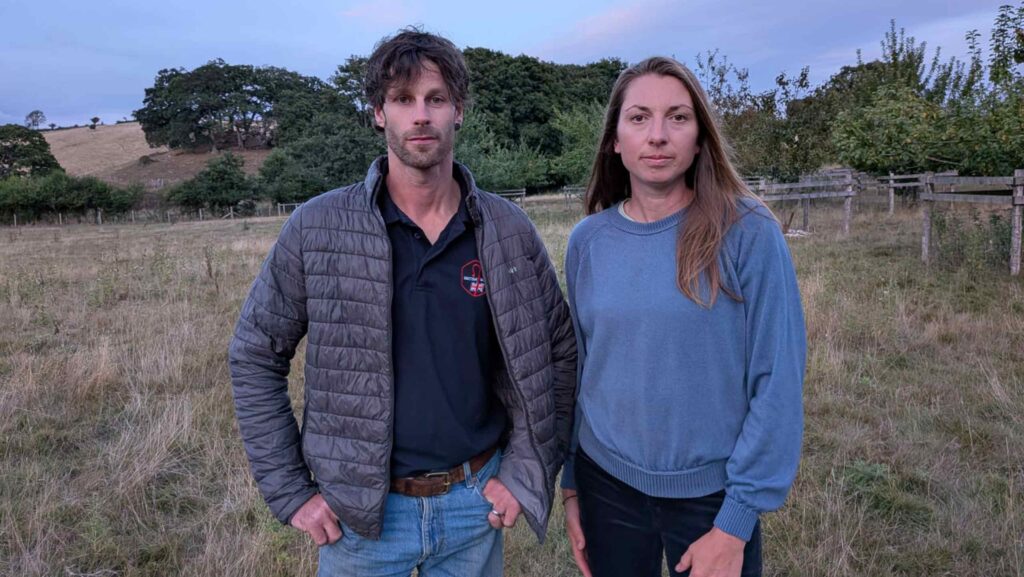 Holly Purdey with her husband, Mark Brewer © Holly Purdey
 Exmoor farmer Holly Purdey has criticised the Rural Payments Agency (RPA) after being told to repay an overpayment linked to capital works completed and paid for in 2018, but not inspected until six years later.
Mrs Purdey said the case had undermined her confidence in the payments system, with farmers facing the prospect of having payments questioned years after work has been completed and evidence approved.
She farms 121ha on the National Trust’s Holnicote Estate with her husband, Mark Brewer, producing beef, sheep and fruit trees for silvopasture.
See also: Somerset farmer questions value of RPA inspections
Their dispute stems from a Countryside Stewardship Higher Tier agreement entered into in 2017, before they took over their tenancy in 2018.
Capital works under the agreement were completed in 2018, with evidence submitted and approved before payment was made.
However, a random Rural Payments Agency (RPA) inspection did not take place until 24 October 2024.
The agency wrote to Mrs Purdey on 17 October 2025 with the inspection results, before contacting her again in August 2026 to claim an overpayment had been made on capital options.
The recovery calculation was itemised under the 2017 marketing year as over-declaration penalties and reductions linked to Countryside Stewardship Higher Tier Capital – M04 FA4a.
The RPA is demanding £450, with a deadline of 11 September 2026.
Mrs Purdey said the issue was less about the amount than the lengthy delay between completing the work and the agency identifying an alleged problem.
“It creates a real fear that we can do everything that is asked of us, submit the evidence, have it approved and receive payment, but then years down the line be told there was a problem,” she said.
The demand has also landed amid severe cashflow pressures caused by spending on bluetongue vaccines and challenging drought conditions.
“The RPA seems comfortable missing its own payment deadlines, yet expects farmers like us to meet theirs without fail. That’s pretty ironic,” she said.
“It’s not a tiny sum and comes at a time when we, like many farmers, have been struggling with the impact of drought and bluetongue.
“We’re nine years post our scheme starting. This does nothing for your confidence.”
Sluggish timelines
Mrs Purdey stressed that she was not looking to avoid paying a legitimate debt.
“I’m not going to quibble if money needs to be paid, but it’s the methods they go about things to create really negative situations that don’t need to occur with much better communication,” she said.
When she requested further clarity on the repayment, she was told replies take 10 working days.
An RPA spokesman said: “We are committed to helping farmers and food businesses thrive, but we also have a responsibility to carry out checks and review evidence after a payment is made to protect public money and the goals of the schemes we manage.”