

Somerset farmers braced for prolonged flood fallout
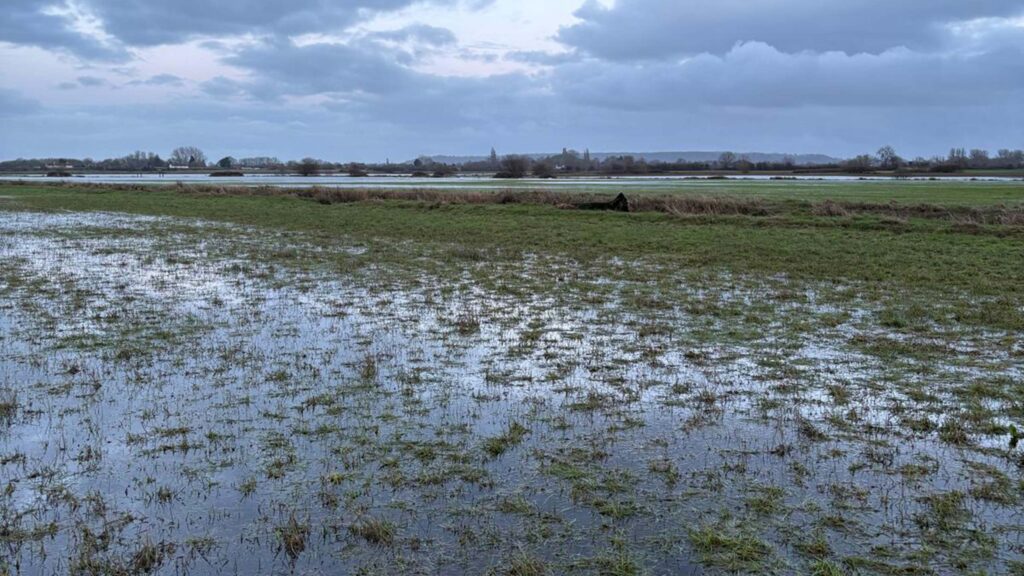 Grazing land is still underwater at West Yeo Farm © James Winslade
 Farmers on the Somerset Levels say the impact of one of the wettest winters in decades will be felt long into spring, as floodwater continues to blanket land and financial pressures mount.
The Environment Agency (EA) confirmed on 27 February that about 20 square miles of the Levels remain submerged following months of persistent rainfall. While recent drier days have brought limited relief, many producers remain unable to access grazing ground.
James Winslade, a fifth-generation beef farmer at West Yeo Farm near Bridgwater, said vast areas upstream were still submerged.
See also: Somerset farmers battle worsening flood crisis
“Tens of thousands of acres above us are still underwater. It will take months to get that water off and there will be fodder shortages too,” he said.
“Farming is being walloped everywhere you look – from inheritance tax to fertiliser and pickup taxes, soaring costs, and falling SFI payment rates.”
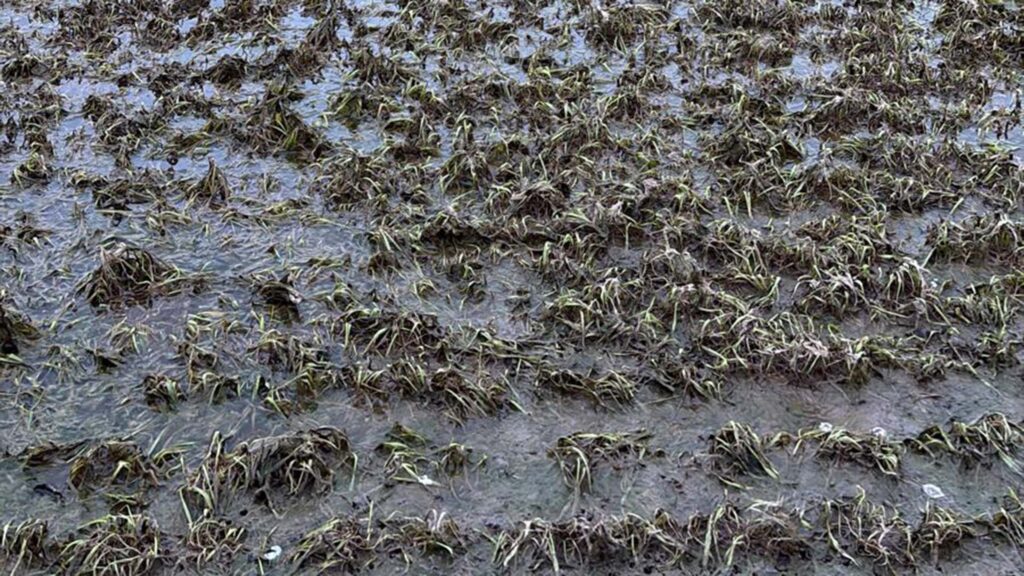
James Winslade’s winter wheat © James Winslade
He praised the efforts of local internal drainage boards (IDBs), which he said had been pressing the EA to accelerate water movement and checking pumps, sluices and watercourses to ensure systems were working efficiently.
However, Mr Winslade voiced concern about EA plans to scale back local river maintenance.
He reiterated calls for permanent pumps on the Levels and the construction of more reservoirs to capture winter rainfall for use during increasingly common summer droughts.
For dairy farmers, the crisis is compounded by last year’s dry spell. Mark Humphry, NFU county chairman for Somerset and a Duchy tenant near Taunton, warned that recovery would be measured “in months rather than weeks”.
“For some farms, the situation is critical and it will probably be another month before they see their land,” he said.
“Because of the drought last summer affecting the South West, many farms weren’t able to grow the fodder they wanted to. Then we have had the wet winter. There are farms out there having to buy in forage for their cows.”
Mr Humphry’s own dairy farming business, which supplies milk to cheesemaker Wyke Farms, spent about £40,000 on feed during the summer drought.
Although he has turned out 120 in-calf heifers onto Italian ryegrass, many herds in the region remain housed, driving up feed and bedding costs while milk prices remain under pressure.
Around the regions
Elsewhere, farmers are reporting that spring is in the air. In Essex, arable farmer Guy Smith at St Osyth, near Clacton-on-Sea, described January as “very wet” with about four inches of rain, but said conditions had improved.
“Thankfully, the weather seems to have taken its foot off the throttle. The crops look OK. The problem we have had is getting our hands on fertiliser,” he said.
In Aberdeenshire, sheep farmer Rodney Blackhall called the winter “horrendous”, citing heavy snowfall followed by weeks of rain.
Yet with lambing under way, optimism is returning. “Spring is in the air and there’s a much better feel to it at last,” he said.
Met Office data released
Provisional figures from the Met Office underline the scale of the winter deluge. England recorded 42% more rainfall than its long-term winter average, ranking it the eighth-wettest winter since records began in 1836.
Southern England endured its fourth-wettest winter, while the West Midlands, Cornwall and Leicestershire each logged their wettest on record.
Across the UK, rainfall was 13% above average, although Scotland was 14% below its seasonal norm, highlighting sharp regional contrasts.