

Analysis: Brexit decade brings mixed fortunes for farmers
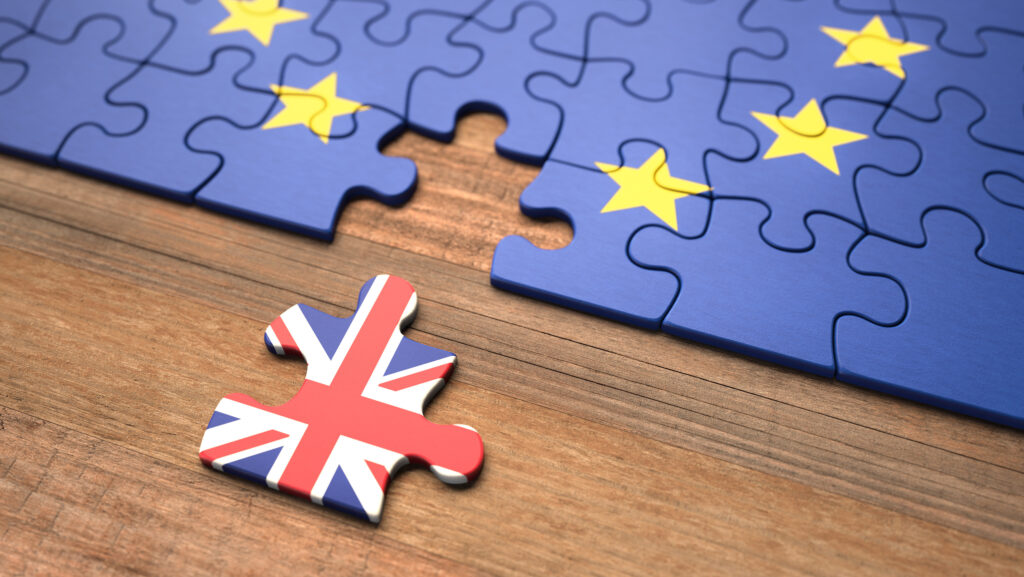 © Adobe Stock
 The UK’s 2016 decision to leave the EU after more than 40 years of membership was as surprising as it was consequential. Few, including those advocating for Brexit in the run-up to the 23 June referendum, believed that it would actually happen.
When it did, it provided one of those rare moments in history in which most people will remember where they were or what they were doing when news came through that the country had indeed voted to cut its ties with Europe.
See also: On test: Toyota Hilux gets better looks but same old drivetrain
One of the many myths surrounding those events (along with the one that an extra £350m a week would be spent on the NHS – remember that big red bus?) was that farmers voted overwhelmingly for Brexit.
That was not the case. Our own survey at the time revealed a 54% to 46% split in favour of leaving the EU within the agricultural community – not much different from the 52% to 48% split nationally.
Some questioned the validity of our findings, given that they were based on a self-selecting survey of our reader database.
But subsequent FW surveys revealed the exact same result, while other independent research of the country’s most rural counties, including by the London School of Economics, drew the same conclusion.
So how does the industry see things now, and would a new referendum throw up a different result?
New survey
To find out, Farmers Weekly conducted a new survey in May of this year, asking farmers and others in the ancillary industries for their views.
As ever, interest in the subject is still considerable, with more than 1,000 verified respondents over the two-week period – one of the biggest ever responses to all our surveys.
And the strong sentiment to emerge is that the Brexit promises made during the 2016 campaign have not been delivered. Furthermore, if there was a new referendum tomorrow, the agricultural industry would probably vote the other way.
Asked that specific question, 55% said they would now vote to rejoin the EU, compared with 43% who would prefer to stay independent.
Drilling into that a bit further, there is a clear split between how grassroots farmers see it and how those working in the ancillary industries would respond.
Among farmers (who made up about four-fifths of the survey), 51% said they would now seek to rejoin the EU, against 47% who would prefer to stay out (with 2% saying they would not vote) – close, but still a switch from 10 years ago.
For those working in the “supply chain”, a more convincing 72% would like to rejoin, compared with just 26% who would prefer to stay out.
Among the farmer respondents, farm managers appear more keen to rejoin than owner-occupiers or tenants, as do those farming in Wales and Scotland.
Where has it all gone wrong?
Overall, however, there appears to be major disappointment with the way Brexit has turned out.
When we asked what people thought the effect of leaving the EU had been on UK agriculture, just 18% said it had been positive, while 68% said it had been negative (and 13% said it had made no difference at all).
Within the farming group of respondents, there seems to be little difference between the sectors, with 67% of cereal growers saying Brexit has been “fairly” or “very” negative for them, compared with 66% of sheep producers and 63% of pig producers.
The most despondent group would appear to be oilseed rape, potato and sugar beet growers – all with a “disappointment rating” in excess of 70%.
To what extent this reflects the impact of Brexit, or the other challenges specific to those sectors is open to conjecture, though the loss of access to emergency neonicotinoid seed treatments and the demise of the seed potato export market may have influenced opinions.
Pros and cons
Around half of those taking part in the survey suggested there had been no benefits at all from Brexit, though of those who did see some gain, 18% pointed to the greater independence the country now has in terms of policymaking.
“The biggest benefit is the ability to set our own rules for agriculture – both for crops and animal welfare,” said one farmer owner. “This, however, has not been taken proper advantage of and looks likely to be lost through trade agreements with the EU,” he added.
Another supply chain participant pointed to the progress the UK has made in gene editing and crop protection since leaving the EU. “We can lead the way with innovation and be at the forefront of solutions to complex problems,” he said.
Other areas of improvement identified included animal welfare, technological development and environmental support.
But by far the greater emphasis was on the negatives, with 29% citing the loss of EU-style support payments, 24% pointing to the imposition of new trade barriers for exports, and 23% mentioning lack of security at the borders.
Red tape, labour availability, food security, import competition and export opportunities were all considered to have been made substantially worse as a result of Brexit.
“Brexit has put a barrier of paperwork to hinder access to both markets and suppliers, and has sidelined us from decision-making in Europe,” said one farm owner.
“The EU looks after its farmers, unlike our Labour government,” said another farming tenant.
Support arrangements
As such, it was little surprise to find that many more stakeholders – both farmers and those in the ancillary industries – said they wished the UK was still in the Common Agricultural Policy (CAP).
Across the board, about 42% gave this answer, while 26% said they were happy with the new domestic farm support policy.
Arable farmers were more inclined to hanker after the old-style EU subsidy system, while dairy, pig and poultry producers seem relatively more content with the new system – presumably because they were never major beneficiaries under the CAP anyway.
There were no particular regional differences. Even though farmers in the devolved regions are a few steps behind those in England in terms of the policy transition, they seem to have no greater enthusiasm for the emerging new domestic support arrangements.
Interestingly, 20% of farmers indicated they would be happier with no support, while 12% said they “didn’t know”.
Dwindling appetite for another referendum
Despite all this, it is apparent there is little enthusiasm within the farming community for another referendum.
When we asked that question three years ago, 52% of respondents said yes, they would like the chance to vote again. This time round, just 41% gave that answer, with 9% undecided and 50% against the idea.
Grassroots farmers taking part in the survey were even less inclined to want another referendum (37%) whereas a small majority of those in the ancillary sector (56%) thought it would be a good idea.
Those operating in the livestock-dominated North West were particularly opposed to having another referendum, while farmers in the arable-dominated East were more open to the idea – perhaps mirroring the contrasting economic performances of livestock and arable farming in recent times.
More support for an SPS deal
While there seems to be dwindling enthusiasm for a new referendum, there is some support for closer alignment with the EU, as being progressed by the Labour government with its attempts to secure a sanitary and phytosanitary (SPS) agreement with Brussels.
With a target to secure such a deal at the next UK-EU summit (pencilled in for July), the government is adamant that this will deliver significant gains in terms of freeing up trade and stimulating agricultural exports.
Defra estimates that a food and drink deal could deliver up to £5bn a year for the UK economy, helping cut the considerable costs of dealing with red tape and inspections at the borders, and recouping some of the 20% drop in agri-food exports since 2018.
Defra secretary Emma Reynolds has been a particular enthusiast. “By reducing delays and unnecessary paperwork, this deal will help keep shelves stocked, protect jobs and put downward pressure on food price inflation for families across the country,” she has said.
Many in the farming industry are more circumspect, pointing to potential difficulties in terms of pesticide availability, the future development of gene editing, and plans for vaccinating cattle against bovine TB, should the UK fail to win any special exemptions from EU regulations.
“It is vital we get the right deal for UK farming – one that minimises disruption and has appropriate transition periods in place to enable farming businesses to adapt,” said NFU president Tom Bradshaw.
Against this background, our survey shows a clear split – with 47% in favour of so-called “dynamic EU alignment” – though quite a number said they were unsure or had not heard of it, while about 53% said we should go further and rejoin the Single European Market.
Again, and not surprisingly, grassroots farmers are less enthusiastic than those in the supply chain for these developments, though the survey also found that “farmers who have changed the way they farm as a result of Brexit” are also a bit keener on dynamic alignment, and even on holding another referendum.
Conclusion
Ahead of the 2016 referendum, Farmers Weekly took a stance. We recognised that our readers would be influenced by a whole host of considerations when deciding how to vote – issues of sovereignty, migration and bureaucracy ranking highly among them.
Our view then was that “if farming prosperity is your number one concern, then a vote to remain seems to be the preferable option” – and we took a lot of flack for expressing that view.
Clearly there is no prospect of another referendum soon. But, whatever the challenges thrown up by closer ties with Europe through an SPS agreement, taking steps to ease the flow of agricultural exports, on balance, seems to be the most sensible way to go.
Some other key findings
- Half of farmers say they have changed the way they run their farms since leaving the EU, with joining a new agri-environment scheme, diversifying and cutting production the most common changes.
- Three-quarters of respondents believe the trade deals the government has made since Brexit have been “fairly” or “very” bad for British farming.
- The most common word chosen (by 16% of respondents) to describe the impact of Brexit on British agriculture is “disastrous”.
Would you vote differently?
Back in 2017 – 18 months after the referendum – we asked our readers if they would change the way they voted if given another opportunity. Whether out of cussedness or conviction (there was already mounting dismay at the impact of Brexit), the message was clear, with just 1% indicating they might vote the other way.
We asked the same question in 2023, and found that a more significant 8% of readers who had voted “leave”, would actually switch to “remain”.
The world has changed dramatically in the intervening years and that trend seems to have accelerated. When we asked the same question last month, we found that more than a quarter (27%) of those who wanted “out” of the EU in 2016 would now like to rejoin.
The desire for a rethink is especially strong among those working in the supply chain, where 39% of those who voted leave last time would now vote remain.
To be fair, the survey also found that 16% of those who voted “remain” 10 years ago say they would now opt for “leave”.
It is also notable that there is now a sizeable chunk who say they did not vote at all in the 2016 referendum – presumably because they were too young at the time.
Not surprisingly, those who said they would change the way they would vote now are also the most keen on having another referendum.
About the survey
- Just over 1,000 Farmers Weekly readers completed the survey.
- Of them, 81% were active farmers (mostly owner occupiers) while 19% were from the ancillary industries.
- Of that 19%, a quarter were consultants, 12% provided “professional services”, and 11% were agronomists.
- The average farm size was relatively high for a “typical” FW survey at 317ha.
- The most common enterprises run by respondents were cereals (57%), beef (45%) and sheep (37%), though all other farm types (dairy, horticulture, pigs and poultry) were well represented.
- The average age of respondent was 57.
- There was a broad geographical spread, but with the highest proportion (20%) coming from the South West and the smallest from Northern Ireland (2%).