

Dartmoor ponies removed from stocking rate calculations
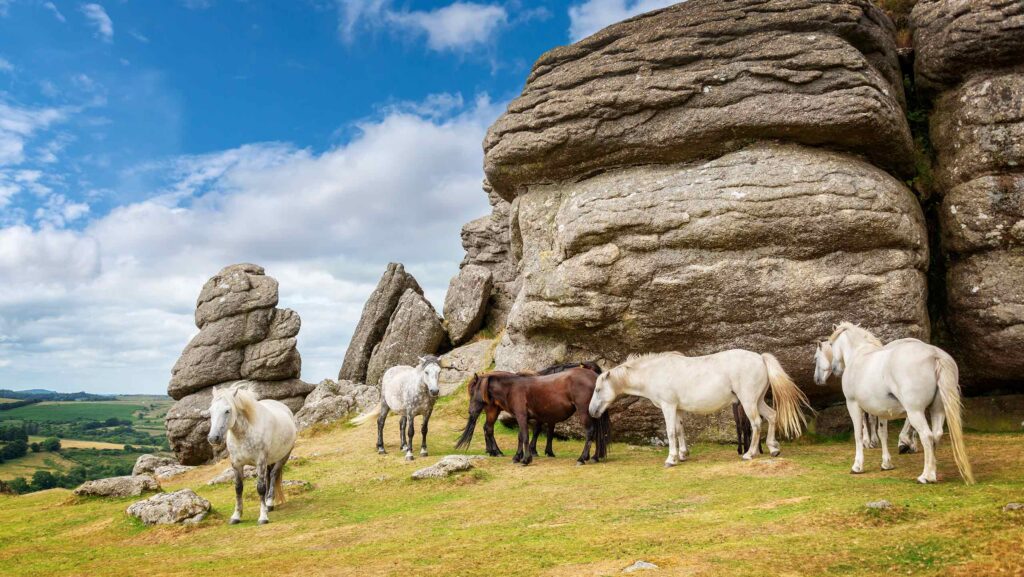 © Adobe Stock
 Farmer and countryside groups have applauded a government decision to exclude Dartmoor ponies from stocking rate calculations when it comes to meeting agri-environment scheme conditions, but say further refinement is essential.
Fears had arisen that by including them in stocking rate calculations, farmers would be more likely to take out ponies rather than beef or sheep, as the ponies offer little financial reward.
See also: High Court finds Dartmoor stock assessments inadequate
But with less than 1,500 Dartmoor ponies remaining, it was predicted the population could fall below sustainable levels.
A public petition to change the rules and protect the ponies attracted almost 224,000 signatures.
However, Defra has now confirmed the animals will be removed from stocking rate calculations in new Environmental Land Management (ELM) agreements with immediate effect, implementing a key recommendation of the 2023 Fursdon Review.
Pony numbers will also be monitored to ensure they remain stable, and a dedicated pony supplement introduced into farming schemes (which will also be available in other moorland locations).
Marian Spain, Natural England chief executive, said: “Natural England has always been clear that Dartmoor’s ponies play a central role in shaping the landscape and supporting nature, and we want to see them continue to do so.”
Response
Tenant Farmers Association vice-chairman and Dartmoor farmer Helen Radmore said it was good to see Defra and Natural England adjusting its policy according to need.
“But we need to go much further than just looking at ponies,” she added. “We need to reconsider the stocking rates for hefted sheep and cattle too.
“Currently, Defra and Natural England seek to impose a standard stocking rate across every upland common, whether that is in Cumbria, the Peak District or on Dartmoor, when farmers and graziers enter into ELM schemes.
“That broad-brush approach is inappropriate and must change. At the very least, we need to recognise the inherent differences between the various upland commons in the country.
“Much of Dartmoor’s problems comes from undergrazing as opposed to overgrazing, and a more focused, scientific approach to stocking rates and management must be a priority.”
The Countryside Alliance (CA), which had also lobbied hard on the issue, said it too was pleased that “on this occasion” the government has listened to the evidence.
CA government relations manager David Bean said: “While further work remains to develop a long-term grazing framework for Dartmoor, the government’s announcement brings welcome reassurance that both the ponies and the people who manage the moor have a secure future.”