

TB and environmental regulations put pressure on NI farmers
 © Travelib/Alamy Stock Photo
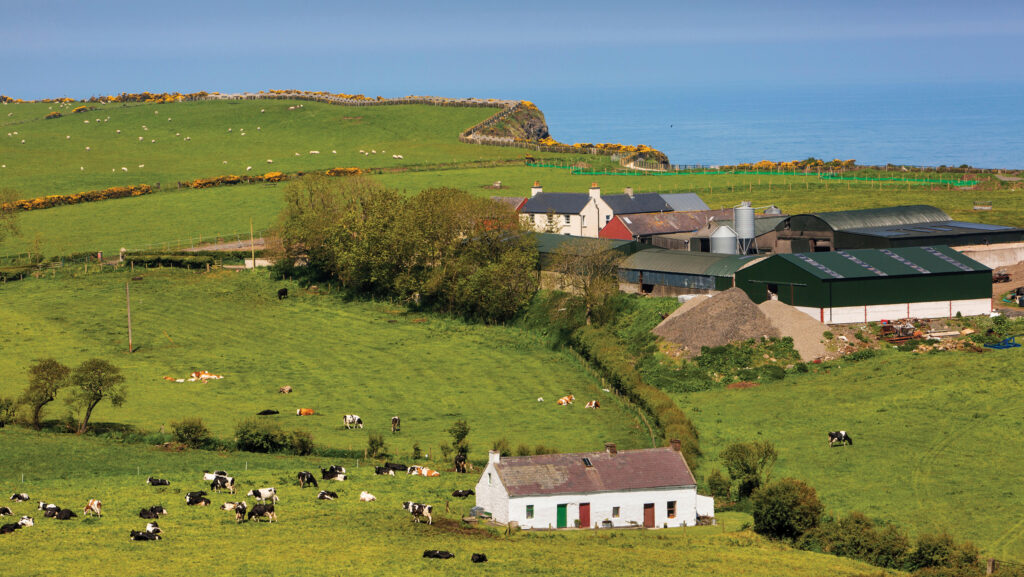
 A combination of stricter regulations, limited bovine-TB controls, planning constraints, and tight margins are all adding to concerns for farm businesses in Northern Ireland.
These frustrations came to a head last October when the Ulster Farmers’ Union (UFU) issued a vote of no confidence in the Department of Agriculture, Environment and Rural Affairs (Daera).
UFU policy director James McCluggage told Farmers Weekly that relations have improved since then, but sticking points remain.
See also: New UFU president highlights water pollution responsibilities
He says: “We continue to work with Daera and have definitely seen a change in attitude since the vote of no confidence.
“We need to continue to work with them to make sure that we’re trying to get the fairest and best policies we can for farmers, but there’s some things that still could be improved on.”
Daera’s Agricultural Census figures show that the number of farms in Northern Ireland continue to decline, with 25,834 farms recorded in 2025, some 356 fewer than the previous year.
A heavy focus remains on livestock and smaller family farms, with beef and sheep enterprises accounting for 78% of holdings, dairy 10%, cereals 7%, pigs and poultry 3% and other types just 2%.
The latest available farm income figures for Northern Ireland show a downturn in overall profitability with substantial falls for dairy and cereals, partially offset by improvements for beef, sheep and pigs.
The average farm business income across all farm types decreased from £50,450 to £29,260 per farm for the 2023-24 financial year – the most recent data available.
Since then, higher input costs, falling beef values and lower cereals and milk prices have all taken a further toll on farm profitability.
Mr McCluggage says morale in the arable sector is particularly low, with poor weather impacting plantings, and farms are now having to catch up with field work while facing very high red diesel prices.
The big issues currently affecting farmers in Northern Ireland
1. Water quality
The controversial Nutrients Action Programme – which aims to improve water quality and reduce pollution from agriculture – remains in the development phase with stakeholders in the Task and Finish Group still regularly meeting.
The group is headed by an independent facilitator, with farming groups and environmentalists working on proposals together, which are due to be presented to the Daera minister.
Its findings are expected to be publicised in late May, with an industry-wide consultation likely to follow before it can be put into legislation.
UFU president John McLenaghan says: “Agricultural policy cannot be developed by looking at environmental outcomes in isolation.
“Policy must also recognise the economic realities of local food production and the importance of rural communities.”
2. Bovine TB
Bovine TB continues to pose a major problem across Northern Ireland with a lack of controls available to stop the disease.
Industry research has found the direct cost of bovine TB is roughly £60m/year, with an additional £96m in indirect costs, from other factors such as production losses and spending on biosecurity.
UFU deputy president Glenn Cuddy says: “We cannot continue with a system where farmers carry the greatest burden of this disease. Action to eradicate bovine TB, including wildlife intervention, must now be delivered without further delay.”
3. IHT impact
Almost 80% of farm businesses in 2025 were classed by Daera as “very small”, accounting for less than one standard labour unit, indicating many farmers also work off farm to subsidise their incomes.
Therefore, the majority are likely to fall below the inheritance tax (IHT) threshold introduced from
6 April this year – about 85% of farms according to some industry analysis.
Mr McCluggage says there are still those 15% of farms that may be affected, and the UFU will continue to try and get IHT on agricultural businesses removed and get other political parties to include it in their manifestos.
4. Planning constraints
Obtaining planning permission remains a major obstacle for many farm businesses looking to expand or replace outdated buildings, with lots of restrictions and delays.
Mr McCluggage asks: “What kind of signal does that give out to young farmers who want to come into the industry to innovate, to develop the farm, bring new technologies and make their buildings a bit better for efficiencies?”
Democratic Unionist Party (DUP) MP Carla Lockhart adds that long delays and a lack of co-operation are inflicting financial burdens and mental pressure on farmers.
She argues that the Shared Environmental Services is creating a “bureaucratic choke point”, which is stifling farm development and investment.
5. SPS agreement
Progress on a sanitary and phytosanitary (SPS) agreement with the EU, is primarily seen as good news by farmers and the agricultural supply chain in Northern Ireland.
Mr McCluggage says: “A good, comprehensive UK deal should hopefully address a lot of those practical issues that we’ve had because of the Protocol and the Windsor Framework.
“Any reduction in SPS checks or paperwork for goods moving from GB to Northern Ireland is a really significant step forward.
“The removal of export health certificates is massive and a reduction in physical inspections would improve efficiency.”
Government support for farmers in Northern Ireland
Farming Sustainability Payment
Daera has moved to a single application process for government support schemes in Northern Ireland.
Applications are currently open for the Farm Sustainability Payment (FSP), with the window due to close on 15 May.
Farmers are encouraged to take part in other schemes, such as the Soil Nutrient Health Scheme, to ensure they are fully eligible for FSP and avoid potential penalties.
Daera agriculture minister Andrew Muir says: “This year sees the introduction of the farm sustainability payment under the Sustainable Agriculture Programme.
“FSP brings several key changes, with the Farm Sustainability Standards replacing cross-compliance, and with new land eligibility rules coming into effect.
“There are also important changes regarding eligibility for FSP, so businesses may need to take action to retain their entitlements in 2026, especially those that lease out entitlements.
“It is imperative farm businesses are aware of these changes.”
Payment rates this year will be subject to progressive capping for amounts in excess of £60,000, with incremental reductions above this point.
Mr Muir says: “The unit value of entitlements for the 2026 scheme year can only be confirmed once an executive agreed budget and my subsequent funding position is known.”
Farming with nature
A new Farming with Nature scheme is coming into force this year, but clarity is still lacking on payment rates and relevant actions.
The scheme replaces the Environmental Farming Scheme and is likely to provide financial support to farm businesses for carrying out actions which lead to environmental improvements, such as the use of buffer strips, and planting of hedgerows, trees, and cover crops.
The first round of applications has now closed, although an expanded offer with additional actions is expected to launch later this year.
Beef schemes
Meanwhile, the Beef Carbon Reduction scheme, which pays £75 per eligible animal for finishing beef cattle at under 27 months of age, is now in its third year of a four-year programme.
The Ulster Farmers’ Union (UFU) says there have been no discussions or guarantees from government as of yet as to what will happen to the scheme after year four.
Daera’s Suckler Cow scheme, which offers a financial incentive to farmers for reducing their intervals between calving, is now in its second year and is currently open for applications.
The scheme offers a payment of £100 for reducing the age at first calving and the time between future calving intervals, in an attempt to improve breeding management practices.
Protein support scheme
A pilot scheme offering incentives to growers for planting protein crops for use in animal feed has also been relaunched, with payments of £330/ha for growing peas, beans and lupins.
Future support schemes
The UFU is optimistic that Daera will offer future support for the sheep sector, after sustained lobbying by the organisation, which is likely to be available for farm businesses from 2027 onwards.
Mr McCluggage says: “We’re effectively lobbying for three new schemes for next year, sheep support, arable support and the Farming For Generations scheme.”
Discussions around future support for the arable sector is still reportedly in its early stages.
“The arable sector has been through a rough past few years, there’s a need for support there, which is something we are being quite vocal about,” he adds.
Case study: Callum and Jayne McAleese, Tullyarmon Farm, County Londonderry
Callum and Jayne McAleese © Tullyarmon Farm
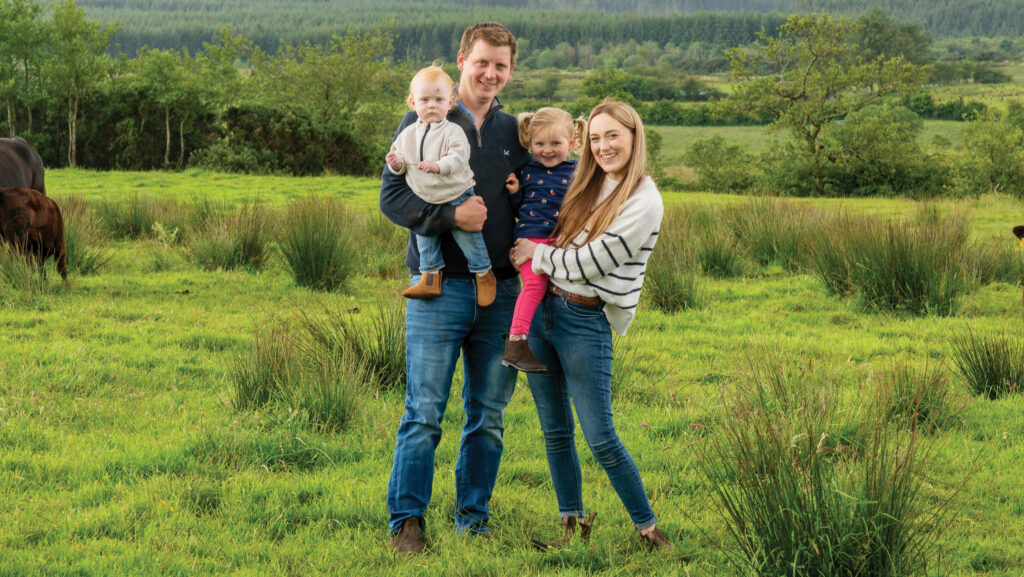
First-generation farmers Callum and Jayne McAleese have built up a herd of Aberdeen-Angus cows, near Coleraine, County Londonderry, and have recently expanded into pigs and dairy.
The couple continue to work both on farm and in other jobs in order to subsidise their farming income. They also sell pork and beef directly to customers through a meat box business.
“We’ve now got 16 pedigree Aberdeen-Angus cows and their followers, but it’s growing every year,” says Mr McAleese.
Having initially started with just a few cows on rented ground, they found it hard to access any of the support schemes without all the entitlements required, until they took on a 10-year tenancy on a 20ha block of land with a farmhouse and buildings.
Support schemes
Ms McAleese says: “You need to have a single farm application in before you can start to apply for any of the other grants that are available, so for a long time we were not actually eligible for support.
“We then got a bit more ground and were able to do our single farm application along with the young farmers payment.”
Mr McAleese adds: “You can fight and fight with ground to make it the best ground in the world, but if you don’t own it, that’s hard to justify.
“Instead, we’re learning to work along with our environment, not against it.
“We’re looking hard at rotational grazing and species mixes; our neighbours all think we’re mad, but it’s working for us.”
Agri-Food Biosciences Institute
The Agri-Food Biosciences Institute (Afbi) is a Daera-funded agricultural research facility with seven sites across Northern Ireland.
It has recently come under scrutiny with concerns around its role and proficiency raised both by industry and politicians in response to a data breach, plus biosecurity and animal welfare issues.
Daera agriculture minister Andrew Muir has raised concerns and called for a review.
In a recent ministerial address, Mr Muir stated: “Issues have emerged that mean that I need stronger and clearer assurance that standards are being applied consistently across Afbi.
“Afbi’s capability to respond to emergencies, quickly, safely and effectively, is a critical part of our overall resilience.
“Farmers, the food industry, our partners and the wider public should be able to place the highest confidence in Afbi’s work and the controls that sit around it.”
DUP MP Carla Lockhart says Afbi’s credibility has been questioned by hard-working farmers.
She adds: “There has been a series of serious allegations connected to Afbi, including whistleblowing concerns about biosecurity, failures in environmental regulations, and animal welfare issues at its Hillsborough farm.
“Afbi plays a critical role in safeguarding animal health, public health, and the integrity of our food supply chain.”
Afbi response
Afbi issued a response to the statement from the minister, adding that the board took seriously “the trust placed in Afbi and the need for transparency” for Daera and all its stakeholders.
It says it has already taken action to drive improvements and address all issues raised.
Balmoral Show preview
© PA Images/Alamy Stock Photo
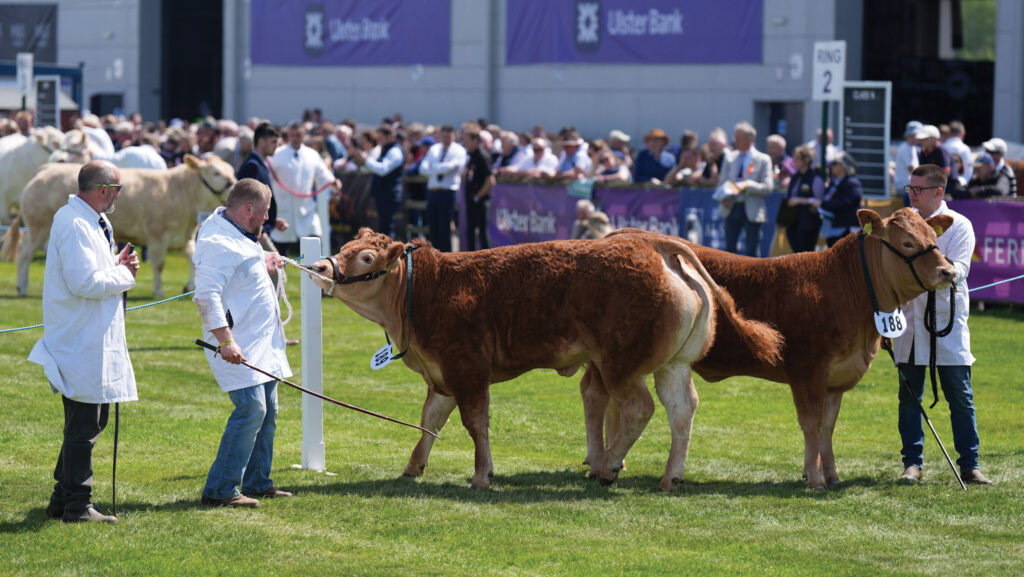
Northern Ireland’s largest agri-food event, the Balmoral Show, is set to return from 13-16 May 2026.
The event, which has been running for over 150 years, will have more than 3,500 head of livestock exhibited, although no poultry this year due to the risk of avian influenza..
Livestock and Meat Commission (LMC) chief executive Colin Smith says: “The Balmoral Show is one of the standout events in the agricultural calendar and LMC is delighted to continue its sponsorship of these ever-popular livestock classes.”
The show will also play host to the Six Nations Blade Shearing Championships, with England, France, Ireland, Northern Ireland, Scotland and Wales all competing.
Rhonda Geary, group operations director at the Royal Ulster Agricultural Society, says: “We can’t wait to welcome everyone back to the Eikon Exhibition Centre next week.
“From world class entertainment, award-winning livestock, spell-binding show jumping or delicious cookery demos, the Balmoral Show has it all.”