Cereals host farm fights market volatility with local focus
 © MAG/Philip Case
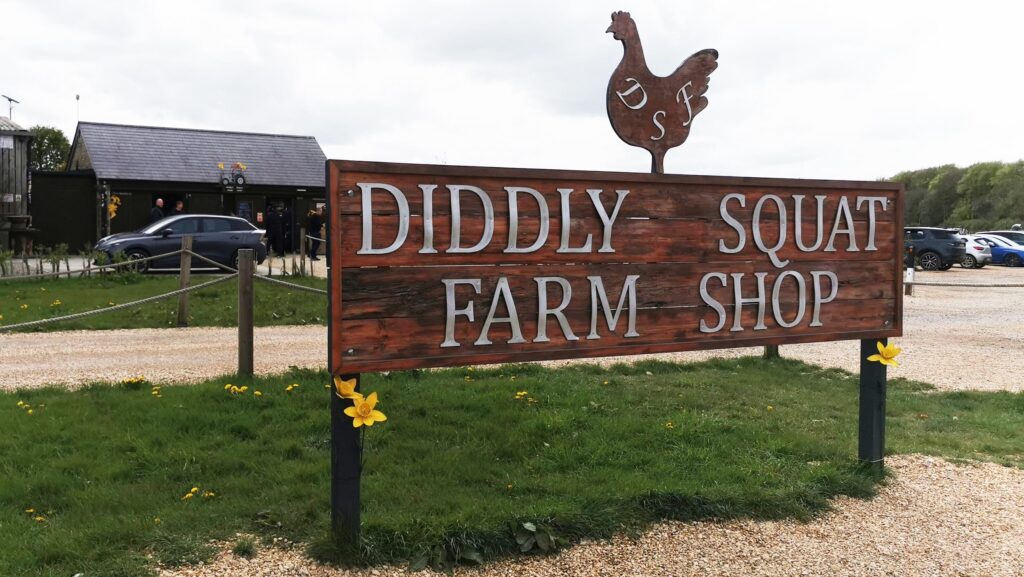
 Most of the changes introduced at Jeremy Clarkson’s Diddly Squat Farm, where this year’s Cereals event is taking place, will be familiar to farmers intent on developing a sustainable farming business.
More grass in an increasingly flexible arable rotation, the adoption of reduced tillage wherever possible, the addition of livestock to the farming system and the strategic use of agri-environment schemes are all evident, along with scrutiny of costs.
See also: Clarkson’s Farm star urges growers to focus on margins
However, it’s the closer end market integration with a focus on local sales that has required additional effort from the farm team in the past five years and is now a standout feature of the 400ha farm business near Chipping Norton in the Cotswolds.
“Everything has a market or is grown on contract,” explain Charlie Ireland and George Badger of farming consultancy Ceres Rural, who work with Jeremy on the farm’s direction and management.
Local supply chains
Among other initiatives, that means supplying local mill Matthews with milling wheat and spelt, producing durum wheat for the Farmer’s Dough, growing some oats and wheat for Wildfarmed, and having malting barley destined for Hawkstone.
As well as providing the Diddly Squat farm shop with goods, it involves working with 12 other local farmers in a co-operative arrangement to supply meat to the Farmer’s Dog pub.
“This has reduced the farm’s exposure to the commodity markets, and livestock sales have given it financial resilience,” notes George.
“Collaboration has also been key, whether that’s working with contractors or setting up a joint venture for the sheep enterprise.”
Adaptable plans
Being cost appropriate and agile are also essential in today’s economic climate, he adds.
“We’re all aware of the current squeeze on farm finances so being able to change track is so important – both to take advantage of specific opportunities and to react to the weather.”
Last year’s very dry spring and summer was a good example of that in practice, George points out.
“Spring droughts are tough on these brash soils and pulses aren’t an option either.”
As a result, the rotation at Diddly Squat Farm remains fluid.
The cropping is based on a first wheat, followed by two spring cereals with cover crops and then a break, while two- to three-year grass leys are now part of the arable rotation.
About half of the farm is in arable and half in grass. “More grass has gone in over the past five years,” reports George.
“In that time, we’ve grown winter wheat, oilseed rape, spring barley, winter and spring oats, durum wheat, winter spelt and some potatoes.”
Successes and failures
The 5ha of unirrigated potatoes were a disaster in 2025, admits Charlie.
In contrast, the winter oats produced the best gross margin by a long way, but the farm’s five-year winter wheat average of 7.16t/ha took a dive down to 6.5t/ha in such a dry growing season.
Durum wheat performance has been mixed and the crop has been dropped for now, he continues.
“We had two poor years and the price has fallen. But the first two to three years with the crop were great. It is the ultimate farm-to-fork crop.”
Oilseed rape hasn’t featured since 2023, after poor establishment and tight turnaround issues.
“It is likely to go back in the ground this autumn,” says Charlie.
“Seeing how well it is growing in the plots on the Cereals site has convinced us that it’s time to give it another go.”
Success with low soil disturbance has been achieved, although ground was moved for the first time in 12 years this season.
“There were two reasons for that,” recalls Charlie. “There was too much stone on the surface and we needed a grassweed reset.
“Ploughing still has a place here, albeit on a strategic basis.”
The Cotswold brash soils, which have clay streaks, are very abrasive but don’t tend to slump, he adds.
“Generally, we are getting enough structure from growing cover crops and having a diverse rotation.”
Livestock integration
The first livestock arrived on the farm in autumn 2019 when 70 ewes were introduced.
Since then, cattle and goats have also been integrated, with the cattle being part of the supply chain for the pub and the goats being used for scrub clearance.
Sheep are used to graze winter wheat, cover crops and permanent pasture, with lamb sales adding to the farm finances.
Every fortnight, livestock from nearby farms are collected for use in the pub that Jeremy is involved with.
Diddly Squat Farm is two years into a Sustainable Farming Incentive agreement, has a five-year Higher Tier Countryside Stewardship scheme and is also part of the Evenlode Landscape Recovery project.
The latter will involve quite specific areas of the farm in a 30-year agreement, says George, and is based on water quality improvement.
“On this farm, it will involve creating woodland and scrub as well as slowing the flow of water.
“Given its height, areas of this farm have been pinpointed for actions that can really make a difference.”
Their experience with landscape recovery to date has been very positive and George’s advice is to encourage farmers to engage with such projects.
“It’s another income stream from more fragile parts of farms that are often lower yielding.”
Machinery at the farm
Contrary to the impression given in Clarkson’s Farm, the business has limited capital tied up in machinery and equipment.
Ceres Rural’s Charlie Ireland points out that it makes a big difference to the farm’s finances.
“On this 400ha farm, there’s around £100,000 in kit. There’s no need to have more, especially as we make good use of contractors.”
When the sprayer needs replacing, it will be with a second-hand, 10-year-old machine in good condition.
“Autonomous machinery may appeal, but it comes at a cost and it’s too soon to understand what value it delivers to the business,” he says.
Welcome from Jeremy Clarkson
Jeremy Clarkson © MAG/Colin Miller
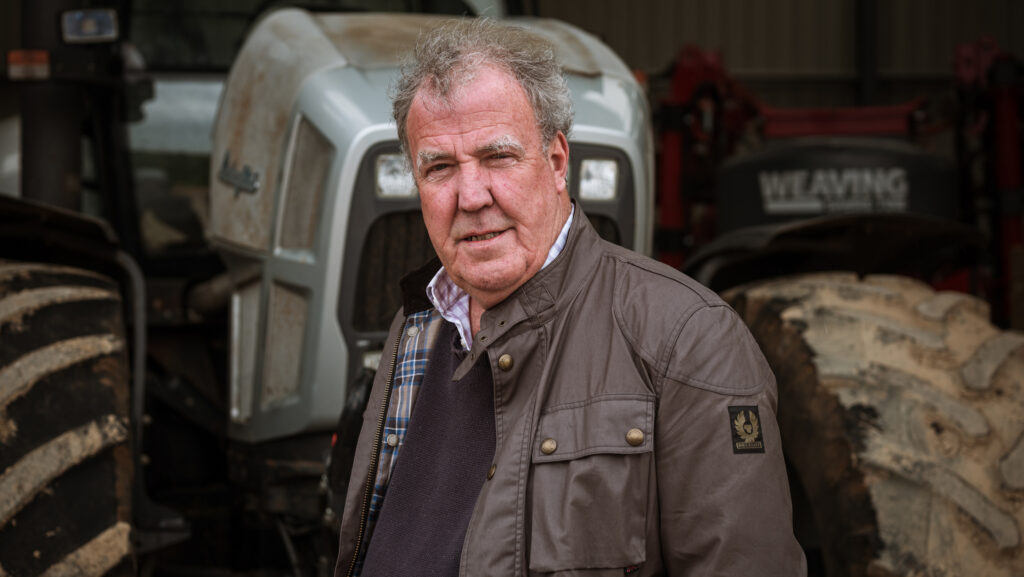
Host farmer Jeremy Clarkson is excited to be holding Cereals and is most looking forward to the learning experience offered by the two-day event.
He treats every day on the farm as a learning day.
“We keep experimenting with what we can grow and produce here.
“I’m often accused of hobby farming, but there’s not much point in growing large areas of arable crops in this economic climate.”
He recognises that the current situation is soul destroying for many arable farmers.
“It’s a depressing place to be and it fills me with despair, but the flip side is that people do need to eat.”
Herb production, a market garden, popcorn and some rabbits are all current projects at Diddly Squat in the continuing search for profit, he reveals.
New for this year at Cereals is a livestock zone – something that Kaleb Cooper is pleased about.
“Extra enterprises help to balance the books,” he points out.
Having livestock at the event reflects the more westerly location of this year’s show and reinforces the industry shift to mixed farming businesses, he adds.
“The site looks good and there will be plenty to see,” says Jeremy. “My next task as the host farmer is to dig the soil pit.”
Cereals 2026 is taking place on Wednesday 10 and Thursday 11 June at Diddly Squat Farm near Chipping Norton, Oxfordshire