

This Week in Farming: 50% ram infertility and latest Valtra
 © James Andrews
 Welcome back to another edition of This Week in Farming, home of the best content from Farmers Weekly in the past seven days.
First, here’s your markets (opens as PDF). Beef prices continue to march higher, while lamb has taken a breather. Diesel prices continue to make grim reading.
Before we start, can I tell you about Farmers Weekly Live? It’s a brand new event coming to Stoneleigh next year and we’d love your help to make it as useful as possible.
Register your interest and then we’ll email you a questionnaire to let you have your say on what it would take to get you to come along.
Now, on with the show.
Bluetongue latest
Bluetongue continues to ravage the western side of the UK, with clusters of reported cases as far north as Castle Douglas.
This week vets in the south-west of England, the first hotspot, reported that ram infertility is running at 50%, posing problems for shepherds as we head into peak breeding season.
In my editorial this week, I note that breeding ewe numbers in England have plummeted in the past four years, with nearly one million fewer ewes on farm than in 2022 – even before this latest disease outbreak.
And farmers in Northern Ireland are being alerted to a separate midge-borne virus threat, Shamonda, that has been found on two farms in the Republic of Ireland.
Keeping with the disease theme….
Dairy update
…we also explore how one Dorset farming family tackled an outbreak of Q fever in their dairy herd in 2023 after noticing a sharp dip in fertility rates.
That’s just one article in our dairy-focused section in the magazine this week.
We also have practical articles looking at how to minimise the number of “fetch” cows – those overdue for milking in a robot system, advice on reducing the risk of dry-period mastitis and a look at how housed herds can plan for the next heatwave.
And here’s a piece that reminds me of Sherlock Holmes – the curious case of curious cows producing more milk.
Aphid alert
It’s not just livestock farmers that are on the alert for airborne troubles, with arable growers on the watch for barley yellow dwarf virus amid mild conditions across much of the country.
Yet our Crop Watch agronomists report that there is much to be cheerful about given good establishment conditions – providing pests and weeds can be managed in good time.
Of course, viable products are also needed for many of those tasks, and deputy editor Abi Kay looks back at the neonicotinoid ban this week and asks: Can British farming afford another neonics moment?
Changing gear
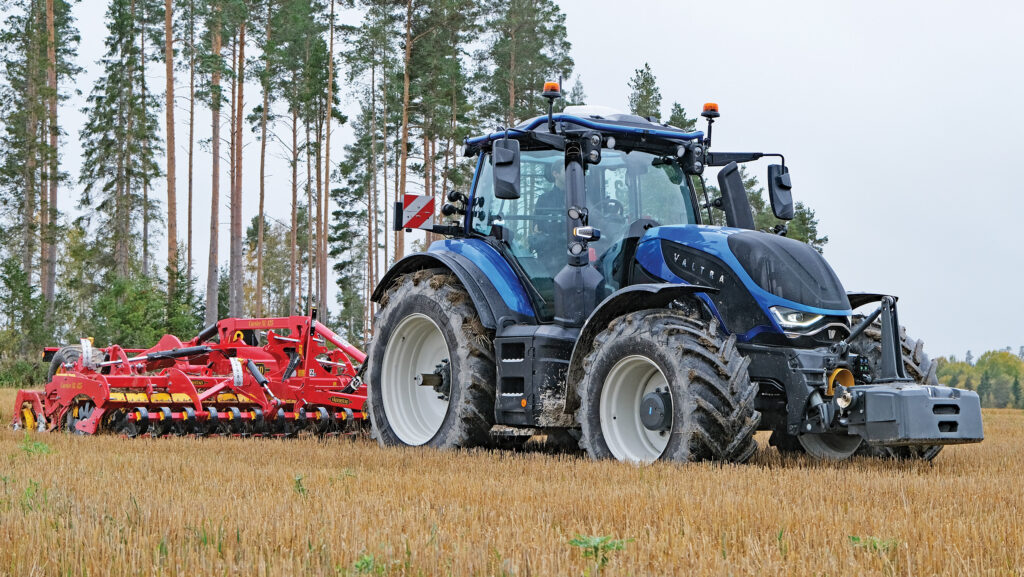
The new transmission is rightly the focus of our machinery team’s writeup of Valtra’s revamped T Series, our second Agco magazine cover story in two weeks, after featuring Massey Ferguson’s range reshuffle and six new 7S models last week.
However, Valtra’s suite of customisation options, including choice of colour, always catches my eye and this time they have gone big on interior options too.
This week we also have another deep dive into the latest dealership changes, with plenty of updates still coming from CNH in particular. This was our most-read story for much of this week.
Who’s up and who’s down?
On the up this week is agricultural inflation, with new analysis from consultancy firm Andersons showing that farm input costs are rising at more than double the rate of consumer price increases.
And civil servants at Defra’s arms-length bodies are feeling down this week after shadow Defra secretary Victoria Atkins pledged that a future Tory government would scrap Natural England and the Environment Agency.
Listen to the FW Podcast
Don’t forget to listen to the latest Farmers Weekly Podcast, brought to you by Johann Tasker, Hugh Broom and Louise Impey.
You’ll find it anywhere you get your podcasts, or listen free on the FW website.