

This Week in Farming: Beef, price caps and trade deals
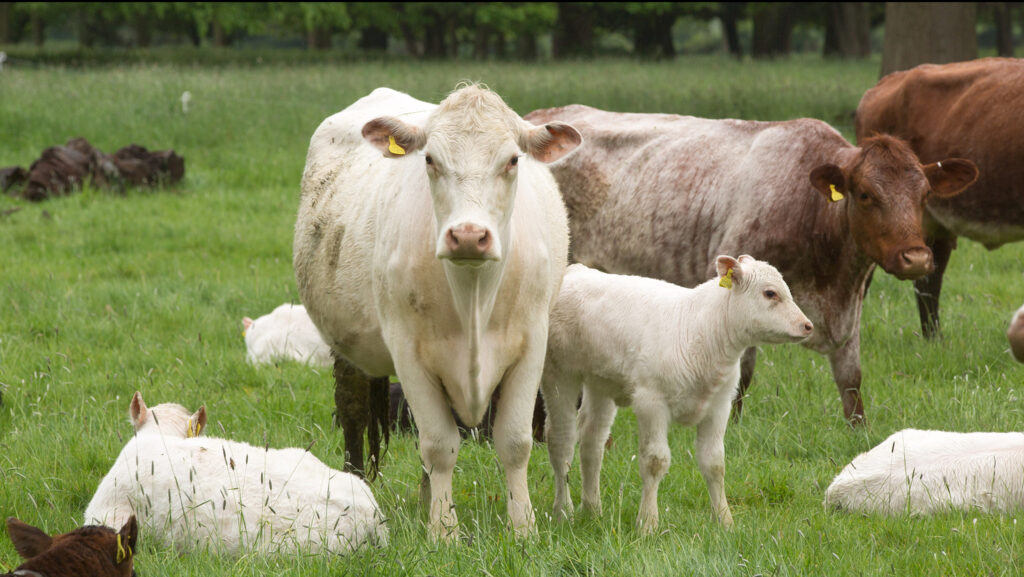 © Tim Scrivener
 Welcome back to another edition of This Week in Farming, your regular round-up of the best Farmers Weekly content from the past seven days.
First things first, here are your market prices (opens as PDF).
Red diesel is still trading at above £1/litre, although there has been some welcome news, with the Treasury cutting fuel duty by more than one-third until the end of the year.
On to the news…
About the author

Beef prices not so ‘bullish’
Finished cattle prices have come tumbling down from last year’s record highs, with producers beginning to feel the pinch.
Farming groups have warned that falling prices could trigger declines in the suckler herd and reduce long-term investment in the beef sector – a topic that will no doubt spark plenty of debate at the National Beef Association’s flagship Beef Expo next week.
Pig producers have also been under pressure with contracts at risk as abattoirs struggle with backlogs.
However, major pork and poultry processor Cranswick seems to be faring OK, with profits up and revenue lifting to almost £3bn.
Food price freeze
Talk of food price caps being introduced by retailers went down like a lead balloon with both supermarkets and farming groups, as the government explores ways to get inflation under control.
In FW editor Andrew Meredith’s latest editorial, he highlights the possibility of further cuts to tariffs on imported food being floated as an idea by government.
Price volatility could well be here to stay, with MPs warned by industry that the UK can no longer assume stable prices or predictable supply after repeated systemic shocks.
Climate advisers have also suggested that perhaps stockpiling could be the solution to some of the UK food security concerns, with calls for “large-scale national food stockpiling” in order to avoid future supply disruption.
Trade deals
A major trade deal between the UK and the Gulf Co-operation Council was agreed on 20 May, with UK dairy, lamb and oat exports all set to benefit from reduced tariffs.
Unlike other recent trade deals, this one was generally welcomed by industry, with assurances made that the UK would not give preferential access to imports that fall below its own animal welfare standards.
With talks nearing the latter stages around a sanitary and phytosanitary agreement with the EU, the NFU has issued a plea to government, urging MPs not to rush and ensure transition arrangements are in place.
Fertiliser in the firing line
Calls to delay the introduction of a carbon tax on fertiliser from the start of next year have gained some traction in the past week, with fertiliser bills already higher as a result of the conflict in the Middle East.
Farmers in the EU have taken their demands one step further, protesting on the streets of Strasbourg to call for more support to help businesses deal with exceptionally high input costs and the introduction of the EU’s Fertiliser Action Plan.
Rain and shine
Recent rainfall has generally helped crops progress in many parts of the UK during May, although it’s a different picture elsewhere in the world with plantings in the US struggling and drilling delayed in Russia.
Traders say the UK growers could be well positioned, with the prospect of a reasonable UK crop and a potentially tighter global market to sell into later in the year.
Herefordshire farmer Billy Lewis writes in this week’s magazine that while recent rain is welcome, a dry spell is now needed for silage.
FW news editor Philip Clarke looks at the challenges of droughts and floods on farmland, and some of the ways farmers are managing it.
Out and about
The inaugural Great British Farm-Fest takes place this weekend (22-24 May) at Stoneleigh Park in Warwickshire, hosting farm talks, tractor games and live music.
Keep an eye out this evening (Saturday 23 May), for the Hawkstone Farmers Choir, who will be competing in the live semi-finals of ITV’s Britain’s Got Talent.
Moving on quickly… JCB engineers are aiming to break the 350mph land speed record with the 1,600hp Hydromax, and its hydrogen-powered engines.
Not to be missed…
- Bank lending to agriculture rises in mixed outlook
- How a suckler farmer works in harmony with environment
- Advice on getting successful inseminations with sexed semen
- Glyphosate curbs could threaten regen farming, report warns
- Duchy of Cornwall reassures farmers amid estate sale concerns
Listen to the FW podcast
Don’t forget to tune in to the Farmers Weekly podcast, with Johann Tasker, Louise Impey and Hugh Broom.
You’ll find it anywhere you listen to podcasts, or listen free on the FW website.