

This Week in Farming: Red diesel, SFI fears and Brexit
 © Tim Scrivener
 Welcome to another edition of This Week in Farming, your regular round-up of the best Farmers Weekly content from the past seven days.
First, here are your market prices (opens as PDF). Feed wheat has lifted above £180/t ex-farm and finished lambs are still absolutely flying at 936p/kg deadweight.
Now, on with the show…
About the author

A decade of Brexit
Brexit is back in the spotlight as next week marks 10 years since the UK voted to leave the EU.
A recent poll of FW readers revealed that of the 1,000-plus farmers who responded, 51% said they would now vote to rejoin the EU. While this is a slight turnaround since 2016, the survey also found significant disappointment at the way Brexit has been delivered in the agricultural sector.
In his latest editorial, FW editor Andrew Meredith reflects on why opinions may have changed, arguing that: “The failure to land on a settled policy that has the support of the bulk of the industry goes a long way to explain why many farmers now feel so disgruntled.”
A prime example of this may well be the latest round of the Sustainable Farming Incentive (SFI), which one former government adviser described this week as “a bit of a car crash coming” as funding fears mount.
The revolving door at Defra also played its part.
A ministerial reshuffle has resulted in the appointment of yet another farming minster – Portsmouth South MP Stephen Morgan.
While he may not come from farming stock, he has at least made the effort to get out on farm, visiting NFU president Tom Bradshaw in Essex shortly after taking up the post.
British farmers may also be feeling a little envious of their counterparts across the Channel, who were recently offered substantial support through a €540m fertiliser support plan to help them tackle exceptionally high input costs.
With a sanitary and phytosanitary (SPS) agreement with the EU on the horizon, one positive development this week was the European Parliament giving the green light to the future commercialisation of gene-edited crops, bringing it closer to UK rules.
Royal Highland Show
Scottish beef and sheep producers had plenty to cheer at this year’s Royal Highland Show, with Quality Meat Scotland forecasting continued growth in red meat exports over the next five years.
Away from the cattle classes, shiny machinery and reeling, attention turned to politics as first minister John Swinney pledged to provide safeguards to help farm businesses mitigate the impact of the SNP’s proposed food price caps.
Many farmers had been hoping the Scottish government could provide more clarity on the Future Farming Investment Scheme; however, they were told they would have to sit tight until the autumn before more details emerge.
Looking further ahead, a shift to more AD plants could be on the cards for Scotland, with a new industry report outlining the future potential of biomethane production and rural affairs secretary Gillian Martin saying it plays an important role in Scotland’s journey to net zero.
Meanwhile, Scottish farming charity the Royal Scottish Agricultural Benevolent Institution (Rsabi) has been capitalising on “World Cup fever” hosting a “Farmer Football” tournament, raising more than £14,000.
Red diesel drops
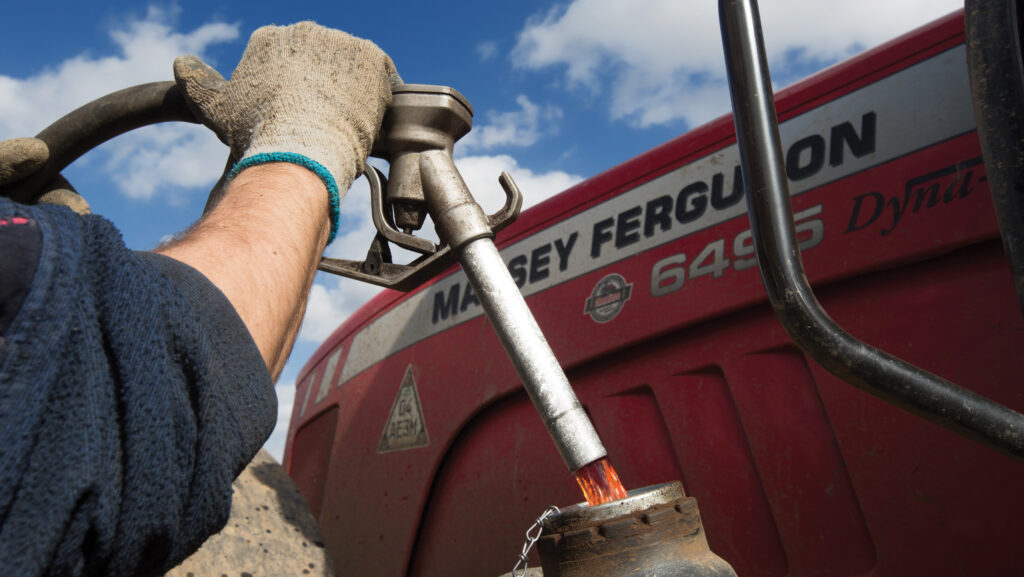
Among the recent headlines, few will have been greeted more warmly by farmers than the substantial drop in red diesel prices.
Red diesel fell back to 80p/litre, driven overwhelmingly by a US-Iran deal to end the war, with other farm inputs such as fertiliser also starting to come down in price.
On another positive note, grain markets have held firm for now and growers at the Cereals event outlined their own strategies for selling wheat on volatile markets.
Even wool is receiving a decent price for once and should at least cover the cost of shearing this year for many sheep producers.
What about the weather?
The NFU has called for support to protect farms from extreme weather, as the UK marks 50 years since the 1976 drought.
FW’s livestock team have been finding out about ways of reducing heat stress in dairy cows.
Meanwhile, agronomists have been out on farm looking at how this year’s crops are faring ahead of harvest, in the last of this year’s Crop Watch series.
Success at Cereals
The FW arable desk has been putting pen to paper (metaphorically speaking) after a busy few days at Cereals last week, with articles on higher growing costs shaping autumn cropping, hybrid wheats offering higher yields and consistency, and OSR growers benefiting from a new type of slug pellet.
Meanwhile, the machinery team has also been busy covering product launches and examining all the kit on display.
This includes:
- Updates to John Deere 6M tractor and 500R sprayer
- A Top-Tilth cultivator from Grange
- A patch spraying option for Kverneland iXtrack trailed sprayer
- 3m Cousins Switchblade cultivator
Overall, the Cereals event was branded a major success by attendees, with roughly 25,000 visitors across the two days.
Best of the rest
Here are a few other stories which are well worth a read:
- Dartmoor pony fears reignite grazing row with Natural England
- Meat suppliers say FSA is ignoring High Court ruling on charges
- Why people insurance should be part of the farm business plan
- Cornwall Councill advised not to sell off 4,400ha farm estate
- New agriculture BTEC aims to open farming careers to pupils
Listen to the FW Podcast
Don’t forget to listen to the latest Farmers Weekly Podcast, with Johann Tasker, Louise Impey and Hugh Broom.
You’ll find it anywhere you get your podcasts, or listen free on the FW website.